Author: Nic Olson

  • Ukrainian Resistance to Russian Colonialism – Briarpatch Reading List (Extended)

    In the September/October 2025 edition of Briarpatch Magazine, I was able to publish a reading list about Ukrainian Resistance to Russian Colonialism. It is reproduced below with additional works I had to cut for length.

    I also recently became a board member for Briarpatch, so I strongly encourage you to check out their reporting and consider signing up for a subscription.

    In my final class studying international human rights law, I shared my paper analyzing Ukraine’s law on Indigenous people which, while imperfect, protects the territorial and language rights of Crimean Tatars, Karaites and Krymchaks. In the class discussion, a friend and self-proclaimed Marxist wearing a keffiyeh asked if I knew that the Russian language was broadly oppressed in Ukraine. Despite their rightful support for Palestine and correct criticism of colonial governments, they tended to be sympathetic to a different colonial, imperial power by repeating one of Russia’s falsified justifications for engaging in an unprovoked war of aggression.

    Expanding our critiques beyond western colonial empire is important as we struggle to find alternatives to any form of oppressive, centralized power. As fascism balloons in our own backyard, we can learn from Ukrainian people actively resisting a fascist authoritarian state. And as we try to comprehend how to dismantle an empire here, we can well be reminded that the problem isn’t one empire or another; rather, the problem is empire itself. As one empire coerces Ukraine into a minerals deal, another empire is currently shooting ballistic missiles at shopping centres in Ukraine. 

    The following resources have helped me understand Ukrainian resistance as removing itself from under the foot of centuries of a colonial power.

    Russian Colonialism 101 (2023)
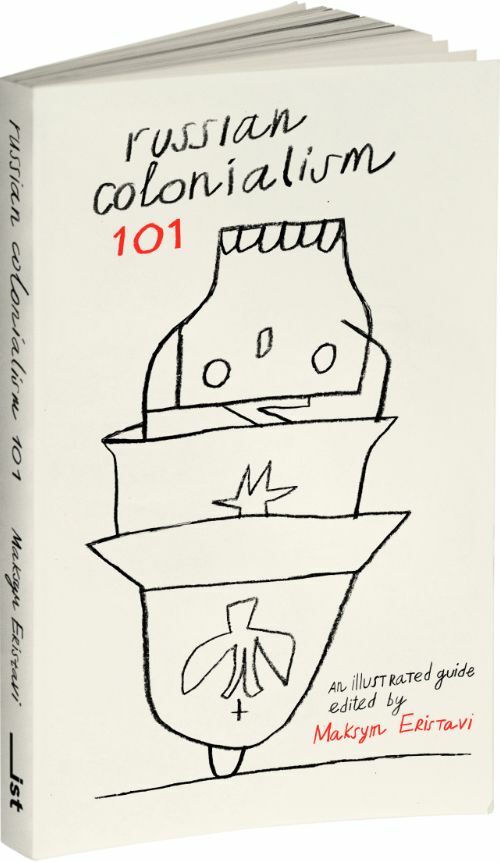
    Until I found the illustrated book, Russian Colonialism 101, by Ukrainian journalist Maksym Eristavi, I hadn’t heard of Russian history explained as colonial power. In the Western anti-colonial, anti-capitalist circles in which I found myself, the Soviet Union was generally either tolerated or praised, with Joseph Stalin’s violent purges considered one of the only dark spots marring this alternative to capitalism. I knew little about its predecessor, the Russian Tsarist Empire, or the current Russian Federation. This guidebook (basically a reading list of its own) explains that the past three iterations of Russian rule – from the Tsars to the Bolsheviks to the Vladimir Putin regime – have employed the same colonial tactics to control and oppress Indigenous nations neighbouring and within Russia’s borders. When Russian prisoners of war are released they are often photographed holding flags for Tsarist Russia, the Union of Soviet Socialist Republics (USSR), and the Russian Federation all at once. The book demonstrates that the current war on Ukraine is far from a singular project of a power-hungry dictator, but an unfortunate feature of Russian colonial statehood.

    Matryoshka of Lies: Ending Empire (2024)
    The Matryoshka of Lies podcast, hosted by Maksym Eristavi and Ukrainska Pravda news outlet dives into lesser-known histories of Russian colonialism. The season-one finale, Ending Empire, touches on Russia’s expansion into Alaska in the late 1700s, where they extended the same policies of coercion and enslavement they used on Indigenous nations of Northern Asia. (Tlingit resistance to this Russian colonialism is best captured by Gord Hill in The 500 Years of Indigenous Resistance Comic Book: Revised and Expanded.) 
    In part, the purpose of the episode and the podcast as a whole is to allow a western audience to better understand Russian colonialism as akin to the genocidal horrors of European colonialism that many North Americans are just starting to grapple with. Similar to many radicals in North America calling for an end to U.S. hegemony and violence through an end of the American Empire, this episode suggests that a “total reset in what is now the Russian Federation” is the only way to end these continuing colonial expansionary tactics.

    A Brief History of a Long War: Ukraine’s Fight Against Russian Domination (2025)
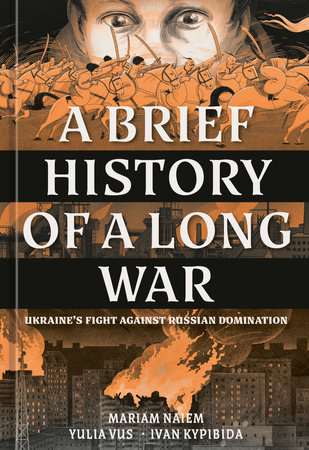
    Policies of food control and forced starvation have long been a genocidal policy of colonial governments, from Canada’s purposeful extermination of Indigenous food sources, to Israel’s current explicit weaponization of food in Gaza. The Holodomor (meaning ‘death by starvation’) occurred in 1932-33 in Ukraine and led to the deaths of upwards of a fifth of all Ukrainians. Soviet policies forced the collectivization of farms, imprisoned or killed people for hiding or ‘stealing’ grain, and instituted restricted travel so Ukrainians could not access other food sources.

    Whereas most narratives of the war start in 2022, or maybe 2014, Mariam Naiem’s graphic novel puts Russia’s war on Ukraine into perspective from the very beginning of Ukrainian nationhood. It unravels the long history of policies meant to extinguish Ukrainian sovereignty movements that threatened Russian control over valuable Ukrainian natural resources: from the Holodomor to policies meant to marginalize the Ukrainian language, to Russia’s invasion once Ukraine shifted into the European sphere of influence. This introduction to the history of the region helps give context to the war by explaining the centuries of Russian empire and Ukrainian resistance.

    Hanna Perekhoda: “The fight for freedom in Ukraine is intimately linked to the global struggle against fascist forces” (2025)

    While the Western left has generally expressed support for Ukraine, in some anti-imperialist circles, dialogue is often immobilized when someone associates Ukraine with NATO, Nazis, or nukes. In this interview, Hanna Perekhoda, a Ukrainian socialist and historian, succinctly addresses some of the most controversial among these stumbling blocks. She explains supposed Russian-language oppression and Russophobia is akin to the anti-white racism rhetoric rising in the West. Perekhoda speaks to Putin’s claim that Ukraine is overrun by Nazis, a propagandist justification for the war hearkening back to Second World War mythology. She acknowledges Ukraine’s far right, noting they have repeatedly proven to be a fringe movement. Given that problems with the far right exist everywhere, she questions whether this justifies a full-scale invasion or a withholding of military support or other aid. She notes that what really risks a rise in fascism is a long-standing war waged by a fascist Russian regime where common Ukrainians are radicalized by years of military occupation and systematic oppression. As Perekhoda makes clear, what is needed is support for Ukrainian lives, autonomy, and resistance.

    Ordinary People Don’t Carry Machine Guns: Thoughts on War (2025)

    Ukrainian author Artem Chapeye gives a contemporary account of what it is like to be on the receiving end of a colonial war of expansion. As a self-proclaimed pacifist, leftist, and feminist, Chapeye joined Ukraine’s military in 2022. After politely admonishing Western anti-imperial leftists for their lack of critique of other powers as compared to their rigorous critique of the American Empire, Chapeye addresses the privilege of pacifism that judges Ukrainian (and other) resistance; anarchist traditions of Ukraine’s historical resistance to empire; navigating the tension of being against the authoritarian dangers of nationalism while fighting for a civic – rather than ethnic – community currently under a nation-state; and the impossible psychological toll of war. Speaking to himself as much as to Western audiences, Chapeye explains Ukrainian resistance as follows: “We can either fight back now, with the losses that necessarily accompany this, or remain the colony of an empire for another hundred years.” His book explains his decision to fight against Russian invasion is not because of a guaranteed win, but because of the moral imperative to fight fascism in all its forms.

    ADDITIONAL WORKS

    Where Russia Ends (film) (2024)

    Makhno: Ukrainian Freedom Fighter (graphic novel) (2022)

    Hey Waitress! – Helen Potrobenko

    Putin’s Trolls – Jessikka Aro (2022)

    Without the State – Emily Channell-Justice

    Five Stalks of Grain (graphic novel) (2022)
  • The Village God of Labour

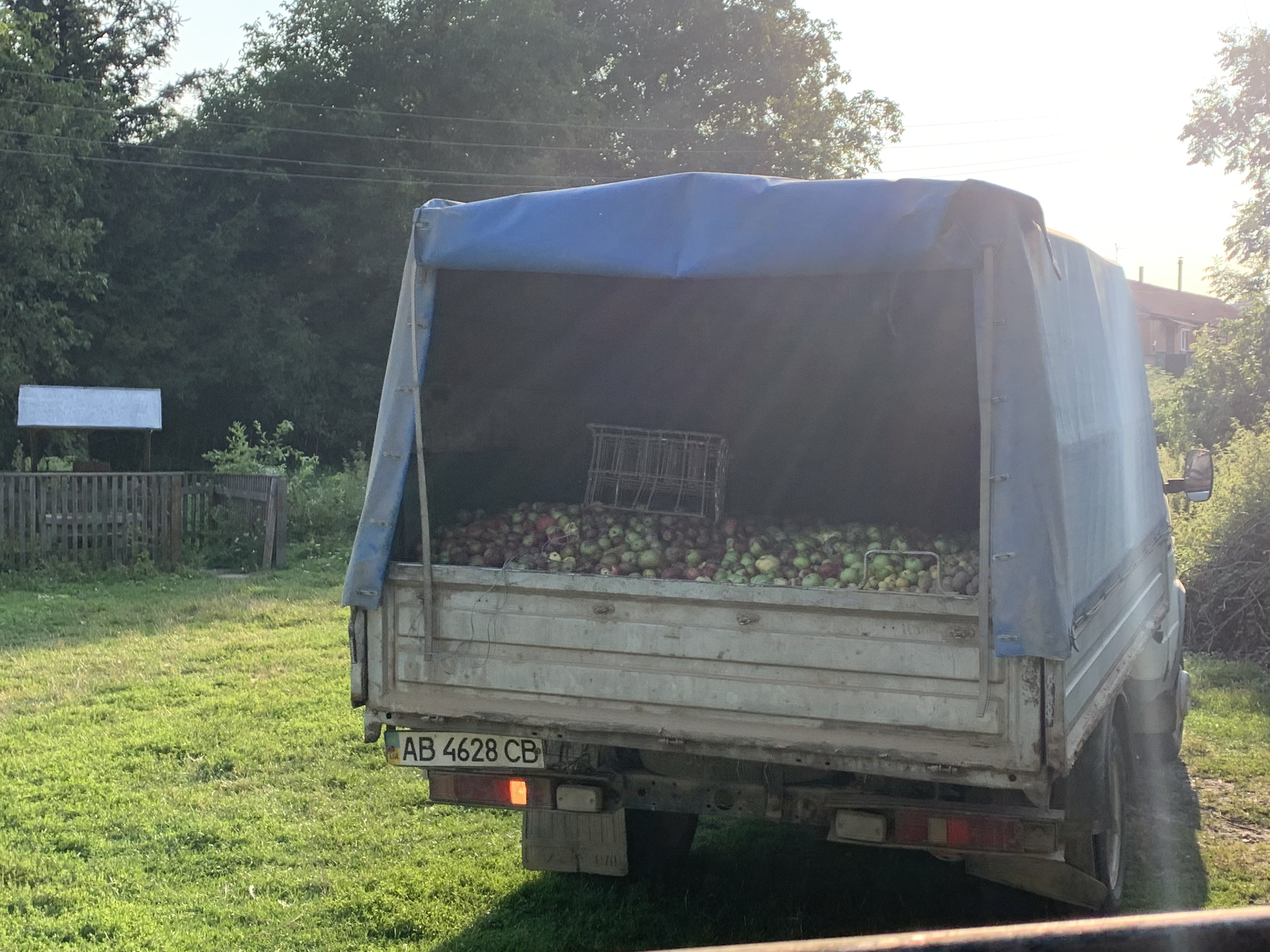
    Pasha, on break from installing new rain gutters, looked down at me as I sweat, shovel in hand, knee-deep in Ukraine’s famous black earth. “Crazy Nic” he said. I didn’t expect him to say something in English so I didn’t catch it. He repeated in his own language: «Шалений Нік» (shaleney Nic). Then I understood.

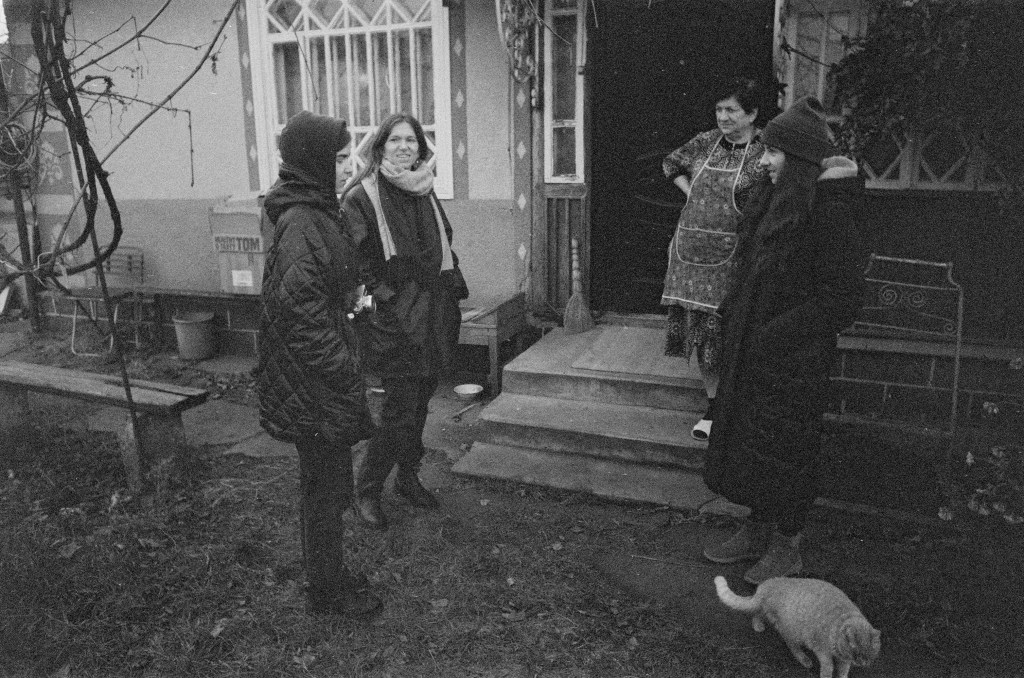
    Olia and I went for a walk to the forest just to see what the sun and wind felt like from from different angles. Upon return, the neighbour, bent ninety-degrees at the waist hoeing potatoes, couldn’t really understand that we came back without foraged mushrooms. A friend has said that she finds it sad that her parents don’t know how to have fun, that every spare moment is spent processing apples, feeding chickens, digging potatoes, canning tomatoes. They would never go to a movie or concert. This weekend, her and I will go to a bar on Friday, a concert on Saturday, and another concert on Sunday. We are of the generation that must always constantly forever be entertained. There’s not much entertainment in the village since the discobar closed.

    Abandoned disco-bar.

    Maybe I should get a job. Selling bread-flavoured sodapop (kvas), selling honey, bike courier, taxi driver, bus driver, teaching english. My anti-capitalist brain tells me that my desire to get a job is just me being insecure about my worth in a society that values you solely based on your salary. My bank account tells me otherwise. And seeing old people sit on the concrete selling wilted plums makes me feel guilty for being previously paid an hourly wage equal to their monthly pension, as though I had something to do with global wealth inequality and amassing of colonial wealth. So I find solace in incorrectly sewing and then seam-ripping adaptive underwear for veterans with prosthetics. Or carrying a long stick with a hook at the end of it, letting gravity pummel me with apples as I shake branches of 100-year-old trees to collect fruit to sell to the juice man for 10₴/kg (25¢/kg). Each metric tonne we collect eases my insecurities, each apple welt brings me closer to the village god of labour — the permanently bent-over бабуся (babusia).

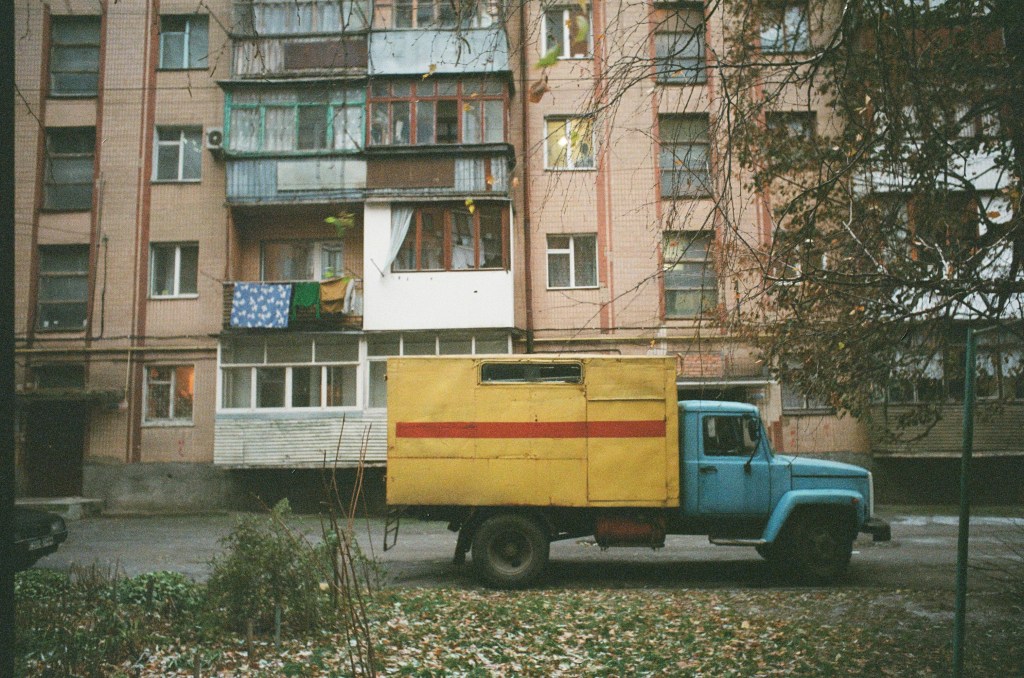
    It wasn’t clear to me why Pasha thought I was crazy. For digging a 60metre long trench from the well to the garden to provide water to the vegetables in increasingly dry summers? Or for moving to Ukraine, spending time in the village when he was just a few years from conscription-age and wanted nothing more than to leave a place he was not legally allowed to leave, being told by his mom that he had to help out his uncle, the only carpenter in town? His uncle is now in jail, having paid a bribe to avoid military service. Now there’s no one to finish the eavestroughs.

    As I Support The Arts by gently bobbing my head to synthesizers pumping through clouds of haze at a festival in Kyiv (a task I convince myself is more important than ever when a culture is under attack), village labour takes on a different tone in occupied and nearly occupied territory. Demining. Reselling pieces of exploded enemy drones as a fundraiser for new defense drones. Trying not to be killed. There’s an absurdity to art in times of war, says author and soldier Artem Chekh. But also that art is the only thing that allows for a “tolerable existence”. Make art not war, sure, but what do you do if someone makes war on you? (Village) God (of Labour) knows that this blog post or a John Lennon song won’t prevent a train car from exploding. But neither will picking metric tonnes of apples.

    As always, if you’re able, please consider donating below, or reach out if you are interested in donating somewhere else.

    Musicians Defend Ukraine

  • Soft multigenerational anger

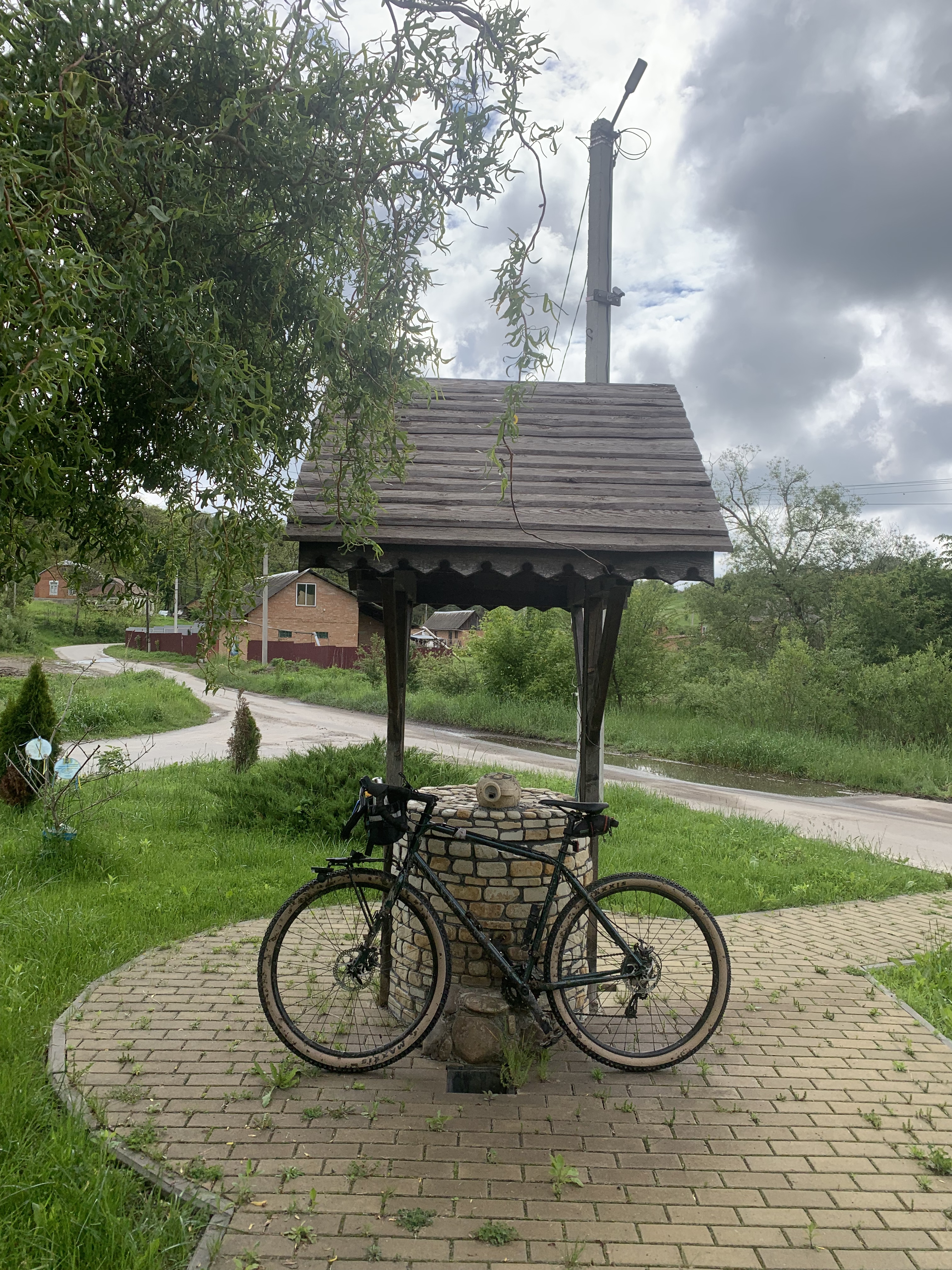
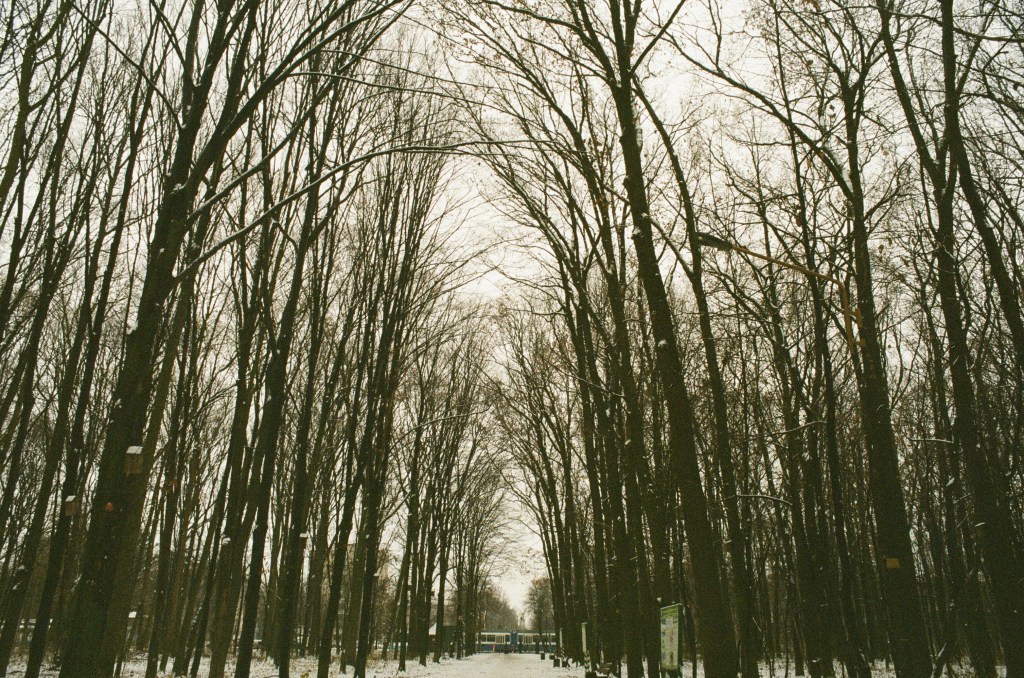
    I’ve always wondered, on an orthodox cross what is the top plank, and what is the bottom diagonal plank? A Renault Duster creeps by as I sit next to my bicycle, speckled in mud, near a dried-up well across from a roughed-up plastic stork and beside a three-metre orthodox cross. Before we left Canada, people told me to stay safe: they’d seen videos of undercover recruiters pushing people off of their bicycles, throwing them in the backs of vans, forcing them to the frontlines. None of them confirmed as real. Meanwhile the colonizer forces a disproportionate number of Indigenous people into the meat grinder, and lies to other racialized foreigners and/or force them to enlist. Would they take my bike with us? Would I resist, throw punches? Would I be able to call my wife? I’d try to convince them we have something in common because I have a thrifted Renault trucker vest. Instead, the Duster dusts its way to Zarvantsi / Зарванці. Is the top plank like the INRI sign? Is the bottom plank where his feet were?

    What is the deal with this stork. Who broke its legs? Two men in fatigues step out of a police cruiser. There’s no one else anywhere close. He says what I assume is “documents please” although I know how to say that and he didn’t say that. I pull the Canadian passport immunity-card from my bike bag. He doesn’t open it and says have a good day with an expressionless face (I crossed into Mexico like that once. Privilege don’t stop at borders, baby). I give my brand-new temporary residency card to the cop. He punches my digits into a tablet and says have a good day with an expressionless face, the type you see in old-timey photos.

    There’s a small tree planted behind the well with names of the dead but I don’t go look at it. Last week, a guy with his wife in Ternopil smiled at me as we walked past on the sidewalk, sun setting in the background of Love Island. A mixture of ‘pleasant greeting’ and ‘what’s his fucking deal?’ zap my neurons simultaneously like two ways of understanding the world trying to fit through the door at the same time and get stuck, all shoulders and elbows. He musta been a new foreigner. People otherwise look at me with general confusion, indifference, or soft multigenerational anger.

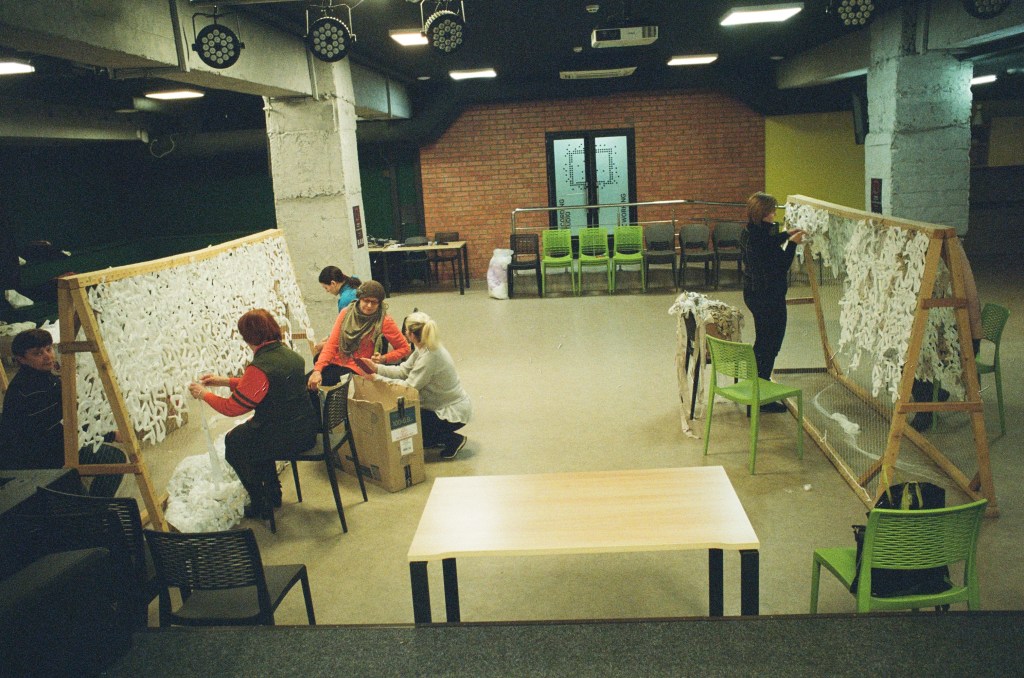
    The women at the sewing group and the women at the net-weaving group say it’s great to have a man, a foreigner in their ranks. I volunteer for the ‘war effort’ and iron with an iron (прасую праскою) adaptive cyber-shorts for my peers who now have fewer limbs than they used to have, than I have. Human psychology isn’t designed to understand such complexity so I tell myself that spending my meagre earnings here on deep-fried dough and steel bicycles is solidarity.

    Friend serving in Kyiv says last week was the worst week in the past three years. I bike through green pastures and blossoming orchards past cows and their tenders. Доброго дня. Добрі. I don’t even consider landmines until the time of writing.

  • Giggling Warm

    I asked if they had beer, and the shop owner said, Yes there is, in one syllable (“Є”). He explained the options. Zero of the words matched with the (if we’re being generous) 750 in my vocabulary. Seeing the empty look in my eyes, my sister-in-law translated. He led me to his beer selection and glassware options, glad to exercise his English-speaking muscles in the Turkish restaurant he proudly runs in small Hnivan. He’s so kind, I think, to speak English to me. But his inflection is flat, normal. I’m just overwhelmed with joy in hearing the civilized intonations of beautiful English that tears form in my eyes.

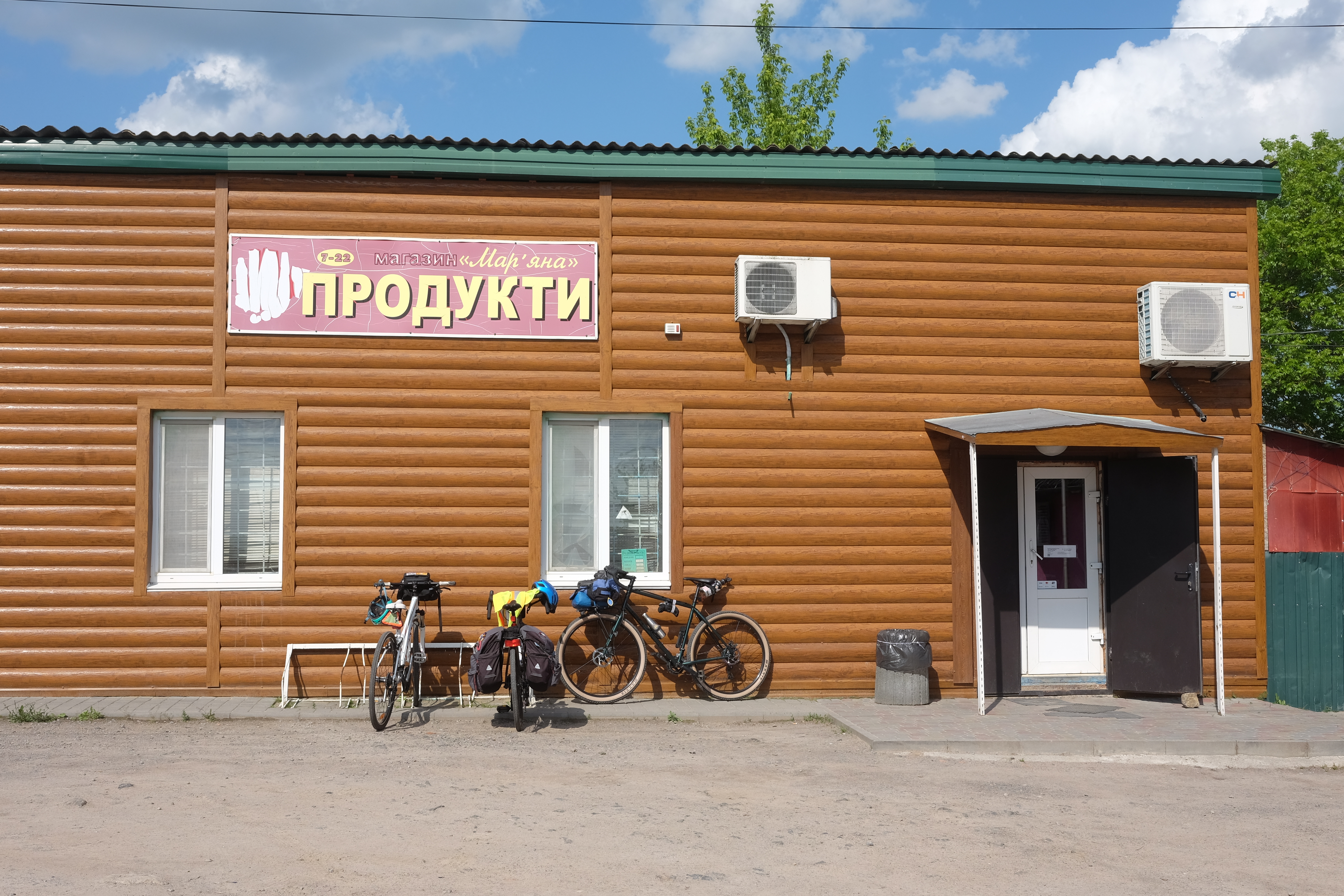
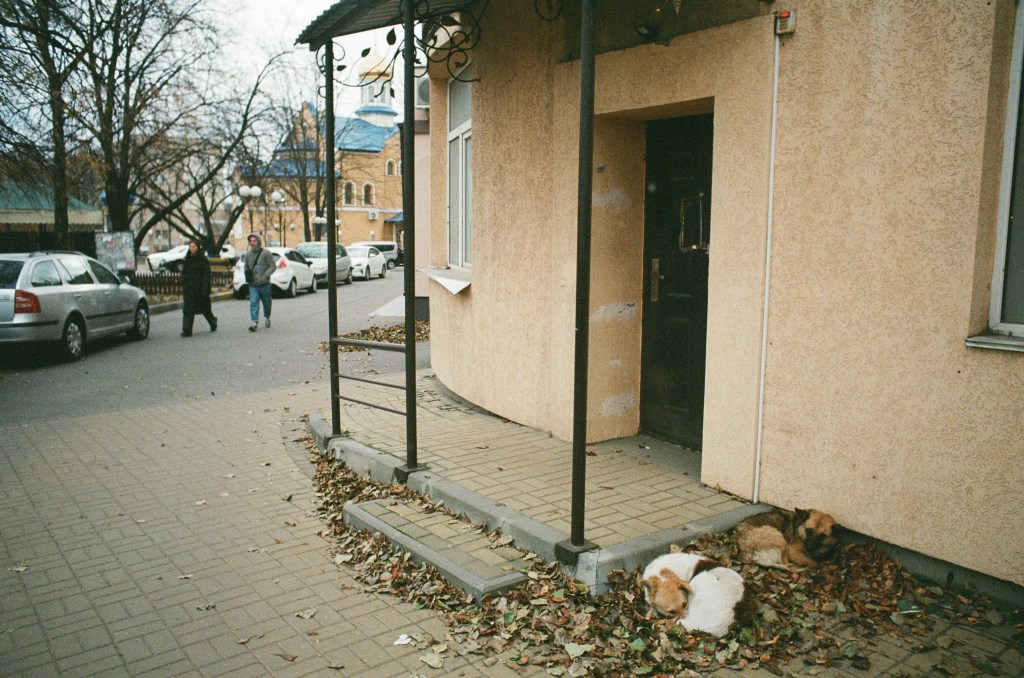
    We roll into Brailiv after napping in the nearby forest. Air raid sirens hang above the town like static electricity, and outside the school girls sing and choreograph movements to “Ukraine Sings”, while stray dogs chuckle and drink from puddles. On this episode of Dissociative Village High School. Outside of the town’s lone shop we discuss where to go next. Two girls on recess coming out of the shop with ice cream muster up the courage to say Hello and Are you from English? before noticing their error and running off giggling, warm. It feels good to be important again.

    The other Canadian Anglophone in online language course has a minor break and says there’s just no logic to the Ukrainian language. The other masc-presenting person who speaks Russian, agrees. The teacher (the only one who actually knows the language aka the only one with authority) kindly disagrees. Just because you don’t understand something, doesn’t mean it’s not logical, she wanted to say. I sit silently: I think he meant, there’s no logic to a world where an Anglophone bothers to learn another language. It doesn’t increase job opportunities, he’d told me. Why bother learning another language when people who don’t speak English are less intelligent, several hundred years of colonialism asks me. This same logic led to where we are now, air raid sirens disrupting chuckling dogs, armymen torturing journalists.

    Small things. How they cement-in these slick tiles in outdoor spaces and then have to build wooden staircases overtop so they aren’t so slippery. How you’re surprised when they decide to actually turn down the house lights at a show. How their driving is so unsafe as to be uncivilized. How the rain slaps on the tin overhang at the apartment. Noticing cultural differences doesn’t count as learning when it is drowning in Canadian exceptionalism. That is, I’m not becoming a better person for seeing the nuanced differences in daily life if I’m not challenging the part of me that is conditioned to think that their differences are inherently worse. When you’re brought up being told your country is the greatest in the world, it takes a long time to decondition the idea that the squealing wheels of the tram-bus isn’t because they are merely a lower order of human.

    All that I have internalized as better, is money. Village roads with more hole than road. Plastic bags for plastic bags. Litter in the pond in the village. Corrupt politicians. Plastic baseboards. All the ways that I remember home as better, more comfortable, more advanced, is merely the presence of disproportionate financial wealth, locally and globally. And in Canada, the presence of wealth is stolen land and its extracted resources. The things I remember from home as better are linked to theft of land, the same theft of land that is actively making people here poorer. Colonialisms upon colonialisms my god.

    It’s certainly ok to feel relieved when you can order a beer naturally and without pain. It’s certainly ok to know that less slippery tiles are better than slippery tiles, even if they don’t look like a high-school drama production’s set of a plantation mansion. What’s not ok is to confuse ill-gotten wealth and language-supremacy with greatness.

    On the way out the door, two beer buzz, he says “See you later alligator”. I giggle, warm. And that’s ok.

  • A No Hope Guarantee

    Everyday, bylaw officers, police officers, and other city employees confiscate and destroy the sentimental and survival belongings of people who are forced to shelter outside across North America. In Canada, people’s internationally recognized human rights are generally enshrined in the Canadian Charter. Tens of thousands of (billable) hours and hundreds of millions of dollars have been spent by governments on lawyers trying to convince old (generally white) judges that their laws are compliant with the Charter, uphold people’s human rights, and are necessary to the functioning of a liveable society. Seemingly, the discussion of general decency is generally ignored and not a consideration in the legal profession.

    For my final paper in law school, I wanted to practice writing an argument that could be put in front of one of those judges that one law in one municipality that allows the confiscation and destruction of people’s belongings violates people’s Charter right to be free from cruel and unusual punishment. It was later published by the school’s student journal. If you’re super bored, you can read it here. Below is the summary of the paper:

    Since the inclusion of section 12 in the Canadian Charter of Rights and Freedoms (the “Charter”), much has been written about cruel and unusual punishment. However, relatively little attention has been paid to the issue of cruel and unusual treatment. As society becomes increasingly regulated and individuals interact with government through administrative bodies with broad discretion, clearer protections against cruel and unusual treatment are necessary to fully realize the intent of the Charter right. Over the past two decades, the City of Victoria has progressively restricted the use of public spaces by individuals experiencing homelessness. While these restrictions have been challenged under various Charter provisions, section 12 has rarely been considered. The 2023 amendments to the City of Victoria’s public space bylaws offer a timely opportunity to consider the application of section 12 in the context of non-punitive administrative decisions that amount to government treatment. Although the test for cruel and unusual treatment requires further clarification, Victoria’s bylaw scheme underscores the need for section 12 analyses to more explicitly address government treatment, or risk neglecting the Charter’s dignity-centred focus.

  • Multi-Millionaire Hockey Player Declines to Comment

    Ovechkin at 2005 World Juniors on the bench, injured

    thirteen lighting of the lamps

    until the Great Eight

    Vladmir’s number-one horse

    surpasses

    the Great One

    Donald’s number two, Governor

    Gretzky merlot to be served in Donald’s Riviera
    Ovi scores and Crimea gets a free PapaJohn’s

    greatest scorers of all time
    one-hundred-twenty empty net goals between them
    mom says they’re both

    cherry pickers

    podcast hosts don’t seem to talk about that


    Connor McJesus roofs

    one in OT
    heals the trade war

    tariffs explode
    supply chains re-weld
    the 49th etched deeper
    illegit sovereignty upheld

    Sid the Kid sings home and native land

    on key

    Fentanyl-czar can now eliminate the scourge

    of drugs over the deeper etch
    street hockey game
    puck rings off the
    iron law of prohibition

    who invented hockey again?


    Vladmir’s anti-propaganda law

    so Provorov boycotts

    Pride Night
    rainbow hockey tape

    two Staals secretly stick-tap

    for Donald executive-ordering
    two genders
    people X off the scoresheet

    Orthodox Pope supports

    the full-scale invasion:
    a conflict against sin
    and pride parades

    but remember it’s the

    Patriarchate
    who is oppressed

    hockey is for everyone

    but especially for
    people who look like
    the two highest scorers of all time

  • Stigma and Lesser-Known Forms of Hidden Homelessness

    This article was co-authored with Jack Davis and Shea Smith and published in Visions Journal. Sadly, Shea unexpectedly passed away a few weeks before it was published. Shea had been targetted by Bylaw and police for years, leading to him being alone and isolated at the time of his death, as is discussed in this article. Shea produced a podcast called the Homeless Idea, which you should listen to. Shea was an amazing advocate, orator, and friend, and he’ll be deeply missed.

    At a Victoria City Council meeting on July 18, 2024, City Councillor Marg Gardiner could not have been clearer in her public approval of stigma. Gardiner said the quiet part out loud when she proclaimed: “There is stigma, and I want there to be stigma, because I don’t want people to think that the use of drugs is normalized for us or our children and grandchildren. That has scared me for years…”1

    This type of fear towards people who use drugs is not usually expressed so openly. Nonetheless, it often informs the decisions of government officials. When city councils vote to close parks to sheltering, when provinces criminalize substance use in public space or ban harm reduction services, the driving force is stigma, NIMBYism (i.e., not in my backyard) and discrimination. This kind of stigma has devastating impacts on people sheltering outside, forcing them to be invisible, both physically and socially.

    Hidden homelessness is often understood as a type of homelessness where people temporarily live with friends or family without guarantee of continued residency (often referred to as “couch surfing”), or when people access short-term accommodations without any sort of legal rights, such as tenancy rights.2

    As two of the authors of this article have lived and living experience of homelessness, however, we argue that stigma, discrimination and NIMBYism against people forced to shelter outside create two different versions of “hidden homelessness” that are not often considered.

    Socially invisible

    First, stigma makes people feel they’ve become, and must stay, “socially invisible.” When elected officials announce their own endorsement of stigma in the public forum, it gives the general public and law enforcement a free pass to openly stigmatize and discriminate when they see people surviving in public space.

    Being chased out from every possible public space, whether by security, police, NIMBY neighbours, park staff or bylaw officers, people experiencing homelessness are being told they are not part of society, they are unwelcome or that they are dangerous and abnormal. Because of this, existing in normal social spaces, such as parks, restaurants or grocery stores, feels unwelcome and unsafe. There’s a feeling that, no matter what you do, no matter how positive you are or how closely you comply with the bylaws, you will not escape judgment, public scorn or violent enforcement.

    This stigma is perfected by law enforcement that devalues people’s personal belongings. The regular impounding and destruction of belongings makes people feel that their material belongings, even the ones required for survival, have no meaning or value. This disconnection from personal belongings changes how a person can relate to others in social situations. Some feel they don’t deserve to make eye contact as people pass them by, for example. Being treated as abnormal and having personal property treated as trash leads to mistrust and fear.

    Out of self-protection, people sheltering outdoors avoid seeking help, accessing services, going to work, going to the doctor or being part of the broader community. It creates the socially hidden homeless: a group of people who either must hide their homelessness or avoid social settings altogether to avoid the harms of stigma.

    Physically invisible

    Second, stigma leads to a form of hidden homelessness among people sheltering outside by forcing them to become physically invisible while living in public space. When politicians like Marg Gardiner openly admit that they support stigma and others repeatedly push for the removal of people experiencing homelessness from their neighbourhood, it leads to policies and bylaws that displace people and permit city workers to destroy their belongings on a daily basis.

    Law enforcement personnel and city workers enforce bylaws in the name of preventing people from becoming “entrenched” as homeless in public places. But we say the bylaws themselves treat unhoused people as less than human. The unhoused community is expected to show respect for anti-sheltering bylaws that force them to constantly move with nowhere to go and prioritize housed neighbours’ recreation over the unhoused community’s literal survival.3

    It is effectively impossible to exist with the items a person needs to survive while complying with bylaws that prohibit daytime sheltering. A person has to make themselves physically invisible or hidden. Those who can’t do so on their own are made invisible by cities through the forceful impounding and destruction of their belongings by law enforcement.

    The end goal of NIMBYism is not having visible, physical homelessness in the neighbourhoods in question. But when there is no other practical place for people to go, the only possible end to NIMBY logic is to lock people up in institutions—that is, criminalization of poverty and homelessness—or to have them become permanently invisible, by increasing their risk of death.4

    This is perhaps the ultimate form of hidden homelessness, and the unspoken goal of politicians who thrive and feed off of fear and perpetuation of discrimination and stigma.

    Let’s make stigma invisible

    When politicians openly declare their disdain for people who use drugs and people experiencing homelessness, stigma is normalized. When stigma is normalized, people are forced into hidden homelessness—either social or physical invisibility, or both.

    If society’s common goal is to end homelessness and reduce the harms related to substance use, which we can hopefully all agree on, what really needs to become invisible are harmful, dated views, like those of Victoria City Councillor Marg Gardiner, and the policies they inform.

    About the authors

    Shea Smith is creator, producer and host of The Homeless Idea podcast. He is a tireless advocate for the human and Charter rights of people in the unhoused community and those who live in supportive housing

    Jack Davis has lived in Victoria for several years and is an outspoken advocate for the unhoused

    Nic Olson is from Treaty 4 Territory and has engaged in anti-poverty work for over a decade