Category: Non-University

  • Giggling Warm

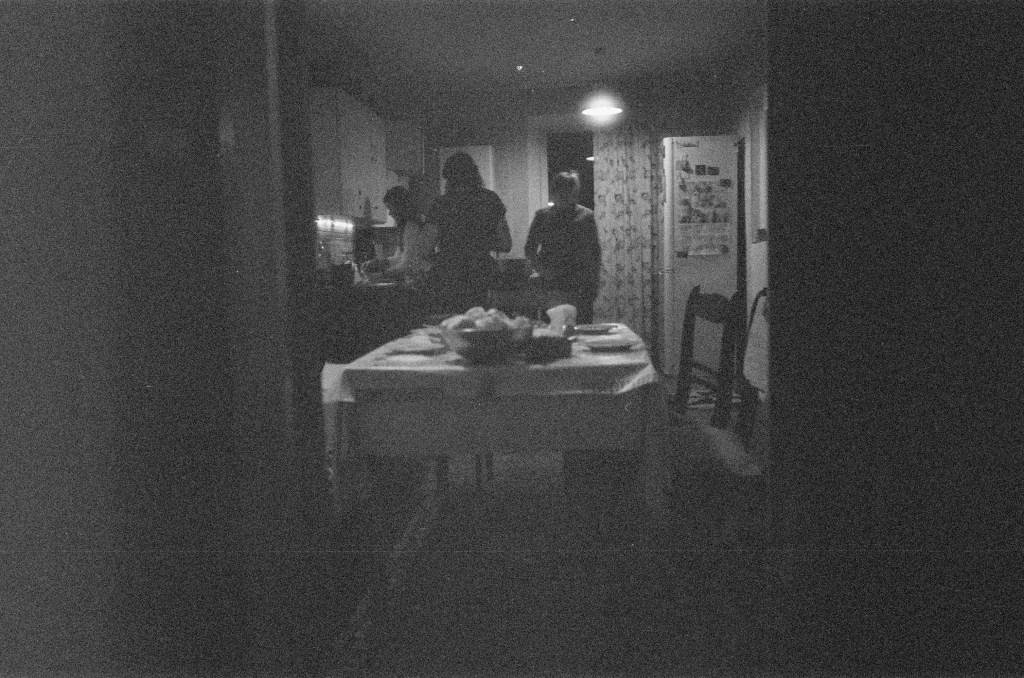
    I asked if they had beer, and the shop owner said, Yes there is, in one syllable (“Đ„”). He explained the options. Zero of the words matched with the (if we’re being generous) 750 in my vocabulary. Seeing the empty look in my eyes, my sister-in-law translated. He led me to his beer selection and glassware options, glad to exercise his English-speaking muscles in the Turkish restaurant he proudly runs in small Hnivan. He’s so kind, I think, to speak English to me. But his inflection is flat, normal. I’m just overwhelmed with joy in hearing the civilized intonations of beautiful English that tears form in my eyes.

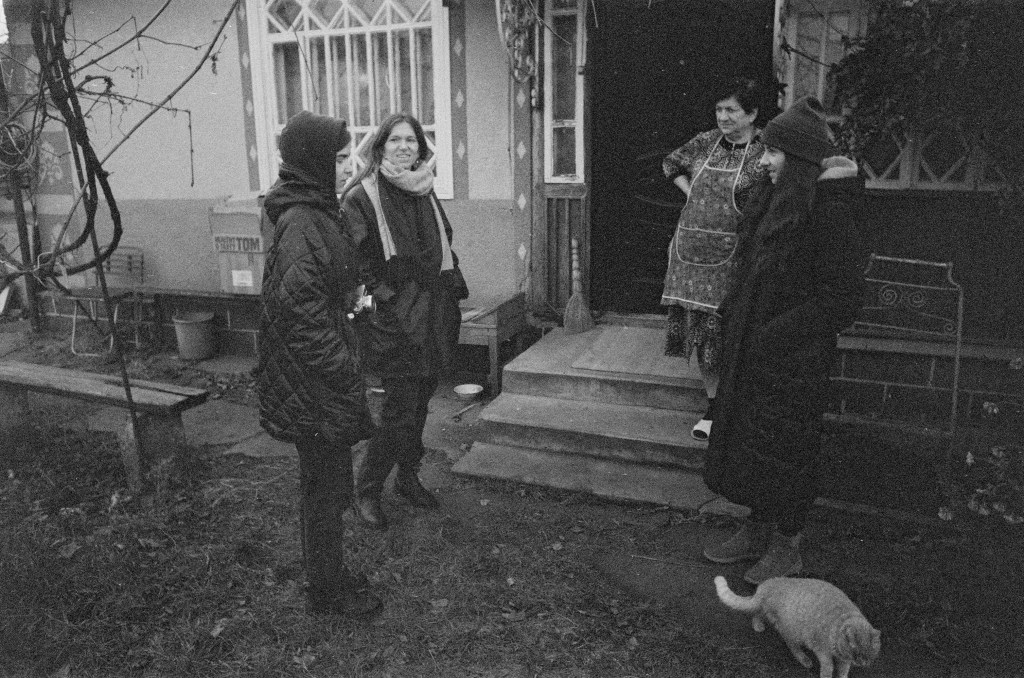
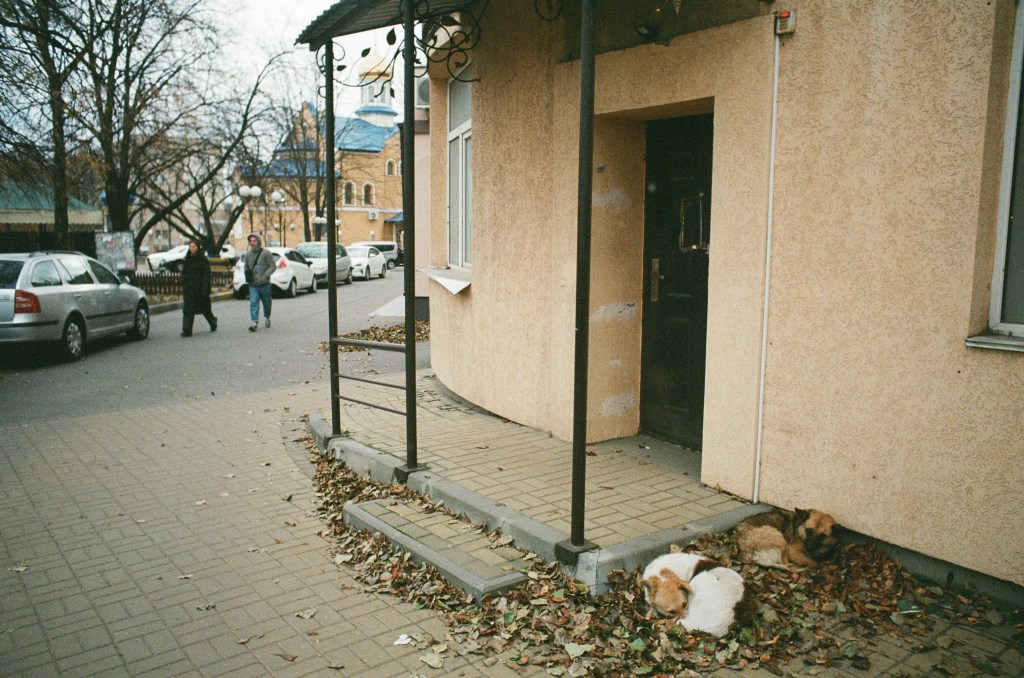
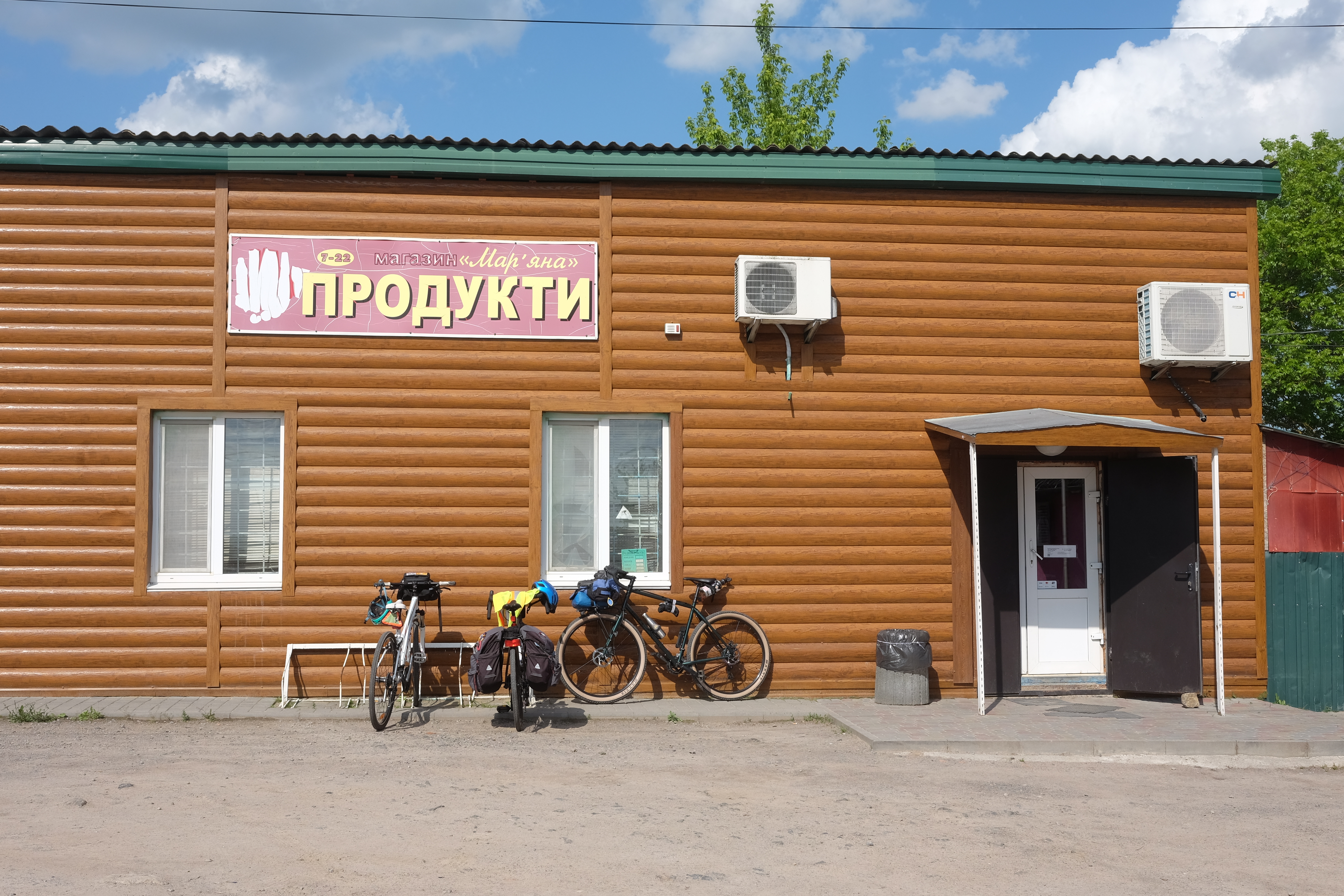
    We roll into Brailiv after napping in the nearby forest. Air raid sirens hang above the town like static electricity, and outside the school girls sing and choreograph movements to “Ukraine Sings”, while stray dogs chuckle and drink from puddles. On this episode of Dissociative Village High School. Outside of the town’s lone shop we discuss where to go next. Two girls on recess coming out of the shop with ice cream muster up the courage to say Hello and Are you from English? before noticing their error and running off giggling, warm. It feels good to be important again.

    The other Canadian Anglophone in online language course has a minor break and says there’s just no logic to the Ukrainian language. The other masc-presenting person who speaks Russian, agrees. The teacher (the only one who actually knows the language aka the only one with authority) kindly disagrees. Just because you don’t understand something, doesn’t mean it’s not logical, she wanted to say. I sit silently: I think he meant, there’s no logic to a world where an Anglophone bothers to learn another language. It doesn’t increase job opportunities, he’d told me. Why bother learning another language when people who don’t speak English are less intelligent, several hundred years of colonialism asks me. This same logic led to where we are now, air raid sirens disrupting chuckling dogs, armymen torturing journalists.

    Small things. How they cement-in these slick tiles in outdoor spaces and then have to build wooden staircases overtop so they aren’t so slippery. How you’re surprised when they decide to actually turn down the house lights at a show. How their driving is so unsafe as to be uncivilized. How the rain slaps on the tin overhang at the apartment. Noticing cultural differences doesn’t count as learning when it is drowning in Canadian exceptionalism. That is, I’m not becoming a better person for seeing the nuanced differences in daily life if I’m not challenging the part of me that is conditioned to think that their differences are inherently worse. When you’re brought up being told your country is the greatest in the world, it takes a long time to decondition the idea that the squealing wheels of the tram-bus isn’t because they are merely a lower order of human.

    All that I have internalized as better, is money. Village roads with more hole than road. Plastic bags for plastic bags. Litter in the pond in the village. Corrupt politicians. Plastic baseboards. All the ways that I remember home as better, more comfortable, more advanced, is merely the presence of disproportionate financial wealth, locally and globally. And in Canada, the presence of wealth is stolen land and its extracted resources. The things I remember from home as better are linked to theft of land, the same theft of land that is actively making people here poorer. Colonialisms upon colonialisms my god.

    It’s certainly ok to feel relieved when you can order a beer naturally and without pain. It’s certainly ok to know that less slippery tiles are better than slippery tiles, even if they don’t look like a high-school drama production’s set of a plantation mansion. What’s not ok is to confuse ill-gotten wealth and language-supremacy with greatness.

    On the way out the door, two beer buzz, he says “See you later alligator”. I giggle, warm. And that’s ok.

  • A No Hope Guarantee

    Everyday, bylaw officers, police officers, and other city employees confiscate and destroy the sentimental and survival belongings of people who are forced to shelter outside across North America. In Canada, people’s internationally recognized human rights are generally enshrined in the Canadian Charter. Tens of thousands of (billable) hours and hundreds of millions of dollars have been spent by governments on lawyers trying to convince old (generally white) judges that their laws are compliant with the Charter, uphold people’s human rights, and are necessary to the functioning of a liveable society. Seemingly, the discussion of general decency is generally ignored and not a consideration in the legal profession.

    For my final paper in law school, I wanted to practice writing an argument that could be put in front of one of those judges that one law in one municipality that allows the confiscation and destruction of people’s belongings violates people’s Charter right to be free from cruel and unusual punishment. It was later published by the school’s student journal. If you’re super bored, you can read it here. Below is the summary of the paper:

    Since the inclusion of section 12 in the Canadian Charter of Rights and Freedoms (the “Charter”), much has been written about cruel and unusual punishment. However, relatively little attention has been paid to the issue of cruel and unusual treatment. As society becomes increasingly regulated and individuals interact with government through administrative bodies with broad discretion, clearer protections against cruel and unusual treatment are necessary to fully realize the intent of the Charter right. Over the past two decades, the City of Victoria has progressively restricted the use of public spaces by individuals experiencing homelessness. While these restrictions have been challenged under various Charter provisions, section 12 has rarely been considered. The 2023 amendments to the City of Victoria’s public space bylaws offer a timely opportunity to consider the application of section 12 in the context of non-punitive administrative decisions that amount to government treatment. Although the test for cruel and unusual treatment requires further clarification, Victoria’s bylaw scheme underscores the need for section 12 analyses to more explicitly address government treatment, or risk neglecting the Charter’s dignity-centred focus.

  • Lyrics of the Month: October 2023 – Destroy All Lawyers

    1 2 3 4
    There’s a plague on the planet
    And they went to law school
    A bunch of hornswogglers
    Treat us like fools
    Know who I’m talkin’ about
    Let me hear you shout
    Destroy all lawyers!
    Destroy all lawyers!
    Bunch of evil weasel poseurs!
    Destroy all lawyers!

    Watch them push them papers
    And bend them laws
    Will the chump with the most money
    Buy them all?
    Grab them by their tails
    Spit in their eyes
    Well they charge you by the minute
    While we get paid by the hour
    What I want to know
    Is how they steal all this power?
    I wanna see them explode
    In every zip code
    Destroy all lawyers!
    Destroy all lawyers!
    Bunch of evil weasel poseurs!
    Destroy all lawyers!

    They got, they got their own bar
    Where they drink pints of greed
    Let’s spay and neuter ’em
    So that they can’t breed
    So let us ??
    Is at the bottom of the sea
    Well they’re not even evil
    Yea they’re worse than devil
    Gonna blow up the planet
    Charge God double
    Wanna see ’em explode
    In every zip code
    Destroy all lawyers!
    Destroy all lawyers!
    Bunch of evil weasel poseurs!
    Destroy all lawyers!

  • White Van Privilege

    White Van Privilege

    White Van Privilege follows the life of one white passenger van from conception to death: first roadtrip to final sale.

    White Van Privilege is a collection of poems that considers the views from the front driver’s seat of a 2008 Chevy Express 15-Passenger van, and from standing next to a tent in a homelessness and drug-toxicity crisis made worse by a global pandemic. Turns out, the views are pretty similar.

    All proceeds go towards my law school education with which I will use to rapidly dismantle the drug war and systemic racism, law by law, regulation by regulation. And/or authenticate your last will and testament. Either way.

    Order today and there’s chance you’ll get it before December 25, but I doubt it.

    ballsofrice.bandcamp.com/merch

  • Homeless Encampments: Connecting Human Rights and Public Health

    “The COVID-19 pandemic is exacerbating long-standing issues related to homelessness, including lack of affordable housing, unemployment, poverty, wealth inequality, and ongoing impacts of colonization. Homelessness is often accompanied by narratives rooted in individual blame, criminalization, and reinforcement of substance use and mental health related stigma. Visible homelessness, in the form of encampments, are manifestations of government policy failures that neglect to uphold the human right to housing, and demonstrate eroding investments in affordable housing, income and systemic supports. Encampments make visible that some in our community lack basic determinants of health such as food, water, sanitation, safety, and the right to self-determination. In order for public health to effectively and equitably promote health and enact commitments to social justice, we argue that public health must adopt a human right to housing and homeless encampments. Embracing a human rights perspective means public health would advocate first and foremost for adequate housing and other resources rooted in self-determination of encampment residents. In the absence of housing, public health would uphold human rights through the provision of public health resources and prohibition on evictions of encampments until adequate housing is available.”

    See the entire article as a PDF here.