Category: Photography

  • The Village God of Labour

    Pasha, on break from installing new rain gutters, looked down at me as I sweat, shovel in hand, knee-deep in Ukraine’s famous black earth. “Crazy Nic” he said. I didn’t expect him to say something in English so I didn’t catch it. He repeated in his own language: «Шалений Нік» (shaleney Nic). Then I understood.
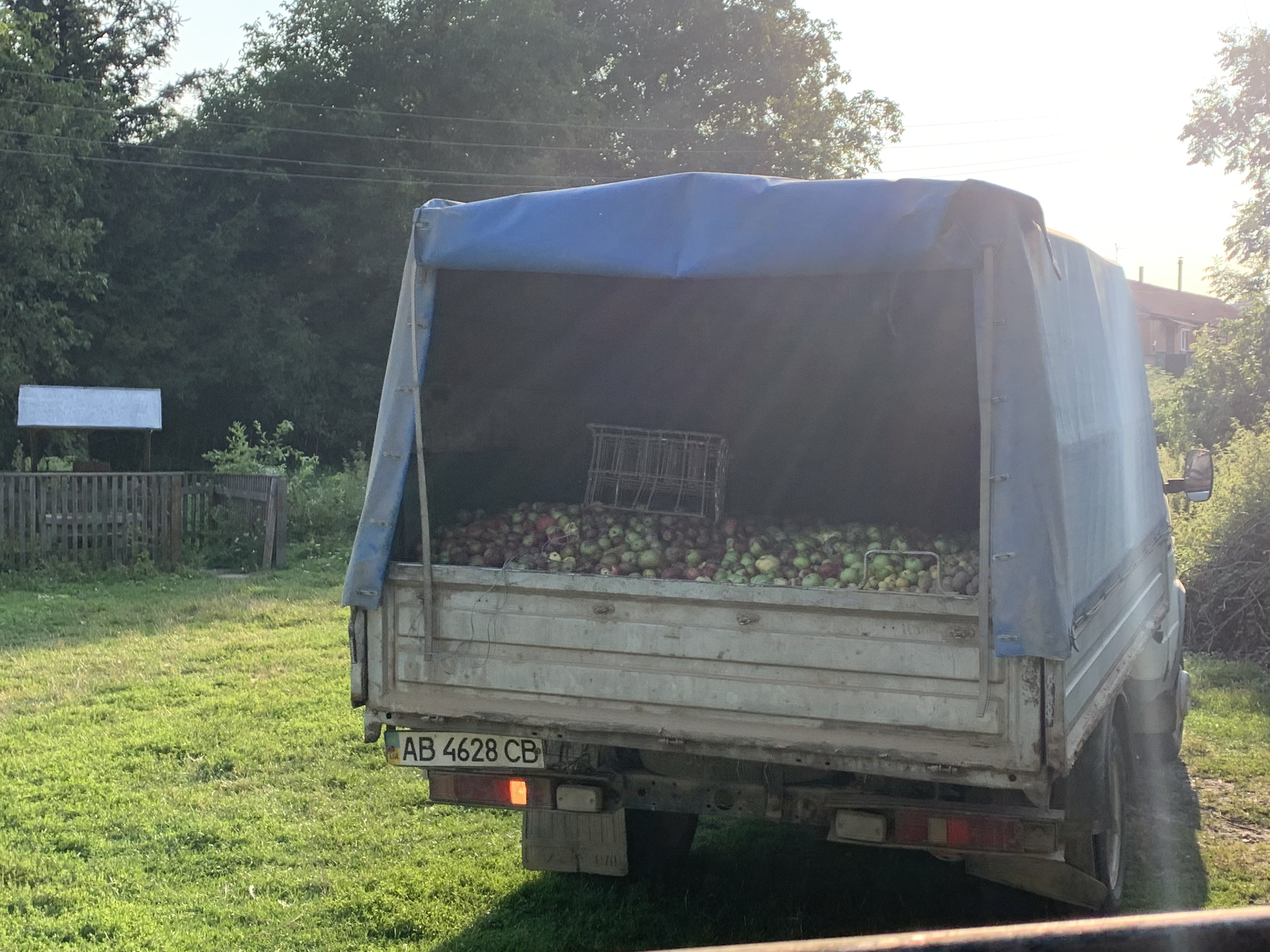
    Olia and I went for a walk to the forest just to see what the sun and wind felt like from from different angles. Upon return, the neighbour, bent ninety-degrees at the waist hoeing potatoes, couldn’t really understand that we came back without foraged mushrooms. A friend has said that she finds it sad that her parents don’t know how to have fun, that every spare moment is spent processing apples, feeding chickens, digging potatoes, canning tomatoes. They would never go to a movie or concert. This weekend, her and I will go to a bar on Friday, a concert on Saturday, and another concert on Sunday. We are of the generation that must always constantly forever be entertained. There’s not much entertainment in the village since the discobar closed.

    Abandoned disco-bar.

    Maybe I should get a job. Selling bread-flavoured sodapop (kvas), selling honey, bike courier, taxi driver, bus driver, teaching english. My anti-capitalist brain tells me that my desire to get a job is just me being insecure about my worth in a society that values you solely based on your salary. My bank account tells me otherwise. And seeing old people sit on the concrete selling wilted plums makes me feel guilty for being previously paid an hourly wage equal to their monthly pension, as though I had something to do with global wealth inequality and amassing of colonial wealth. So I find solace in incorrectly sewing and then seam-ripping adaptive underwear for veterans with prosthetics. Or carrying a long stick with a hook at the end of it, letting gravity pummel me with apples as I shake branches of 100-year-old trees to collect fruit to sell to the juice man for 10₴/kg (25¢/kg). Each metric tonne we collect eases my insecurities, each apple welt brings me closer to the village god of labour — the permanently bent-over бабуся (babusia).

    It wasn’t clear to me why Pasha thought I was crazy. For digging a 60metre long trench from the well to the garden to provide water to the vegetables in increasingly dry summers? Or for moving to Ukraine, spending time in the village when he was just a few years from conscription-age and wanted nothing more than to leave a place he was not legally allowed to leave, being told by his mom that he had to help out his uncle, the only carpenter in town? His uncle is now in jail, having paid a bribe to avoid military service. Now there’s no one to finish the eavestroughs.

    As I Support The Arts by gently bobbing my head to synthesizers pumping through clouds of haze at a festival in Kyiv (a task I convince myself is more important than ever when a culture is under attack), village labour takes on a different tone in occupied and nearly occupied territory. Demining. Reselling pieces of exploded enemy drones as a fundraiser for new defense drones. Trying not to be killed. There’s an absurdity to art in times of war, says author and soldier Artem Chekh. But also that art is the only thing that allows for a “tolerable existence”. Make art not war, sure, but what do you do if someone makes war on you? (Village) God (of Labour) knows that this blog post or a John Lennon song won’t prevent a train car from exploding. But neither will picking metric tonnes of apples.

    As always, if you’re able, please consider donating below, or reach out if you are interested in donating somewhere else.

    Musicians Defend Ukraine

  • Soft multigenerational anger

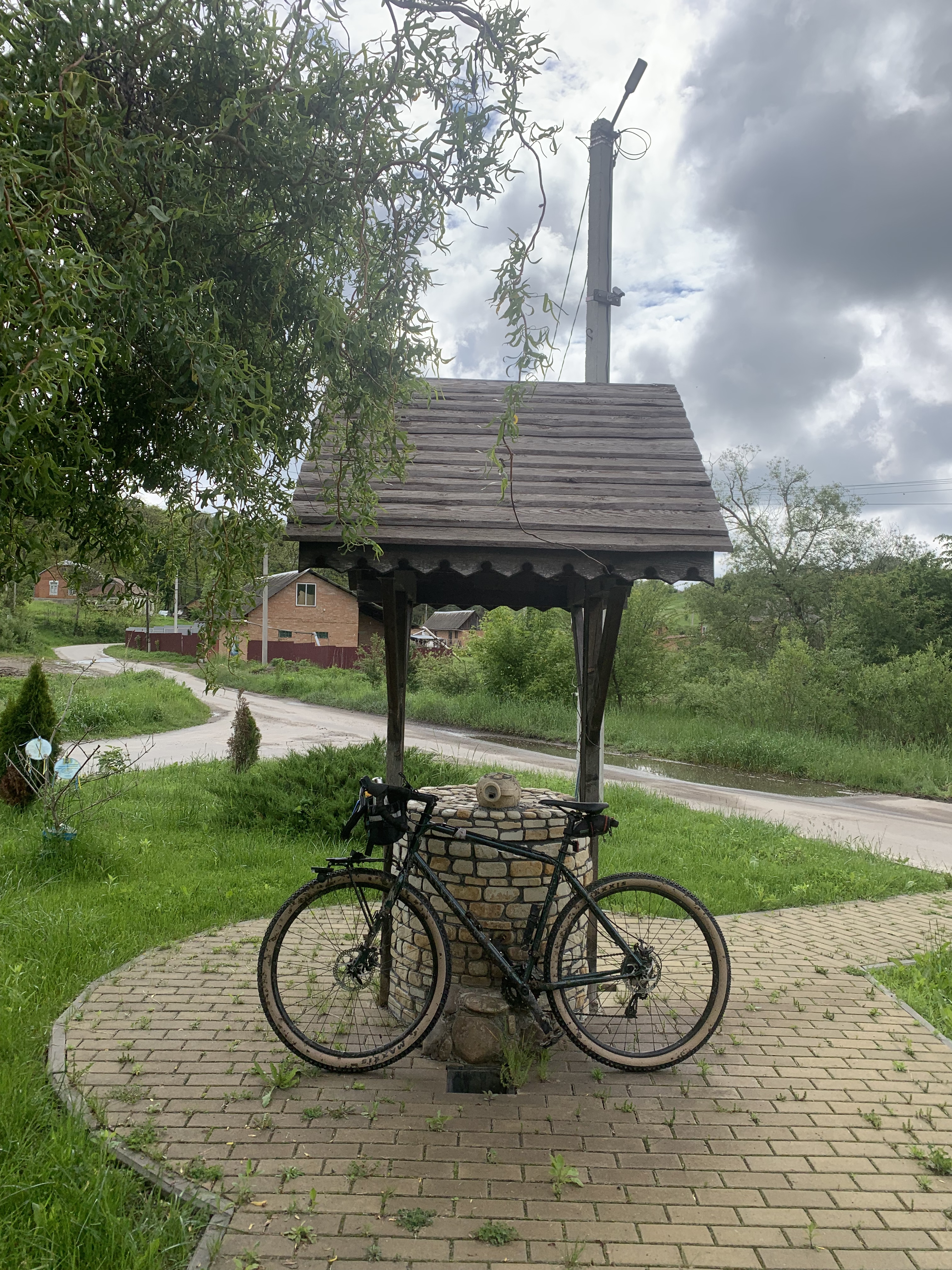
    I’ve always wondered, on an orthodox cross what is the top plank, and what is the bottom diagonal plank? A Renault Duster creeps by as I sit next to my bicycle, speckled in mud, near a dried-up well across from a roughed-up plastic stork and beside a three-metre orthodox cross. Before we left Canada, people told me to stay safe: they’d seen videos of undercover recruiters pushing people off of their bicycles, throwing them in the backs of vans, forcing them to the frontlines. None of them confirmed as real. Meanwhile the colonizer forces a disproportionate number of Indigenous people into the meat grinder, and lies to other racialized foreigners and/or force them to enlist. Would they take my bike with us? Would I resist, throw punches? Would I be able to call my wife? I’d try to convince them we have something in common because I have a thrifted Renault trucker vest. Instead, the Duster dusts its way to Zarvantsi / Зарванці. Is the top plank like the INRI sign? Is the bottom plank where his feet were?

    What is the deal with this stork. Who broke its legs? Two men in fatigues step out of a police cruiser. There’s no one else anywhere close. He says what I assume is “documents please” although I know how to say that and he didn’t say that. I pull the Canadian passport immunity-card from my bike bag. He doesn’t open it and says have a good day with an expressionless face (I crossed into Mexico like that once. Privilege don’t stop at borders, baby). I give my brand-new temporary residency card to the cop. He punches my digits into a tablet and says have a good day with an expressionless face, the type you see in old-timey photos.

    There’s a small tree planted behind the well with names of the dead but I don’t go look at it. Last week, a guy with his wife in Ternopil smiled at me as we walked past on the sidewalk, sun setting in the background of Love Island. A mixture of ‘pleasant greeting’ and ‘what’s his fucking deal?’ zap my neurons simultaneously like two ways of understanding the world trying to fit through the door at the same time and get stuck, all shoulders and elbows. He musta been a new foreigner. People otherwise look at me with general confusion, indifference, or soft multigenerational anger.

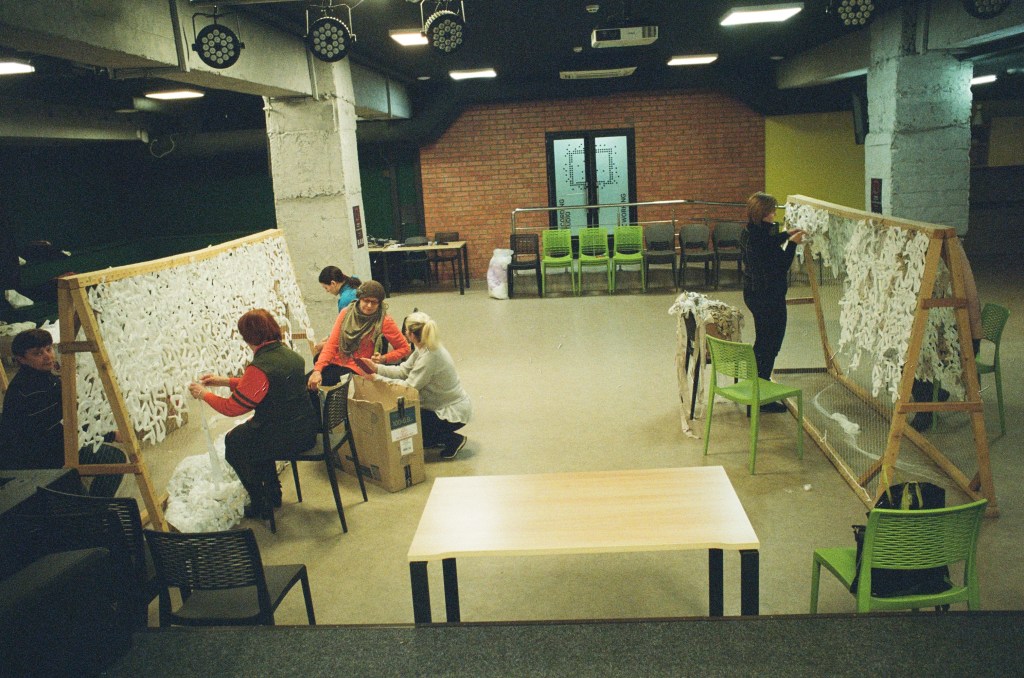
    The women at the sewing group and the women at the net-weaving group say it’s great to have a man, a foreigner in their ranks. I volunteer for the ‘war effort’ and iron with an iron (прасую праскою) adaptive cyber-shorts for my peers who now have fewer limbs than they used to have, than I have. Human psychology isn’t designed to understand such complexity so I tell myself that spending my meagre earnings here on deep-fried dough and steel bicycles is solidarity.

    Friend serving in Kyiv says last week was the worst week in the past three years. I bike through green pastures and blossoming orchards past cows and their tenders. Доброго дня. Добрі. I don’t even consider landmines until the time of writing.

  • Giggling Warm

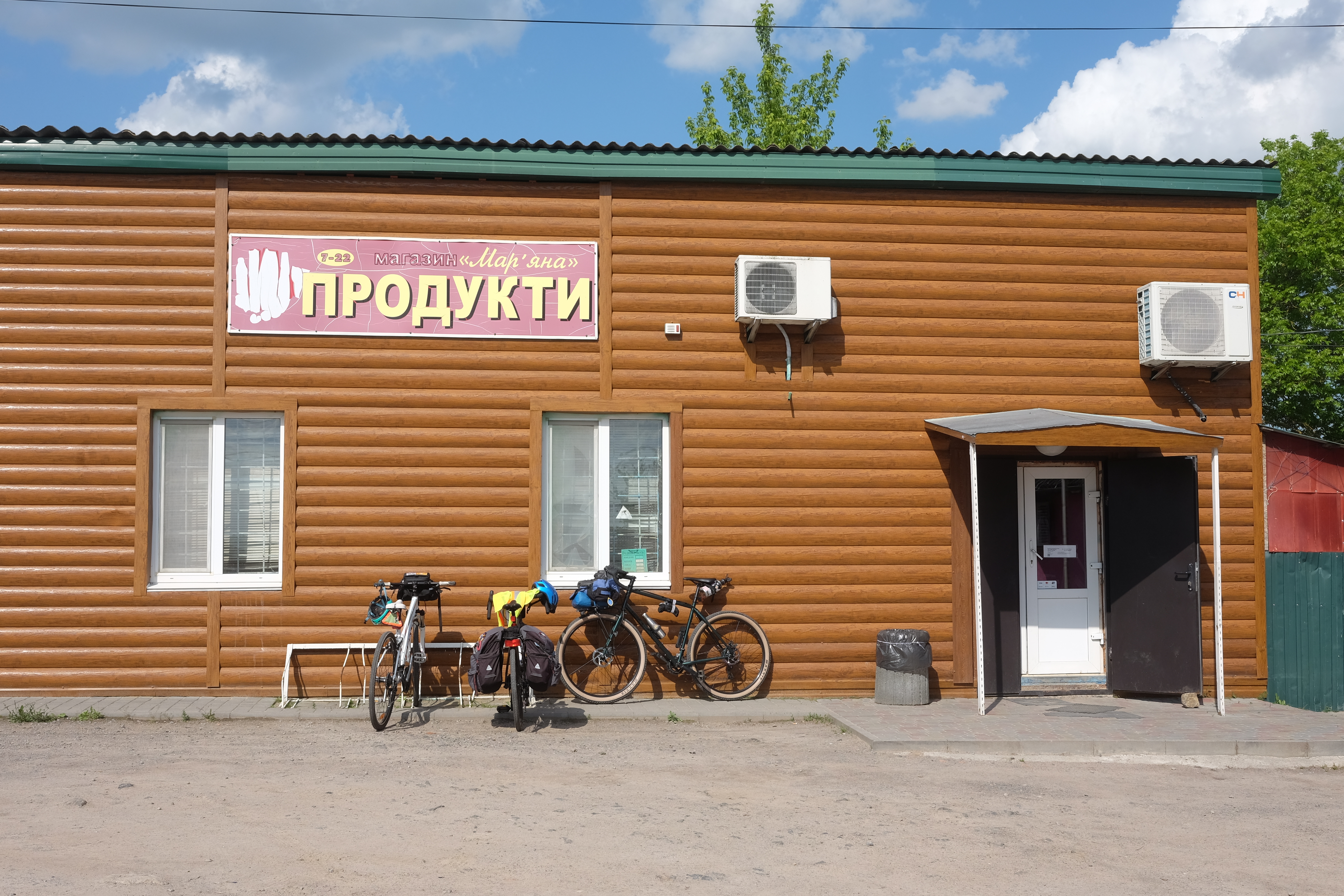
    I asked if they had beer, and the shop owner said, Yes there is, in one syllable (“Є”). He explained the options. Zero of the words matched with the (if we’re being generous) 750 in my vocabulary. Seeing the empty look in my eyes, my sister-in-law translated. He led me to his beer selection and glassware options, glad to exercise his English-speaking muscles in the Turkish restaurant he proudly runs in small Hnivan. He’s so kind, I think, to speak English to me. But his inflection is flat, normal. I’m just overwhelmed with joy in hearing the civilized intonations of beautiful English that tears form in my eyes.

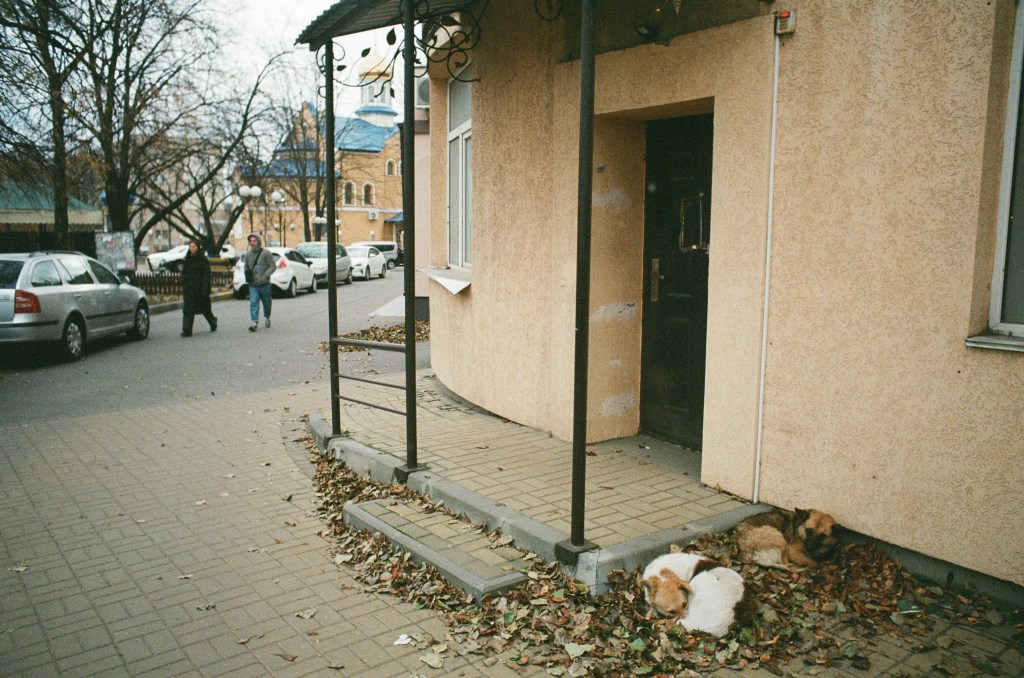
    We roll into Brailiv after napping in the nearby forest. Air raid sirens hang above the town like static electricity, and outside the school girls sing and choreograph movements to “Ukraine Sings”, while stray dogs chuckle and drink from puddles. On this episode of Dissociative Village High School. Outside of the town’s lone shop we discuss where to go next. Two girls on recess coming out of the shop with ice cream muster up the courage to say Hello and Are you from English? before noticing their error and running off giggling, warm. It feels good to be important again.

    The other Canadian Anglophone in online language course has a minor break and says there’s just no logic to the Ukrainian language. The other masc-presenting person who speaks Russian, agrees. The teacher (the only one who actually knows the language aka the only one with authority) kindly disagrees. Just because you don’t understand something, doesn’t mean it’s not logical, she wanted to say. I sit silently: I think he meant, there’s no logic to a world where an Anglophone bothers to learn another language. It doesn’t increase job opportunities, he’d told me. Why bother learning another language when people who don’t speak English are less intelligent, several hundred years of colonialism asks me. This same logic led to where we are now, air raid sirens disrupting chuckling dogs, armymen torturing journalists.

    Small things. How they cement-in these slick tiles in outdoor spaces and then have to build wooden staircases overtop so they aren’t so slippery. How you’re surprised when they decide to actually turn down the house lights at a show. How their driving is so unsafe as to be uncivilized. How the rain slaps on the tin overhang at the apartment. Noticing cultural differences doesn’t count as learning when it is drowning in Canadian exceptionalism. That is, I’m not becoming a better person for seeing the nuanced differences in daily life if I’m not challenging the part of me that is conditioned to think that their differences are inherently worse. When you’re brought up being told your country is the greatest in the world, it takes a long time to decondition the idea that the squealing wheels of the tram-bus isn’t because they are merely a lower order of human.
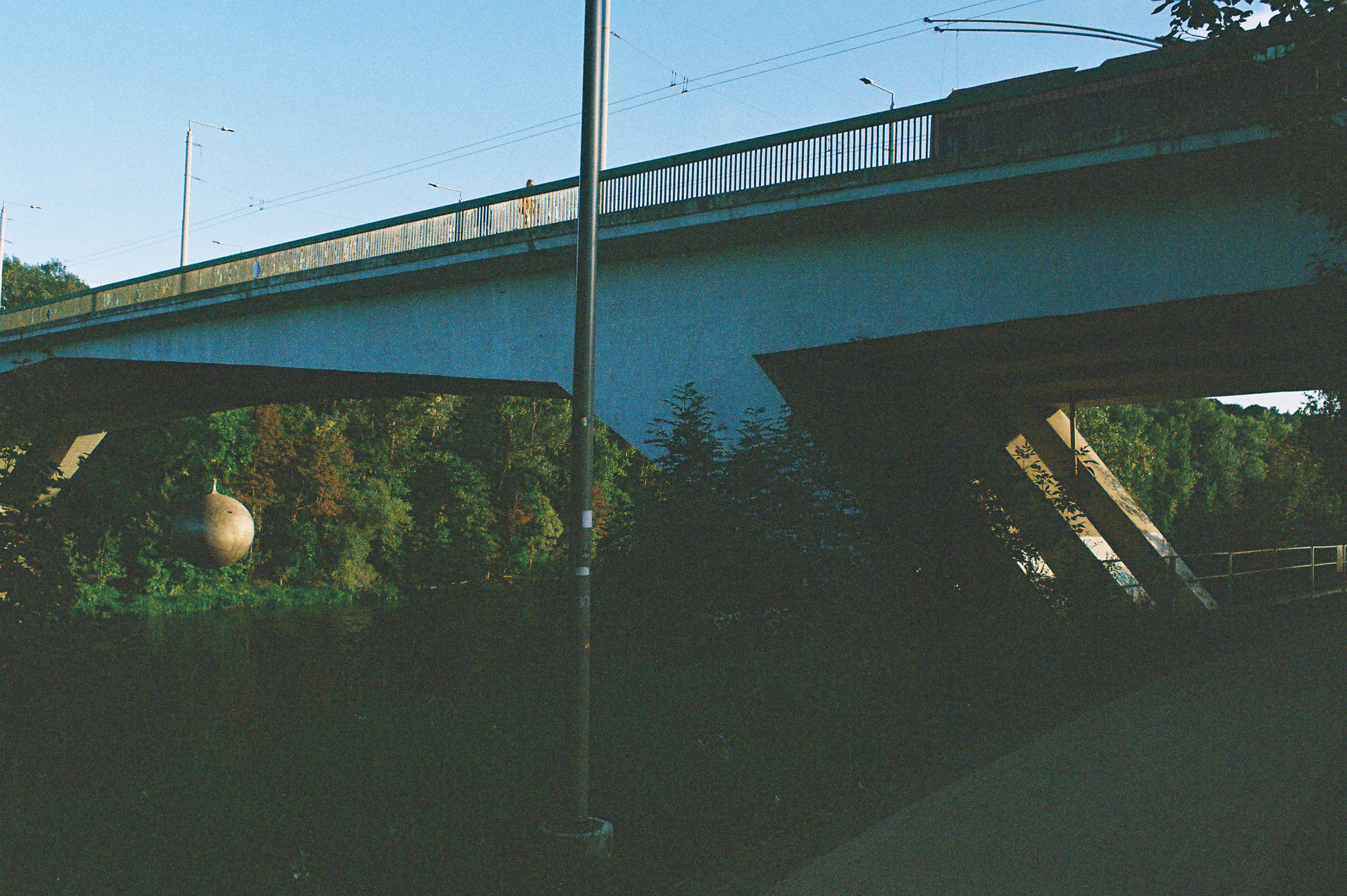
    All that I have internalized as better, is money. Village roads with more hole than road. Plastic bags for plastic bags. Litter in the pond in the village. Corrupt politicians. Plastic baseboards. All the ways that I remember home as better, more comfortable, more advanced, is merely the presence of disproportionate financial wealth, locally and globally. And in Canada, the presence of wealth is stolen land and its extracted resources. The things I remember from home as better are linked to theft of land, the same theft of land that is actively making people here poorer. Colonialisms upon colonialisms my god.

    It’s certainly ok to feel relieved when you can order a beer naturally and without pain. It’s certainly ok to know that less slippery tiles are better than slippery tiles, even if they don’t look like a high-school drama production’s set of a plantation mansion. What’s not ok is to confuse ill-gotten wealth and language-supremacy with greatness.

    On the way out the door, two beer buzz, he says “See you later alligator”. I giggle, warm. And that’s ok.

  • White Van Privilege

    White Van Privilege

    White Van Privilege follows the life of one white passenger van from conception to death: first roadtrip to final sale.

    White Van Privilege is a collection of poems that considers the views from the front driver’s seat of a 2008 Chevy Express 15-Passenger van, and from standing next to a tent in a homelessness and drug-toxicity crisis made worse by a global pandemic. Turns out, the views are pretty similar.

    All proceeds go towards my law school education with which I will use to rapidly dismantle the drug war and systemic racism, law by law, regulation by regulation. And/or authenticate your last will and testament. Either way.

    Order today and there’s chance you’ll get it before December 25, but I doubt it.

    ballsofrice.bandcamp.com/merch