Pasha, on break from installing new rain gutters, looked down at me as I sweat, shovel in hand, knee-deep in Ukraine’s famous black earth. “Crazy Nic” he said. I didn’t expect him to say something in English so I didn’t catch it. He repeated in his own language: «Шалений Нік» (shaleney Nic). Then I understood.
Olia and I went for a walk to the forest just to see what the sun and wind felt like from from different angles. Upon return, the neighbour, bent ninety-degrees at the waist hoeing potatoes, couldn’t really understand that we came back without foraged mushrooms. A friend has said that she finds it sad that her parents don’t know how to have fun, that every spare moment is spent processing apples, feeding chickens, digging potatoes, canning tomatoes. They would never go to a movie or concert. This weekend, her and I will go to a bar on Friday, a concert on Saturday, and another concert on Sunday. We are of the generation that must always constantly forever be entertained. There’s not much entertainment in the village since the discobar closed.

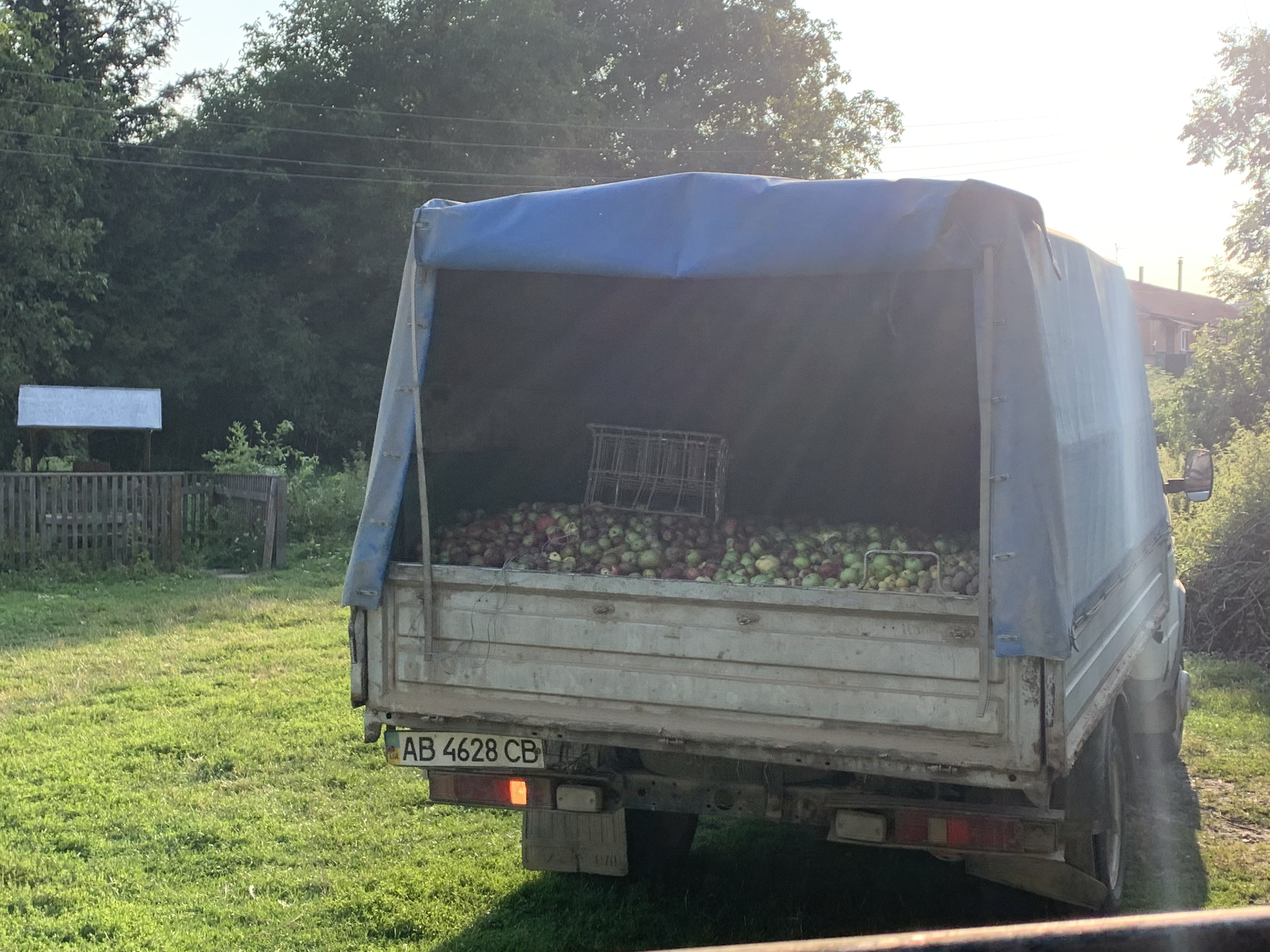
Maybe I should get a job. Selling bread-flavoured sodapop (kvas), selling honey, bike courier, taxi driver, bus driver, teaching english. My anti-capitalist brain tells me that my desire to get a job is just me being insecure about my worth in a society that values you solely based on your salary. My bank account tells me otherwise. And seeing old people sit on the concrete selling wilted plums makes me feel guilty for being previously paid an hourly wage equal to their monthly pension, as though I had something to do with global wealth inequality and amassing of colonial wealth. So I find solace in incorrectly sewing and then seam-ripping adaptive underwear for veterans with prosthetics. Or carrying a long stick with a hook at the end of it, letting gravity pummel me with apples as I shake branches of 100-year-old trees to collect fruit to sell to the juice man for 10₴/kg (25¢/kg). Each metric tonne we collect eases my insecurities, each apple welt brings me closer to the village god of labour — the permanently bent-over бабуся (babusia).
It wasn’t clear to me why Pasha thought I was crazy. For digging a 60metre long trench from the well to the garden to provide water to the vegetables in increasingly dry summers? Or for moving to Ukraine, spending time in the village when he was just a few years from conscription-age and wanted nothing more than to leave a place he was not legally allowed to leave, being told by his mom that he had to help out his uncle, the only carpenter in town? His uncle is now in jail, having paid a bribe to avoid military service. Now there’s no one to finish the eavestroughs.
As I Support The Arts by gently bobbing my head to synthesizers pumping through clouds of haze at a festival in Kyiv (a task I convince myself is more important than ever when a culture is under attack), village labour takes on a different tone in occupied and nearly occupied territory. Demining. Reselling pieces of exploded enemy drones as a fundraiser for new defense drones. Trying not to be killed. There’s an absurdity to art in times of war, says author and soldier Artem Chekh. But also that art is the only thing that allows for a “tolerable existence”. Make art not war, sure, but what do you do if someone makes war on you? (Village) God (of Labour) knows that this blog post or a John Lennon song won’t prevent a train car from exploding. But neither will picking metric tonnes of apples.
As always, if you’re able, please consider donating below, or reach out if you are interested in donating somewhere else.
 Balls of Rice