Author: Nic Olson

  • The Paint Debate

    NYC Painting

    I have never owned a home, though I am in an age where my peers are all deciding that such an investment would benefit them. I find this admirable. Home ownership is something I aspire to greatly, but something which I know with certainty that my immaturity and late-bloomingness make me currently wholly unprepared. So instead I rent. There was a moment in time where I said I would rent comfortably for the rest of my life. I have since revoked this idea, as living in a home with zero roomates and no landlord (except for the bank) sounds somehow pleasant. My views of the following are likely to change in the same way.

    A married couple and I have been having a long-standing debate. This is a debate, to be sure, because both parties are so stubbornly rooted in their belief that no one will change sides, that is, until ten years down the road when I get married and see the lightly-tinted Kokopelli Teal and finally understand how a colour seems to understand my innermost being. I believe that painting the walls of a home or apartment is a painful waste of time and money, and though the debate will remain insignificant forever, the internet is rampant in even less stimulating debate, which therefore legitimizes The Paint Debate. Somehow.

    To state that the flat colour of the wall of a home can even begin to express the personality of a human soul is a degrading to the complexity of personality, which with every individual person would require more than the several thousand shades offered on the Benjamin Moore paint chip section. It would require millions of ever-changing colours; colours that don’t yet exist. The architecture and interior design of a house (if considered art), like the composition of a painting, has thousands of colours and strokes and accents and features that can hint at the surface of a personality, but in no way fully capture the intricacies and oddities of a person. You are not what you own, as Fugazi put it. You are not the colour of paint in your home.

    To state that colour has the ability to change a person’s mood may be a good enough reason to surround yourself in Baby Chick Yellow or the dignified Gibralter Cliffs Grey, though this may hold true only for classes of people who have nothing else to worry about besides superficial interior decorating decisions or choose to paint walls repeatedly to help them forget of their mounting debt. There has undoubtedly been some conclusive research conducted by an authority in psychology stating that certain colours release endorphines and thus, painting a room of a home will guarantee happiness. Similar psychology has been taken up by colonialist governments to bring joy and happiness to the groups of people that they previously assimilated and murdered, and hey, that seemed to work well.

    To claim ownership by way of paint on a wall is an illusional attempt at false ownership. It is evident that a human being purchasing a home will instinctively paint the walls regardless if the colour is something they would like in another context, and this is the Dog Piss Complex. Dogs will urinate on things even when they do not have to urinate, dribbling drops onto a fence or hydrant in a primal game of grafitti, simply to make more things their own. Humans have civilized ways of pissing on property, and thousands of colours of piss to choose from. Besides all this, simply put, ownership is a false dream. Possession is nine-tenths of the law, they say. But to have ownership over something, besides some twentieth century discipline system, is nothing. Ownership is a form of entitlement. A person’s home is no more theirs than it is mine, besides a magical thirty-year digital transaction or physical currency swap. Besides the fact that I would get arrested for attemping to enter it on my own will, and besides the fact that I might be sent to the hospital, mental or otherwise, for painting it myself. Claiming ownership of four walls and a roof is as misguided as claiming ownership over the air that resides within those walls. Painting those walls to mark territory, then, is ineffective.

    To protest living in apartments of drab white walls, to make a statement by painting walls elaborate colours, is something I can support. Change for the sake of change is something I can support. But when change is done in the name of personality, of ownership, of permanent mood-boosters, then I lose interest. Because then reason is out the window, and some bizarre cultural rite of passage comes into play. Adulthood or something.

    All this to say that I have yet to find a reason that I myself would take the time and financial discourse to paint the walls of my dwelling, and that I have a difficult time understanding those that do. There are indeed colours that I prefer over others, this is normal. But to base decisions or pocketbook numbers on these colours, even if they invoke the warmest of positive feeling, is not worth a person’s time. I’d rather sit here for three hours and write a piss-poor essay than waste my time rinsing out brushes and taping floorboard with green tape. The theorized, marginally-improved mood brought by the finished product would not offset the 100% worsened mood caused by mere seconds of the painting process.

    I do not consider it wrong, dumb, superficial, or negatively adult, I just find it as another case of myself not understanding human habit or what has grown to be the norm.

    I think I’m afraid of committment.

    And everyone sits patiently as they wait around for me to grow up.

    NYC Painting 2

  • World Crokinole Championships – The Great Paternal Experiment

    The following piece was featured on Ominocity.com out of Saskatoon, Saskatchewan.

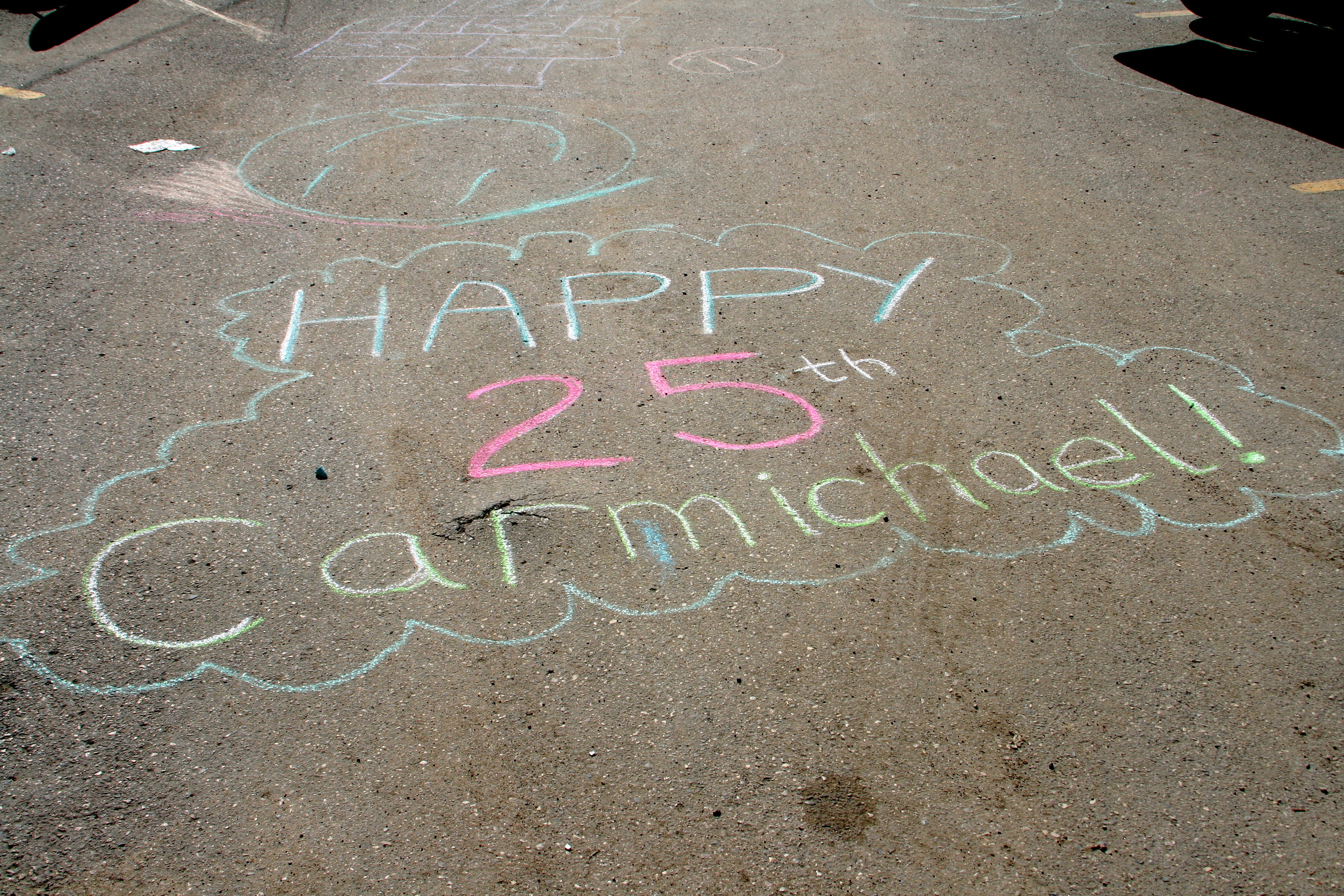
    Crokinole 4

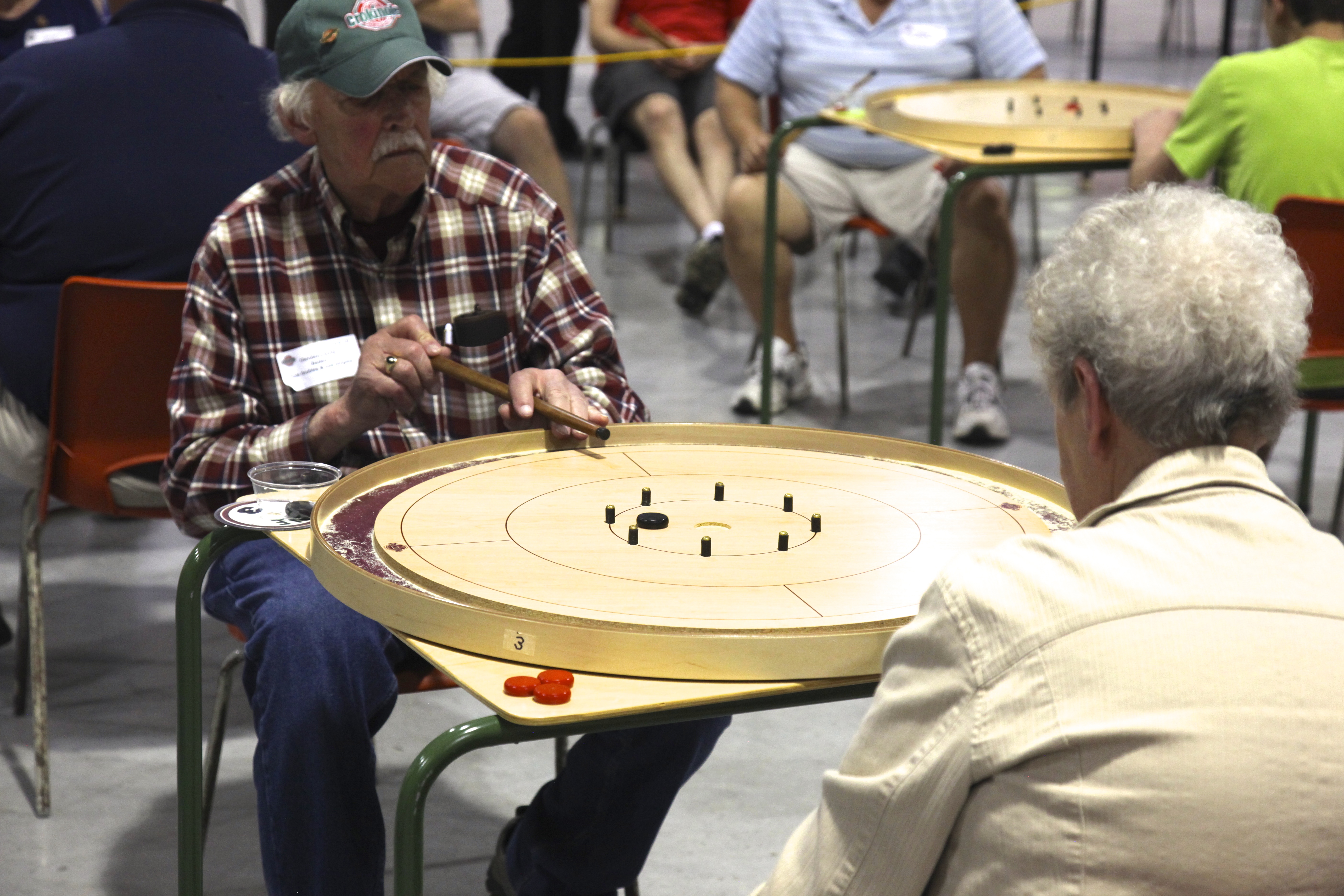
    If you’ve never heard of crokinole, you’re likely not a citizen of the disintegrating Canadian countryside. If you are from the North of 49 and you still haven’t heard of crokinole, you either a) are from a city, b) didn’t grow up in a church, c) grew up with a Nintendo, or d) had unloving parents. Crokinole is a two or four person game played on a 66cm-diameter circular board, in which each player has a determined number of discs made of lathed wood. Each player purposefully flicks these buttons with a finger or wooden cue towards a hole in the centre of the board a quarter-of-an-inch deep and only slightly larger than the button itself, attempting to avoid the eight stationary pegs that guard it like pawns on a chess board.

    It is a game you may have played with your loud uncle and your wrinkly aunt before Christmas dinner. A game in which your grandpa is likely indomitable in between heavy naps in a dusty cardigan on an itchy couch. It is a game you may have tinkered with not knowing the rules (of which there are perhaps three), or, as previously determined, a game you may not have ever even heard of. For myself and my father, it is the game in which we competed at the World Championship in Tavistock, Ontario on June 1, 2013. The World Crokinole Championship, widely revered as the Stanley Cup of crokinole tournaments, the Kentucky Derby of the forefinger stallions, centre stage of peculiar rural males aged 39-88, was obscurity and sportsmanship perfectly defined.

    Crokinole 3

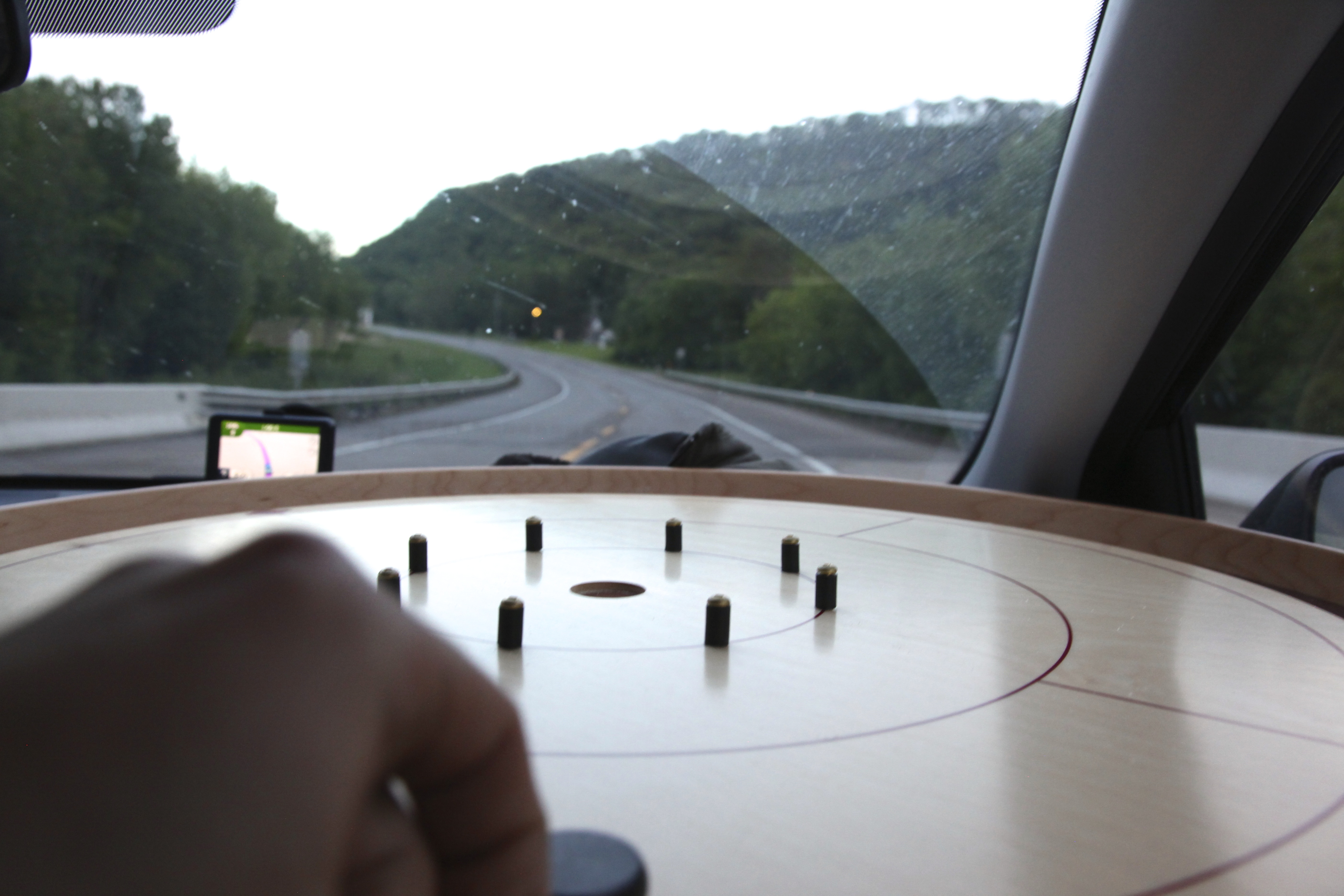
    After driving straight through six U.S. states and two Canadian provinces, we pulled into Tavistock, home of the oldest known crokinole board dating back to 1876. During the drive, when our periods of silence (often reaching four or five hours at a time) were broken, we discussed religion in many contexts; traditional theology, silage and dairy production in devout farming lives, and most importantly, righteousness through crokinole techniques. We made our ecclesiastical pilgrimage, fasting from sleep and whole foods in the goal of reuniting westerly disciples with the holy land of immaculate wooden conception. We were pilgrims for the board of life. The home of crokinole was like I had dreamed it would be as a kid of twenty-four years old. An established farming community of dairy producers with a Main Street that boasted a two-decade old Chinese Restaurant, local credit union, and butcher shop. As one might expect, side streets were dotted with various forms of seniors’ homes.

    Upon arrival, silence was broken by John Schultz, the bald, wiry, extremely pleasant chairman of the World Croknole Championship, asking, “Are you folks here for the crokinole tournament?” He woke us napping in the park—our first hours of horizontal sleep in two days—and it finally occurred to me what we’d done. We drove twenty-two hours for crokinole. In the same amount of time I could’ve driven to the flawless forests of northern California. I could’ve driven to Nunavut. “Holy shit,” I thought, “I could’ve just travelled an hour and played a game of crokinole with my grandpa.” But instead I drove twenty-two hours to play with all of the grandpas of southern Ontario. John Schultz continued to tell us that other folks drove in from Michigan, New York, Ohio, P.E.I.. We cleaned up, grabbed our board, and began our pre-tournament practice on a picnic table in the shade of Queens Park.

    Crokinole 2

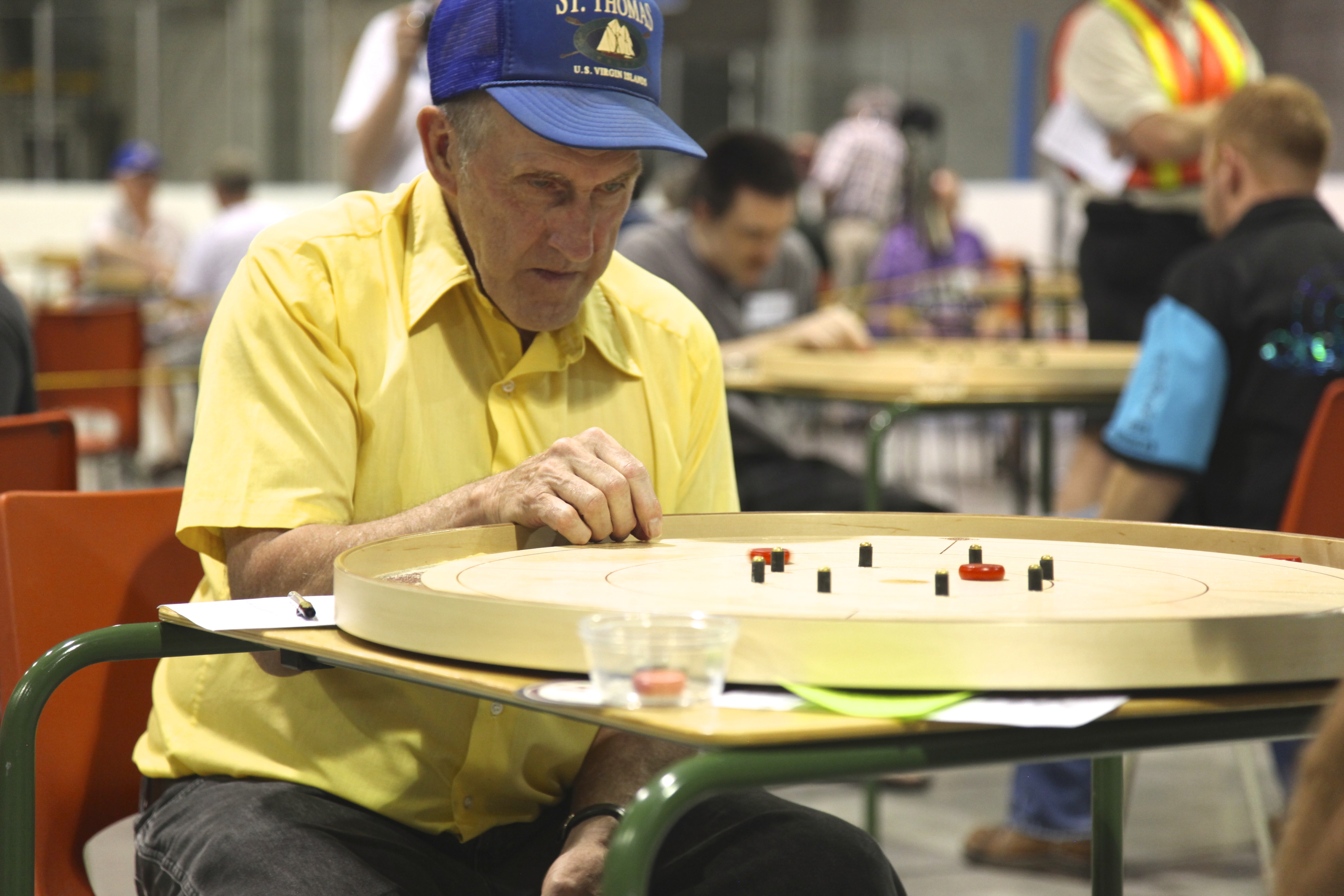
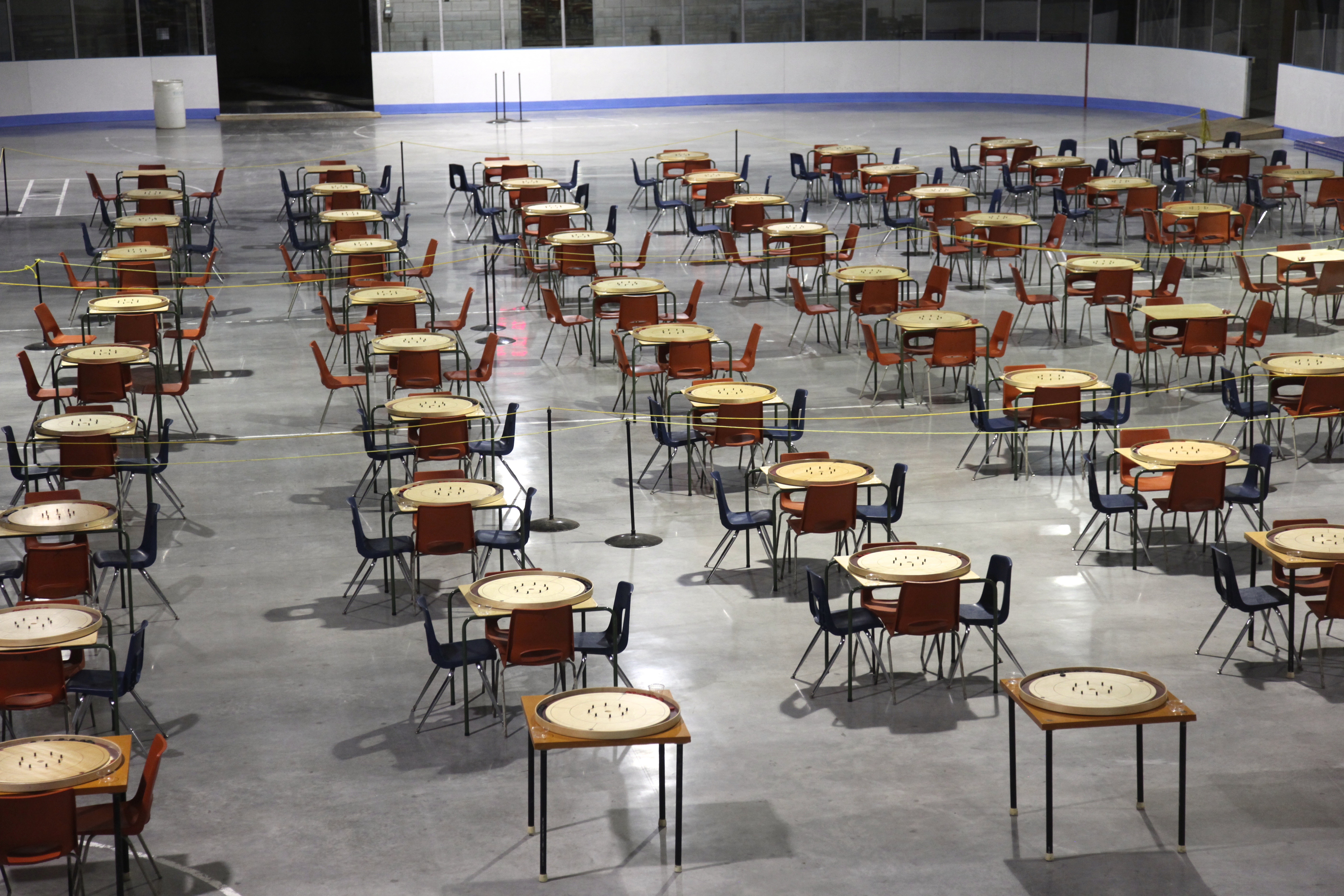
    On Saturday morning when I woke up at dawn to practice before competition began at 8:30, the Ontario air was thick. The humidity weighed down the crokinole buttons as if Mother Nature rubbed each one on her sweaty chest. After a breakfast fine-tuned for finger endurance I followed my father into the arena which housed over 64 freshly waxed, previously untouched boards set up in a grid on the concrete slab of the dried up hockey ice, all partitioned by yellow rope. Competitors and spectators in jean shorts and agriculturally branded caps floated around the merchandise on the perimeter of the rink. Those keen on capitalizing on the lucrative crokinole market sold World Championship t-shirts, ballcaps, boards and board accessories. People competed in the skill shot competition and captured photos of the trophies which were handmade for the event (it is difficult to find a golden plastic figurine of a man playing crokinole to fix to the top of a regular trophy). When tournament competition began, over 280 competitors showed their masterly applied-geometry skills and muscle memory. Each competitor sat down at a table with ten strangers for eight minutes at a time until the horn sounded, shaking hands and wishing luck to people they hoped to blank eight points to zero. Saturated in Canadian politeness, if crokinole isn’t a game of true sportsmanship, it isn’t anything at all.

    Crokinole

    As for the competition, unfortunately the prophesy from aged-competitor Dave Skipper that, “people with beards and moustaches shoot better on these boards,” didn’t prove true. I, one of the few participants with a gnarly beard, didn’t even place in the top half of the draw, and the eventual singles champion, John Conrad, had the hairless face of a teenager, although he was surely approaching his golden years. My father proved to be worthy competition, scaling the ranks of eleventh of 86 participants in the main draw, making the playoff round with the true elites. The final match drew crowds upwards of forty, those who had already sweat through their crokinole team jerseys and sweat bands, groaning and whispering with the final shots of the game. Hands become shaky with such pressure. For one of his final shots, Conrad made an incredible triple take-out. Someone in the crowd said in praise, “I think that was a statement.” In the finals, fathers sat behind the yellow rope, watching sons in competition, offering familial support. My father and I participated in the great paternal experiment that is crokinole.

    While discussing board consistency during the final round, a man who placed third in the doubles category, making no excuses, commented: “The heat, the humidity—we have been battling the elements all day long,” as though it were an Ironman competition, which, in a way it was. The oldest participant was 88-years old, and was celebrating his 50th wedding anniversary at the tournament. He had competed in all previous fifteen World Championships that had been held.

    If it were a televised event, and if the champions were interviewed and asked to describe their feelings, I imagine that like any other world final, they would stumble and mumble in speechlessness. There is no way to properly explain a world championship of any sport, and it only becomes more grueling when it is a celebration of nearly-perfected obscurity. We travelled knowing full-well that we were participating in an antiquated parlour game that itself was competing against screen-bright technologies for space in the family room. What we didn’t know was that our hands would shake and that we would miss shots from fried nerves in a game usually as relaxing as a free massage. We didn’t know that we’d have to practice for another year to make even a dent in the crokinole kingdom.

    Back to the grind. Back to the board.


    Crokinole 1

    Crokinole, The Finals

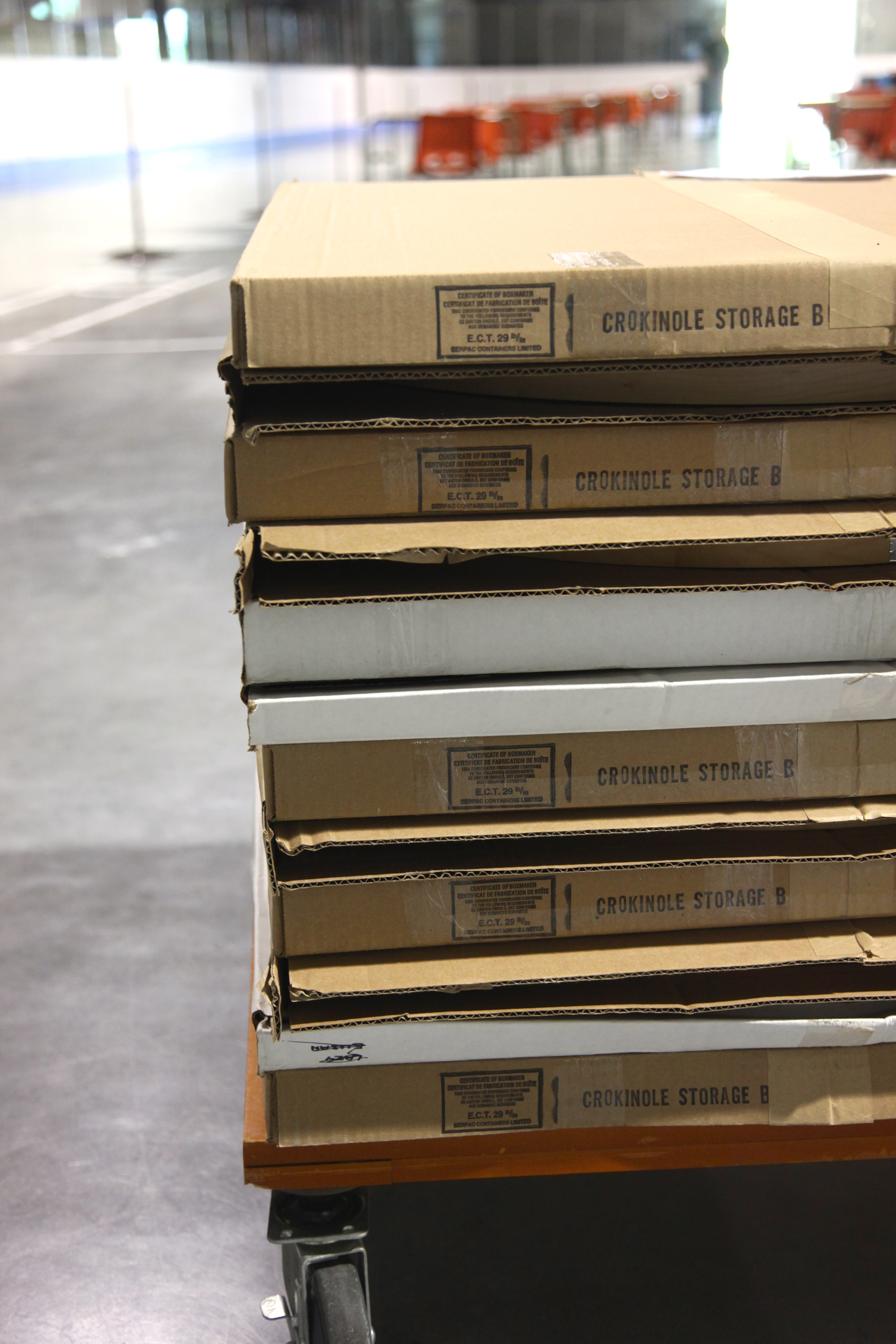
    Crokinole Boxes

    Crokinole Cues

  • Roof-Ready Regina: Let’s Try One More Time

    If you missed it last time, I will be presenting at City Council again this Monday, June 10. Below is what I will say to a a group of dead-eyed politicians. If you want to know more I enjoy discussing the topic, that is, if you enjoy buying me supper or beer. Or even otherwise, I guess.

    It is evident that housing is a priority for city council. The Mayor’s Housing Summit was the necessary first step in presenting new ideas to include in conversations between government and the private and non-profit sectors. Now the conversations begin.

    The City of Regina has come up with plans to improve the rental market housing issue in Regina. Positive steps such as ‘capital incentives which focus on larger projects with a minimum unit number for eligibility for private developers, with no minimum for non-profits,’ (page 19, Appendix A, Comprehensive Housing Strategy Implementation Plan) have been taken. The lack of rental market housing is an evident problem in our city, however the City of Regina does not adequately address rental housing, in that truly affordable rental housing is not given priority. Properly addressing homelessness on a municipal level would include taking the aforementioned plan of capital incentives on larger projects one step further, and requiring developers to include affordable rental housing in medium and large projects as well, as has been done in Montreal. This is a municipal initiative that ensures an adequate percentage of affordable rental housing is produced. Instead of offering incentives to developers, who will build regardless in such times of prosperity, we must take advantage of these times to ensure that affordable rental housing is a part of the plan, thus ensuring that those who need help the most get it.

    Offering incentives to developers for truly affordable housing makes sense. However, offering incentives to developers based on the Plan’s current definition, that is, “at or below market rates”, is not an immediate cure for the lack of affordable housing in the city. The “trickle-down” effect, best-case scenario, would take years to properly represent what CMHC would consider affordable rental housing, that is, “the cost of adequate shelter not exceeding 30% of a person’s income.” Affordable housing is a necessary tool in the transitionary Housing First model, which is briefly mentioned in the Implementation Plan of the Comprehensive Housing Strategy (page 65, Appendix A, Comprehensive Housing Strategy Implementation Plan), and recommended by several presenters at the Housing Summit. Other cities have taken multi-year pledges to eliminate homelessness on a municipal level, taking the lead by advocating strongly to the provincial and federal governments, as well as implementing strategies similar to those that have been previously shared through the Roof-Ready Regina Document, and other community-based initiatives. With the current Implementation Strategy the City of Regina is taking steps to improve the rental housing market, but is effectively doing nothing to eliminate homelessness.

    Please, as you move forward with the Implementation Plan of the Comprehensive Housing Strategy, consider the importance of affordable housing in a healthy community and economy, and take every possible step a municipal government can to address these issues. Homelessness is not just a provincial or federal issue. If homelessness is to be ended, municipal governments must also take significant steps. Let us use what we learned from our counterparts in Calgary and Vancouver and take a proactive step in ending homelessness, starting with a proper plan to include affordable housing.

  • The Melt

    I had a cup of coffee about twenty-one days ago. First time in a decade perhaps. Tasted fine. Any thing tastes good with three scoops of white sugar and some non-dairy powdered whitener. Put that shit on an old worn out boot and you could eat the damn thing. I had coffee because someone needed me to have coffee with them so badly that I didn’t say no. He waited until he had absolutely no choice but to call someone, on the brink of self-destruction sitting in the park.

    I drank beer and pissed in the bush about ten times and eight times respectively on Friday evening. The beer kept appearing in my koozie and I kept talking, more than I may have talked in a few months. The topics discussed included petroleum, Aboriginal rights, picky eaters, atheism, plastic bags (reusable vs. one-time use), housing, Harper, Meatless Mondays and veganism, which brought us back to petroleum and Aboriginal rights and Harper. We cycled into the same topics on purpose, hitting the same points eloquently and intelligently, but after piss number seven the cycles looked more like a child’s attempt a drawing a circle. I held the left wing, and he, the right, and pulled so hard that beers brought left and right so close that they nearly touched.

    Unless we are struck by bicycle-stopping winds that prevent me from delivering two donation receipts to my Alternative Measures Program this week, I am all but in the clear for my passionate stencil incident. “It wasn’t stupid, it was ill-advised,” said the mediator, “You’re not a stupid person.” This was my first mediator/participant that didn’t speak down to me like I was in grade school.

    These stories have a theme. The theme could be summed up by a phrase I heard this week in the alley by our garden.
    Just another goddamn bleeding heart. No perspective or guidance. With no fucking clue.

    And thus I’ve hit a new stage of life. The catatonic stage. The one where you get home from your day and you realize that having two jobs you love isn’t enough to keep you happy. Karma has struck you lonely because of selfishness. Booze, bonfires, television, hobbies cannot distract you like work can, nor can they make you feel like your days are well spent. You are tired but you aren’t too tired. Laying on the couch staring at the ceiling, standing in the kitchen staring out the window, sitting in the work van staring at the steering wheel in the complete city silence, with no thoughts except simultaneous self-pity and self-loathing based on things you can’t even remember. Getting home is no longer a mental relief because you are alone with your thoughts, trying to find where one balances passion and sanity, trying to see how long you can drown your emotional and relational issues in work tasks and busywork. And when those begin to sour then the rest begins to heat up. The coffee melts the mandatory donation receipts and mixes with the beer.

    The spring melt has ended, but the summer brain melt has just begun.

  • Witchcraft on Water

    It is perhaps ill advised to housesit for two different homes in one week when you are overwhelmingly busy and underwhelmingly bothered by relationships. I am here to keep the Communist-inspired dog from getting lonely, but when my only comfort of the weekend becomes playing with and speaking to a self-sufficient domesticated animal who is so deaf that an airhorn in the ear would not even make him lick his balls, then I wonder who is in need of help. Who really needs the doors opened for him here, Fidel?

    But it gave me the chance to witch for water. Grandma suggested I do so, saying that it is in the family’s blood. Water witching consists of walking around in a field with a y-shaped branch or several metal pieces to find underground water, minerals, pirate treasure, sweet sweet oil, underground chocolate rivers, or anything you fancy you are looking for. Many may consider this a form of quackery but I see it as a return to the roots of our ancestors. Ancestors: those people with stolid faces and dirty trousers who were able to plant a garden with seeds they sowed themselves with water they found themselves with a horse they broke themselves, all without the divine assistance of an international database of information, or even a single book, that is unless the Bible explains in detail the steps of dowsing. But as far as I can tell I found a few spots where the water table opened its top to the arms of witchcraft. I cut and bent two metal clothes hangers into L-shaped instruments, walked around in the several-acre long yard with the hangers balancing delicately parallel between my four fingers. Beforehand, to assist with the exhilaration, I downed three beers. I hit a point between two trees (fuck if I even know what kind of trees they were. My ancestors roll in their graves, and only partially because I said ‘fuck’). The arms of my instrument swung inwards and crossed at the point where water was supposedly resting underground. I smiled and maybe even thrust my hips in a south-easternly direction.

    You never know if water-witching is one of those things that you want to happen so bad, that you make it happen. Like seeing a ghost in your grandma’s basement, or feeling the hand of Jesus on your shoulder when singing at church. This system doesn’t work for anything that matters; I want most of Regina City Council to get a raging bout of herpes, but I cannot will my subconscious to tilt my water-witching tools so that those old troglodytes start growing sores on their genitals (I’d have to contract that kind of work out to someone with more hip-thrusting talent.) Positive energy can have a great affect on the outcome or the outlook of many things, I am learning this slowly. Sweet shit, I maybe now know why I have been consistently so miserable.

    I really wanted to find water. And though I don’t have the tools to dig a well to see if my witching was water-worthy, I have faith that it was. That my ancestors left me one useful, practical skill. It will come in handy when we in the lower class don’t have homes and don’t have running water so I can witch for water, potash, oil, an underground bakery, to survive.

    The only thing I can hear is Fidel licking clean his dinner dish on the tile floor, the rest of the neighbourhood is silent. He needs me to feed him, and that’s about it. He can piss in the basement, he can lounge his days away. I need more than to sit around and will for things to happen, lounging decades away with my hands down my pants. Positive energy isn’t that strong. Willing for water to exist, and getting up when I hear the door chime and let the dog outside to take a shit, have two entirely different outcomes.

  • Lyrics of the Month: April 2013 – Rio De San Atlanta, Manitoba

    Our cities seem to function quite the same: sweeping ghettos undeer one big rug makes them easier to contain, so the upper-middle class can sleep (or shop in peace) and convince themselves that “trickle-down” will solve this poverty. Yes, murderers walk our streets and their weapons are their pens, desks, policies and P.R. campaigns (fed by the spoils of war) against the “lazy, shiftless” populations of the poor. This system cannot be reformed…(so how about we try something different?)

    Propagandhi, Rio de San Atlanta, Manitoba, Less Talk More Rock

  • Roof-Ready Regina

    I will be presenting the following at the April 29, 2013 Regina City Council Meeting. If you are also concerned about the fate of housing in Regina, please show up at City Hall at 5:30pm. To read the Roof-Ready Regina – A More Comprehensive Housing Strategy, click here.

    My name is Nicholas Olson. I’m the Frontline Support Manager at Carmichael Outreach. We at Carmichael teamed up with some other organizations and non-profits in Regina such as Regina Anti-Poverty Network, Project People, Making Peace Vigil, Regina Anti-Poverty Ministry, and the Queen City Tenants Association to come up with a document we call Roof-Ready Regina – A More Comprehensive Housing Strategy. In it we highlight several strategies that we as community organizations feel are imperative to add to the proposed housing strategy in order to properly represent all populations in Regina, and thus making the current Comprehensive Housing Strategy truly comprehensive.

    At Carmichael, in dealing with those who are most severely affected by the housing crisis on a daily basis, we have noticed that several things could be improved upon in the Strategy to benefit all populations. First of all, we ask that the ‘Made In Regina’ definition of Affordable Rental Housing, defined in the Comprehensive Housing Strategy as “housing with rents at or below average market rent,” be changed to coincide with the definition provided by the Canada Mortgage and Housing Corporation, or CMHC. Using the ‘market price’ as the marker does not at all ensure affordability. The CMHC definition states that “The cost of adequate shelter should not exceed 30% of household income. Housing which costs less than this is considered affordable.” Using a ‘Made In Regina’ definition will leave many citizens behind. The hourly wage required to afford the average cost of a Regina bachelor apartment is $13/hour, something a cashier or sales clerk working full time at the average rate cannot afford. A single non-journeyman carpenter making the Saskatchewan average of $15.40/hour cannot afford to live in a one-bedroom apartment. In order to properly afford a three-bedroom apartment in Regina, a person must make $23/hour working full time. A single unemployable person on Saskatchewan Assistance gets a shelter allowance of $459 which does not come close to the $633 average cost of a bachelor apartment. A family with 5 or more children on Saskatchewan assistance can barely afford to pay rent on a one bedroom apartment in Regina. All these statistics are based on numbers from the Saskatchewan Wage Survey of 2011 conducted by the Government of Saskatchewan; Saskatchewan Assistance Rates (October 2012); and the CMHC Fall 2012 Rental Market Report. Although average wages in Saskatchewan are at an all-time high, using the CMHC definition for affordable housing shows that many full-time employed citizens can’t afford to pay average rental costs. Basing the Affordable Housing portions of the Housing Strategy on an improper definition prevents equal and effective decisions to be made for those urgently affected by these the housing crisis.

    Secondly, with the limited resources that a city has in the development of housing, affordable or not, we ask that more be done with incentives, programs, policies and bylaws. We would ask that the city require developers to include affordable housing in their plans, or alternatively, to pay into an affordable housing account or ‘Inclusionary Fund’, run and managed by the City and non-profit developers. Similar practices have been in place in Montreal since 2005, which function similar to Density Bonusing. Montreal strongly encourages developers who built over 200 units to include 30% social housing, or if social units are impossible to accommodate, that the developer can offer land, buildings or a financial contribution to the ‘Inclusionary Fund’. This practice, housing groups in Montreal have suggested, will not slow overall development but rather deter gentrification, encourage proper proportions of housing in all neighbourhoods by community minded developers, and encourage social mix in all neighbourhoods as well. Targeting developments that require important zoning changes, and developments that rely on municipal or government land is important to best use the City’s assets and jurisdiction.

    Third, we ask that special needs and supportive housing be given special consideration by the City and that they work with existing subsidized housing providers to look into for opportunities. Carmichael Outreach works with the people most difficult to house in Regina. Many face one or more barriers to finding housing, including: addictions, mental illness, poverty, racism and a less than ideal past rental history. Further, we house a position to help find housing for people living with HIV/AIDS, as many of those diagnosed name homelessness or precarious housing as one of the main barriers to improving their health and adhering to their medication regiment. This is an increasingly important issue considering the fact that Saskatchewan has the highest rates of HIV/AIDS in Canada. It is almost impossible to find housing for these people within the current housing market.  

    Housing First models, where people are given a home as the first step and then programming and outreach is offered second, has been a successful approach to getting and keeping people housed, but it must be done in such a way that support is on-going and constant. It is for this reason that we ask the City of Regina to actively pursue supportive housing opportunities as well as projects that subscribe to a Housing First model as an effective means of housing the difficult to house.

    We believe that these requests, as well as the remaining the requests on the Roof-Ready Regina document are reasonable, attainable, and achievable goals for the City of Regina to ensure all populations are properly represented with adequate forms of housing. 

  • Thou Mayest

    I sat at the Housing Strategy Public Forum at noon on Thursday. I listened as four city representatives justified a plan to fix a city, scrambling to answer questions from dozens of disgruntled citizens about housing in various forms. Providing housing for the masses is a priority, they said. Just not as serious of a priority as making a lot of money, they neglected to say. The citizens’ sole chance to have their say in a hotel lobby with free cookies and Fruitopia. Democracy works.

    I wondered whether it counts as having a voice if you are speaking to those do not have ears.

    So mom said this, “I think sometimes for your own sanity you have to believe that people will eventually do the right thing.” I genuinely do not believe that people will eventually do the right thing. I only have so many years of life to impatiently wait. What I do believe, for my own sanity, is that people can do the right thing. They have the choice and this puts me at greater ease. Because I expect nothing. Because I am not waiting with fried nerves for the sun to explode. I’ve got to believe at least this or I will give up, and giving up is a cardinal sin in anyone that matters. I’ve got to believe this or I might kill myself. I’ve got to believe it whether it is true or not. My cynicisms no longer reach as far as believing in an inherently evil humanity. I have passed that point in my perpetual anger. If that were the case, we would have starved long ago.

    “Maybe it’s true that we are all descended from the restless, the nervous, the criminals, the arguers and brawlers, but also the brave and independent and generous. If our ancestors had not been that, they would have stayed in their home plots in the other world and starved over the squeezed-out soil.”

    -Steinbeck, East of Eden, Chapter 51.2, p568

    Though we may not be an evil people, we are still not inherently good. We are inherently selfish, and this to me seems concrete. As animals we instincually make decisions to ensure our personal survival. This is not news. Humans can, however, break this conditioning. There is still a choice.

    In East of Eden, Lee studies the story of Cain and Abel.

    Lee’s hand shook as he filled the delicate cups. He drank his down in one gulp. “Don’t you see?” he cried. “The American Standard translation orders men to triumph over sin, and you can call sin ignorance. The King James translation makes a promise in ‘Thou shalt,’ meaning that men will surely triumph over sin. But the Hebrew word, the word timshel—‘Thou mayest’—that gives a choice. It might be the most important word in the world. That says the way is open. That throws it right back on a man. For if ‘Thou mayest’—it is also true that ‘Thou mayest not.’ Don’t you see?”

    “Yes, I see. I do see. But you do not believe this is divine law. Why do you feel its importance?”

    “Ah!” said Lee. “I’ve wanted to tell you this for a long time. I even anticipated your questions and I am well prepared. Any writing which has influenced the thinking and the lives of innumerable people is important. Now, there are many millions in the sects and churches who feel the order, ‘Do thou,’ and throw their weight into obedience. And there are millions more who feel predestination in ‘Thou shalt.’ Nothing they may do can interefere with what will be. But ‘Thou mayest’! Why, that makes a man great, that gives him stature with the gods, for in his weakness and his filth and his murder of his brother he has still the great choice. He can choose his course and fight it through and win.” Lee’s voice was a chant of triumph…

    “…This is not theology. I have no bent toward gods. But I have a new love for that gilttering instrument, the human soul. It is a lovely and unique thing in the universe. It is always attacked and never destroyed because ‘Thou mayest.’”

    -Steinbeck, East of Eden, Chapter 24.2, p301-302

    I still question the effectiveness of a political process that is so inane as a public relations exercise with five different types of cookies. I question the point in trying to penetrate the infinitely-layered inclined mountain of bureaucracy. But possibilities arise. Thou mayest triumph over sin. Thou mayest triumph over ignorance. Thou mayest triumph over selfishness. This, Steinbeck says, is what makes man great. He still has “the great choice. He can choose his course and fight it through and win.”

    It doesn’t matter what others do—I must remind myself of this. Letting the poor decisions and monumental mistakes of others disrupt your progress along the line of choice is foolish. Thou mayest. Or thou mayest not, and it doesn’t fucking matter to me what the innumerable morons of the world decide to do. As long as I remember that both they and I had a choice.

    Because ‘Thou mayest.’

  • Four Years of Life

    I have now been alive for four years. I have learned nothing.

    What I have feared when I began writing is potentially coming true. I don’t believe that there is a limit to discovery or knowledge, however there might be a limit to the ways a man can express new knowledge in a certain medium. And although there is no limit to discovery or knowledge, a man can indeed stop learning. I am running out of things to say, because I am only so good at recycling. There are only a few ways to write the same sentence.

    There are perhaps two ways to stop gaining knowledge. Either you eventually come to know absolutely everything, or you come to a point where you give up. Each year, once or twice or sometimes thrice, I come to a point where I contemplate giving up. To stop treading, stop kicking, exhale completely, and sink to the bottom. To retain nothing new because it seems that there is no purpose to do so. Birthdays, and Near-Death Birthdays are sometimes the cause. Just another year since I have seemingly learned nothing, and another year where I contemplate giving up, if I haven’t done so already without even knowing it yet.

    I still climb rockfaces I know might kill me, which suggests I haven’t given up, because it takes a grand effort to even choose a rockface to climb. I still climb rockfaces, which seems to suggest that I haven’t learnt a damn thing since April 17, 2009. By these very facts, I must hold all the knowledge that exists in the world.

    Or my hypothesis is wrong.

    I guess I’ll keep writing.

    “It’s one of the great fallacies, it seems to me,” said Lee, “that time gives much of anything but years and sadness to a man.”

    -Steinbeck, East of Eden, Chapter 30.2, p373