




Category: Photography
-
The Paint Debate
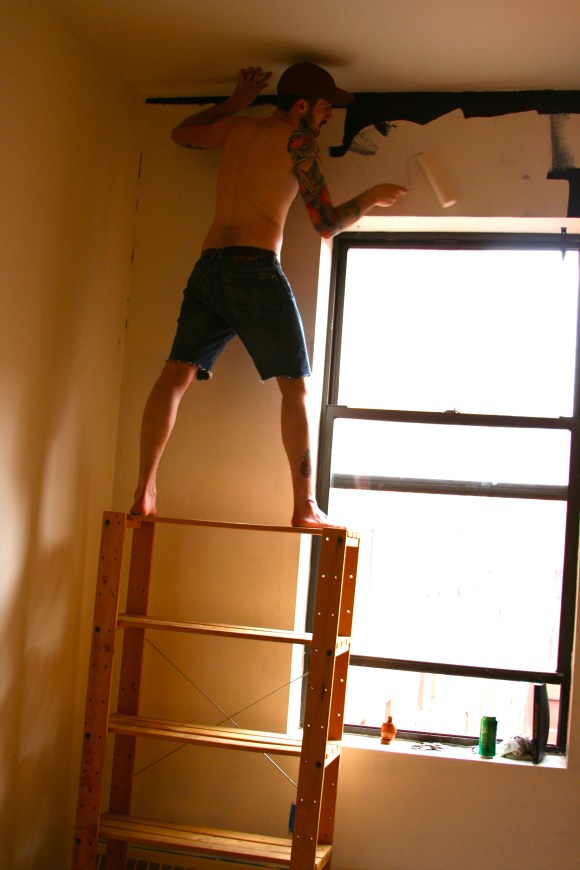
I have never owned a home, though I am in an age where my peers are all deciding that such an investment would benefit them. I find this admirable. Home ownership is something I aspire to greatly, but something which I know with certainty that my immaturity and late-bloomingness make me currently wholly unprepared. So instead I rent. There was a moment in time where I said I would rent comfortably for the rest of my life. I have since revoked this idea, as living in a home with zero roomates and no landlord (except for the bank) sounds somehow pleasant. My views of the following are likely to change in the same way.
A married couple and I have been having a long-standing debate. This is a debate, to be sure, because both parties are so stubbornly rooted in their belief that no one will change sides, that is, until ten years down the road when I get married and see the lightly-tinted Kokopelli Teal and finally understand how a colour seems to understand my innermost being. I believe that painting the walls of a home or apartment is a painful waste of time and money, and though the debate will remain insignificant forever, the internet is rampant in even less stimulating debate, which therefore legitimizes The Paint Debate. Somehow.
To state that the flat colour of the wall of a home can even begin to express the personality of a human soul is a degrading to the complexity of personality, which with every individual person would require more than the several thousand shades offered on the Benjamin Moore paint chip section. It would require millions of ever-changing colours; colours that don’t yet exist. The architecture and interior design of a house (if considered art), like the composition of a painting, has thousands of colours and strokes and accents and features that can hint at the surface of a personality, but in no way fully capture the intricacies and oddities of a person. You are not what you own, as Fugazi put it. You are not the colour of paint in your home.
To state that colour has the ability to change a person’s mood may be a good enough reason to surround yourself in Baby Chick Yellow or the dignified Gibralter Cliffs Grey, though this may hold true only for classes of people who have nothing else to worry about besides superficial interior decorating decisions or choose to paint walls repeatedly to help them forget of their mounting debt. There has undoubtedly been some conclusive research conducted by an authority in psychology stating that certain colours release endorphines and thus, painting a room of a home will guarantee happiness. Similar psychology has been taken up by colonialist governments to bring joy and happiness to the groups of people that they previously assimilated and murdered, and hey, that seemed to work well.
To claim ownership by way of paint on a wall is an illusional attempt at false ownership. It is evident that a human being purchasing a home will instinctively paint the walls regardless if the colour is something they would like in another context, and this is the Dog Piss Complex. Dogs will urinate on things even when they do not have to urinate, dribbling drops onto a fence or hydrant in a primal game of grafitti, simply to make more things their own. Humans have civilized ways of pissing on property, and thousands of colours of piss to choose from. Besides all this, simply put, ownership is a false dream. Possession is nine-tenths of the law, they say. But to have ownership over something, besides some twentieth century discipline system, is nothing. Ownership is a form of entitlement. A person’s home is no more theirs than it is mine, besides a magical thirty-year digital transaction or physical currency swap. Besides the fact that I would get arrested for attemping to enter it on my own will, and besides the fact that I might be sent to the hospital, mental or otherwise, for painting it myself. Claiming ownership of four walls and a roof is as misguided as claiming ownership over the air that resides within those walls. Painting those walls to mark territory, then, is ineffective.
To protest living in apartments of drab white walls, to make a statement by painting walls elaborate colours, is something I can support. Change for the sake of change is something I can support. But when change is done in the name of personality, of ownership, of permanent mood-boosters, then I lose interest. Because then reason is out the window, and some bizarre cultural rite of passage comes into play. Adulthood or something.
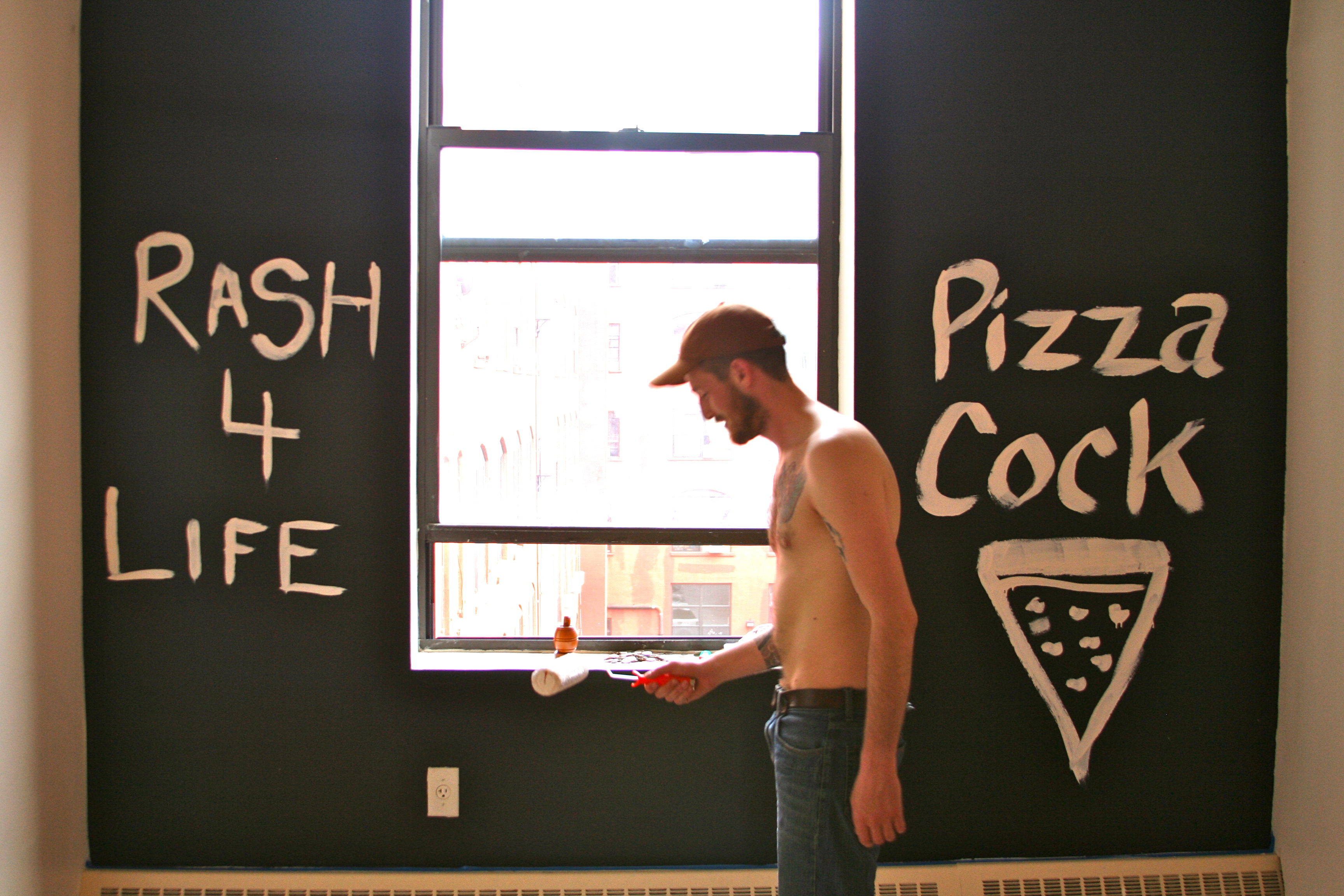
All this to say that I have yet to find a reason that I myself would take the time and financial discourse to paint the walls of my dwelling, and that I have a difficult time understanding those that do. There are indeed colours that I prefer over others, this is normal. But to base decisions or pocketbook numbers on these colours, even if they invoke the warmest of positive feeling, is not worth a person’s time. I’d rather sit here for three hours and write a piss-poor essay than waste my time rinsing out brushes and taping floorboard with green tape. The theorized, marginally-improved mood brought by the finished product would not offset the 100% worsened mood caused by mere seconds of the painting process.
I do not consider it wrong, dumb, superficial, or negatively adult, I just find it as another case of myself not understanding human habit or what has grown to be the norm.
I think I’m afraid of committment.
And everyone sits patiently as they wait around for me to grow up.

-
World Crokinole Championships – The Great Paternal Experiment
The following piece was featured on Ominocity.com out of Saskatoon, Saskatchewan.

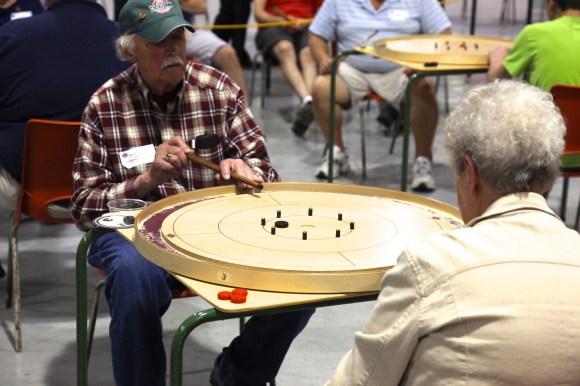
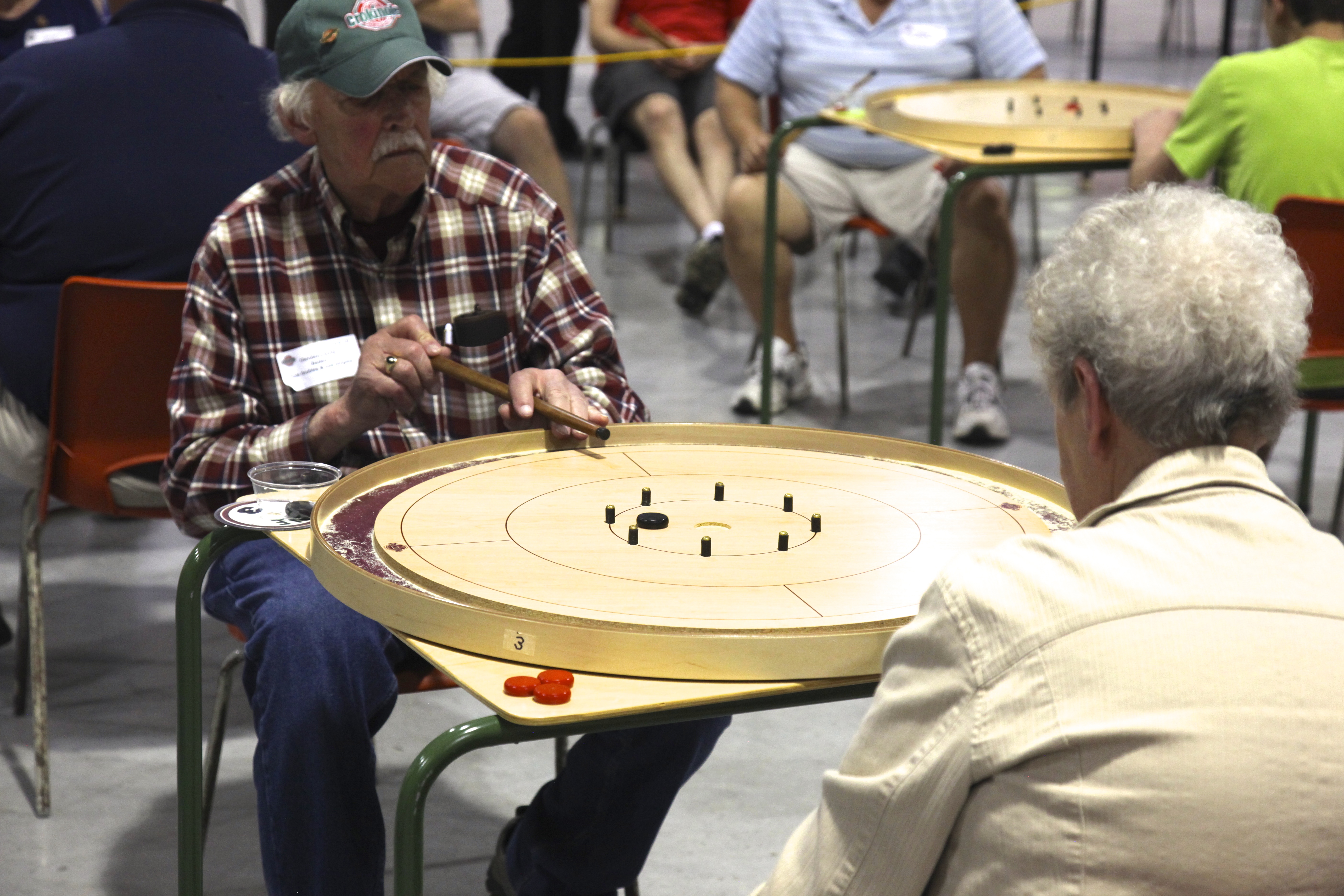
If you’ve never heard of crokinole, you’re likely not a citizen of the disintegrating Canadian countryside. If you are from the North of 49 and you still haven’t heard of crokinole, you either a) are from a city, b) didn’t grow up in a church, c) grew up with a Nintendo, or d) had unloving parents. Crokinole is a two or four person game played on a 66cm-diameter circular board, in which each player has a determined number of discs made of lathed wood. Each player purposefully flicks these buttons with a finger or wooden cue towards a hole in the centre of the board a quarter-of-an-inch deep and only slightly larger than the button itself, attempting to avoid the eight stationary pegs that guard it like pawns on a chess board.
It is a game you may have played with your loud uncle and your wrinkly aunt before Christmas dinner. A game in which your grandpa is likely indomitable in between heavy naps in a dusty cardigan on an itchy couch. It is a game you may have tinkered with not knowing the rules (of which there are perhaps three), or, as previously determined, a game you may not have ever even heard of. For myself and my father, it is the game in which we competed at the World Championship in Tavistock, Ontario on June 1, 2013. The World Crokinole Championship, widely revered as the Stanley Cup of crokinole tournaments, the Kentucky Derby of the forefinger stallions, centre stage of peculiar rural males aged 39-88, was obscurity and sportsmanship perfectly defined.

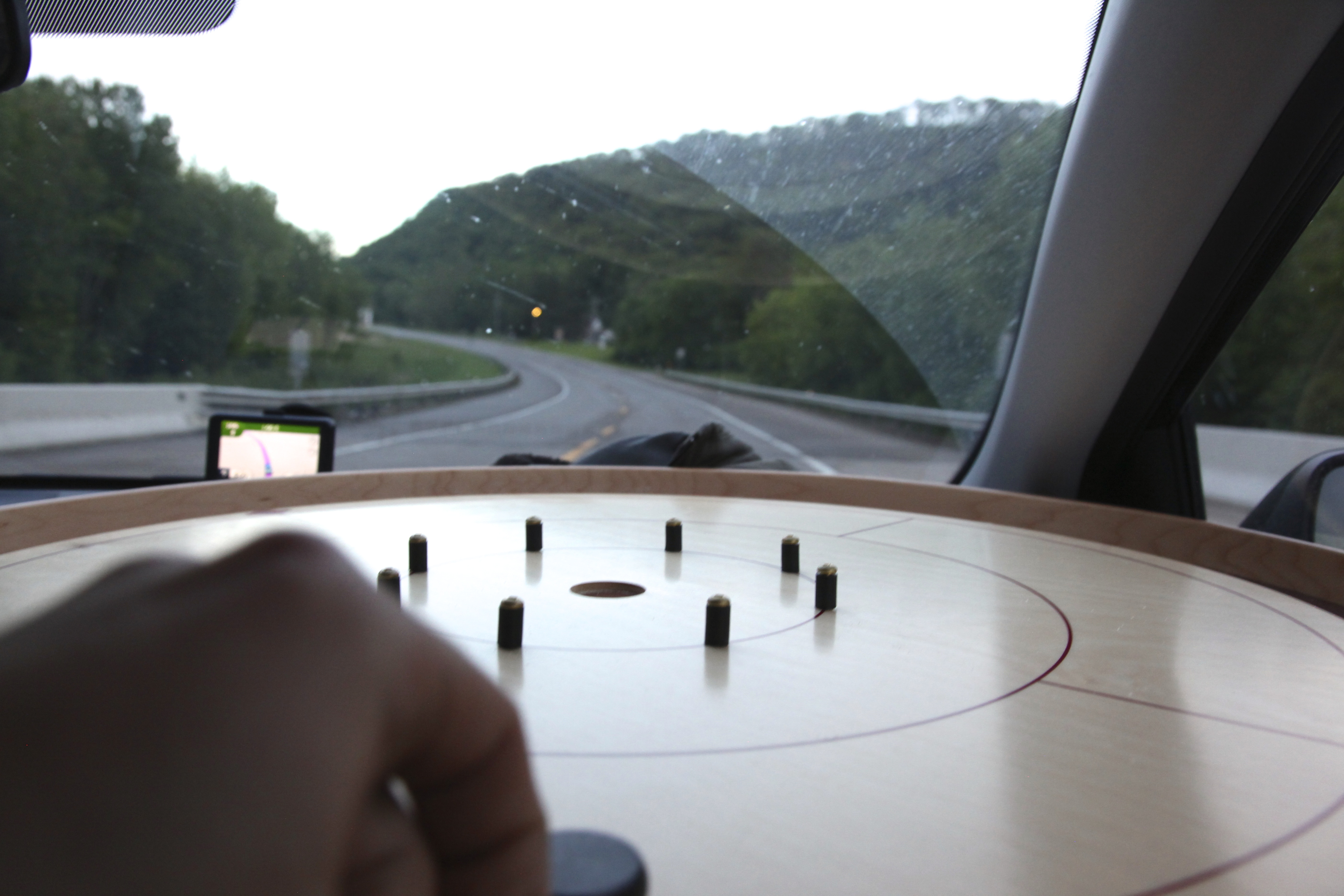
After driving straight through six U.S. states and two Canadian provinces, we pulled into Tavistock, home of the oldest known crokinole board dating back to 1876. During the drive, when our periods of silence (often reaching four or five hours at a time) were broken, we discussed religion in many contexts; traditional theology, silage and dairy production in devout farming lives, and most importantly, righteousness through crokinole techniques. We made our ecclesiastical pilgrimage, fasting from sleep and whole foods in the goal of reuniting westerly disciples with the holy land of immaculate wooden conception. We were pilgrims for the board of life. The home of crokinole was like I had dreamed it would be as a kid of twenty-four years old. An established farming community of dairy producers with a Main Street that boasted a two-decade old Chinese Restaurant, local credit union, and butcher shop. As one might expect, side streets were dotted with various forms of seniors’ homes.
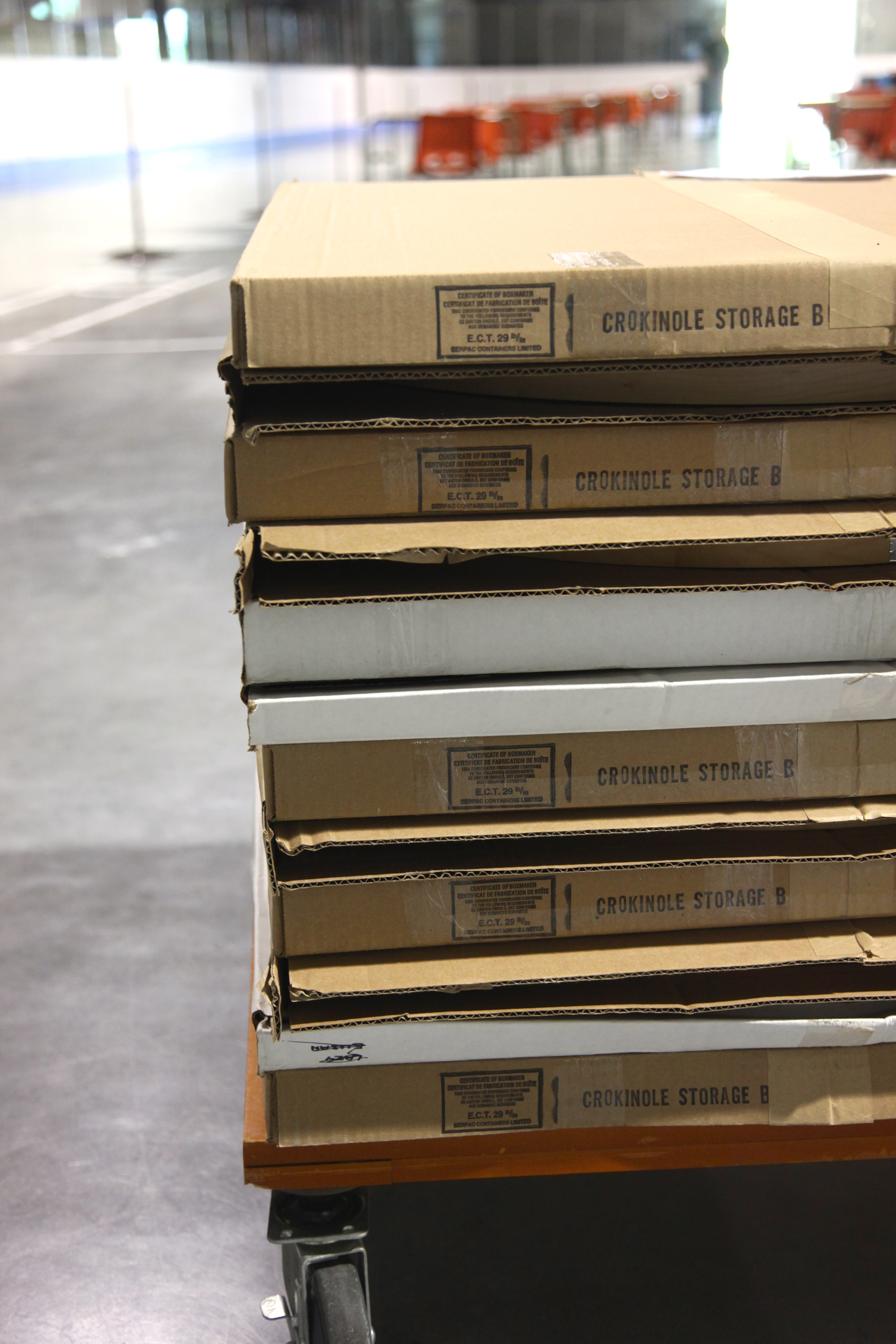
Upon arrival, silence was broken by John Schultz, the bald, wiry, extremely pleasant chairman of the World Croknole Championship, asking, “Are you folks here for the crokinole tournament?” He woke us napping in the park—our first hours of horizontal sleep in two days—and it finally occurred to me what we’d done. We drove twenty-two hours for crokinole. In the same amount of time I could’ve driven to the flawless forests of northern California. I could’ve driven to Nunavut. “Holy shit,” I thought, “I could’ve just travelled an hour and played a game of crokinole with my grandpa.” But instead I drove twenty-two hours to play with all of the grandpas of southern Ontario. John Schultz continued to tell us that other folks drove in from Michigan, New York, Ohio, P.E.I.. We cleaned up, grabbed our board, and began our pre-tournament practice on a picnic table in the shade of Queens Park.

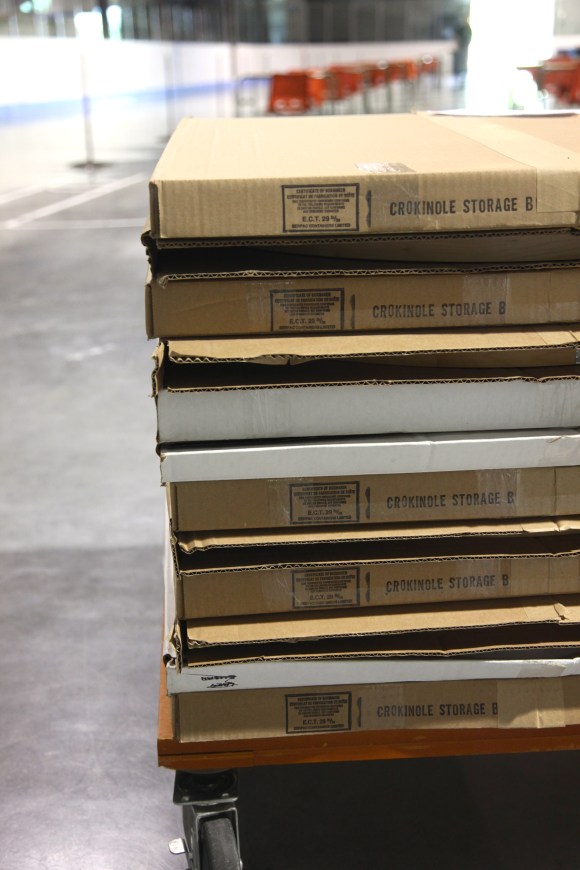
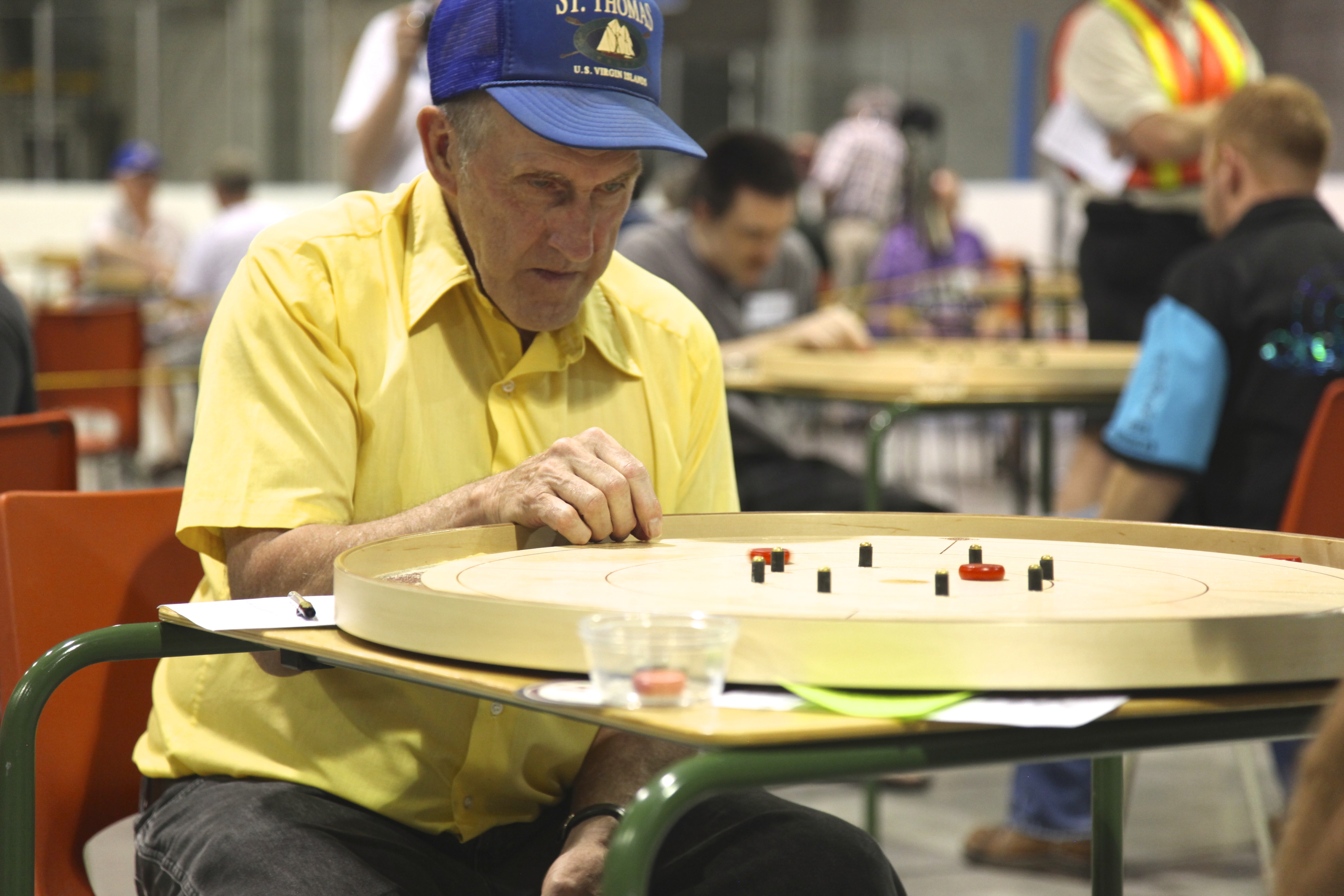
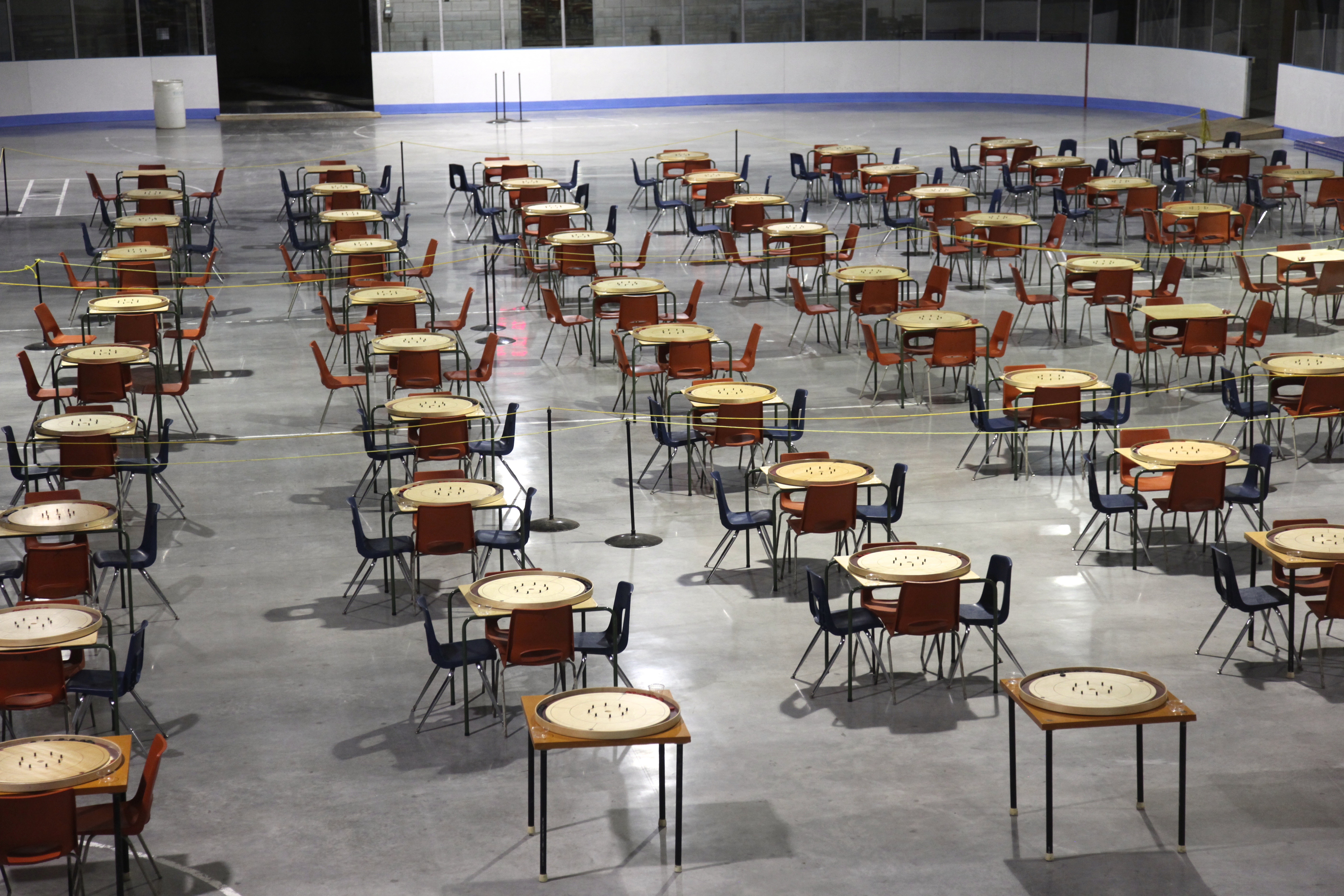
On Saturday morning when I woke up at dawn to practice before competition began at 8:30, the Ontario air was thick. The humidity weighed down the crokinole buttons as if Mother Nature rubbed each one on her sweaty chest. After a breakfast fine-tuned for finger endurance I followed my father into the arena which housed over 64 freshly waxed, previously untouched boards set up in a grid on the concrete slab of the dried up hockey ice, all partitioned by yellow rope. Competitors and spectators in jean shorts and agriculturally branded caps floated around the merchandise on the perimeter of the rink. Those keen on capitalizing on the lucrative crokinole market sold World Championship t-shirts, ballcaps, boards and board accessories. People competed in the skill shot competition and captured photos of the trophies which were handmade for the event (it is difficult to find a golden plastic figurine of a man playing crokinole to fix to the top of a regular trophy). When tournament competition began, over 280 competitors showed their masterly applied-geometry skills and muscle memory. Each competitor sat down at a table with ten strangers for eight minutes at a time until the horn sounded, shaking hands and wishing luck to people they hoped to blank eight points to zero. Saturated in Canadian politeness, if crokinole isn’t a game of true sportsmanship, it isn’t anything at all.

As for the competition, unfortunately the prophesy from aged-competitor Dave Skipper that, “people with beards and moustaches shoot better on these boards,” didn’t prove true. I, one of the few participants with a gnarly beard, didn’t even place in the top half of the draw, and the eventual singles champion, John Conrad, had the hairless face of a teenager, although he was surely approaching his golden years. My father proved to be worthy competition, scaling the ranks of eleventh of 86 participants in the main draw, making the playoff round with the true elites. The final match drew crowds upwards of forty, those who had already sweat through their crokinole team jerseys and sweat bands, groaning and whispering with the final shots of the game. Hands become shaky with such pressure. For one of his final shots, Conrad made an incredible triple take-out. Someone in the crowd said in praise, “I think that was a statement.” In the finals, fathers sat behind the yellow rope, watching sons in competition, offering familial support. My father and I participated in the great paternal experiment that is crokinole.
While discussing board consistency during the final round, a man who placed third in the doubles category, making no excuses, commented: “The heat, the humidity—we have been battling the elements all day long,” as though it were an Ironman competition, which, in a way it was. The oldest participant was 88-years old, and was celebrating his 50th wedding anniversary at the tournament. He had competed in all previous fifteen World Championships that had been held.
If it were a televised event, and if the champions were interviewed and asked to describe their feelings, I imagine that like any other world final, they would stumble and mumble in speechlessness. There is no way to properly explain a world championship of any sport, and it only becomes more grueling when it is a celebration of nearly-perfected obscurity. We travelled knowing full-well that we were participating in an antiquated parlour game that itself was competing against screen-bright technologies for space in the family room. What we didn’t know was that our hands would shake and that we would miss shots from fried nerves in a game usually as relaxing as a free massage. We didn’t know that we’d have to practice for another year to make even a dent in the crokinole kingdom.
Back to the grind. Back to the board.
-
Hit first, talk after.

The first thing I did when I arrived in Montreal was have a beer with Gilles. Gilles is a 71-year-old Quebecois legend, capable of the mightiest string of French and English curse words. We share a stick and poke tattoo. His knee has deteriorated over the years, but his stubbornness to go to the doctor for it has not, so he calls the depanneur to get beer delivered to the third floor apartment that he rarely leaves anymore. He has gained weight because of his reduced mobility and his steady beer-calorie intake, and he has also grown a goatee. Whether the goatee was inspired by the gained weight remains unknown.
The doorbell rings, Gilles sticks his head out the hallway and buzzes the delivery man up. He hauls two thin plastic bags up the interior flight of stairs—two Molson Dry 7.1% Quebecois beer in each bag, massive 40 ounce bottles that could kill a man with either the weight of the glass or the liquid they contain. Gilles tips the man, who also brought him lottery tickets, grabs me a glass from the freezer, and joins me seated at the table.
“Cheers, man.” I take a few glugs of the gold liquid, frosty and malty, leaving warm breath like a shot of whisky. He takes the massive bottle in two hands, lifts it as thought it was a baby bottle, and drinks half of it without tears forming in his eyes, without putting the bottle down, without looking anywhere but the ceiling as the bottle tips back almost upside-down. I leave his apartment at 1900h, drunk and giddy, chewing on the dozens of stories he offered up after almost two years of being apart. His first tricycle. The drug bust across the street. His broad array of jobs. Expo67. The making of war weapons at the RCA building across the way. His homemade 360 degree rotation security camera. Homemade photographic darkrooms. Stolen/borrowed bicycles from the bike shop. Many repeat stories I’ve heard several times, some new ones that further surprise me.
In many ways he is the opposite of myself and he may know this. Forward and talkative as opposed to passive and reserved. He tells stories that demonstrate this. Of recent fights in a bar, then the next day, seeing the men he fought walking down the street. Gilles grabbed a steel pipe from the ditch, ready to swing with force. “Not across the head, but the shoulder.” To break the clavicle, I deduced.
I don’t desire to be him but I can learn from him, as a young person should learn from anyone in their golden years. A friend described him as a know-it-all. There is maybe no better person to learn from, than one who knows everything. This last week he taught me that it is important to learn something new everyday. To try something you’ve never tried before. The internet assists him with this. He finds something he has never seen before and replicates it, improves it, has fun with it. Homemade tattoo gun. Musical laser visualizer. Video camera weight balance. He’s worried about getting Alzheimers, he said, so he keeps his brain busy. He was always good at building things, so he continues to do this. Then he taught me the following.
“You’ve gotta hit first and talk after, Nic. That’s what you gotta do.” The exact opposite of what I know, and advice I won’t soon put into direct practice. There are many people I would love to hit with a steel pipe across the collarbone and then never talk to again. Talking acheives nothing with most people, but an elbow to the nose would often start a riveting conversation. In regards to self, his adage may better fit. I overthink, and Gilles is just another person that, in his own way, is telling me to do the opposite. To follow instinct. To avoid the untameable gusts of thought that occur in an overstimulated, overexerted brain. To just fucking go for it. Consequences be damned. Regret nothing.
Gilles and I spent three or four hours in two Saint-Henri museums on a Sunday afternoon. In a pom-pom toque, brandishing a cane, he pointed out places he recognized, like the once great Église Saint-Henri, the All Girl Catholic school nearby, the 15-cent store. Several times he told me that he knew more than either of the available guides, and in this case, he may have been right. Gilles has had no time to think of the past negatively. He learned. He once quit his well-paying job to work for three months at Expo67. He got several dates with Miss World. In every story he tells me, as I nod and sip bière-forte, I can see that he didn’t overthink. He either put not enough, or just the right amount of thought in, and he regrets nothing.
Oh, to be seventy-one.
-
Living on the Street Hockey
Gretzky, Wendel Clark, Jazzy Darren shine at Carmichael World Cup of Hockey
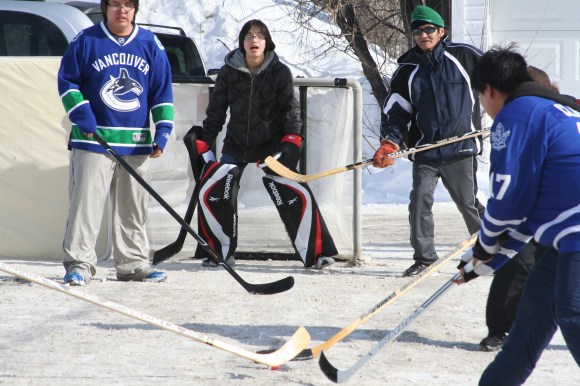
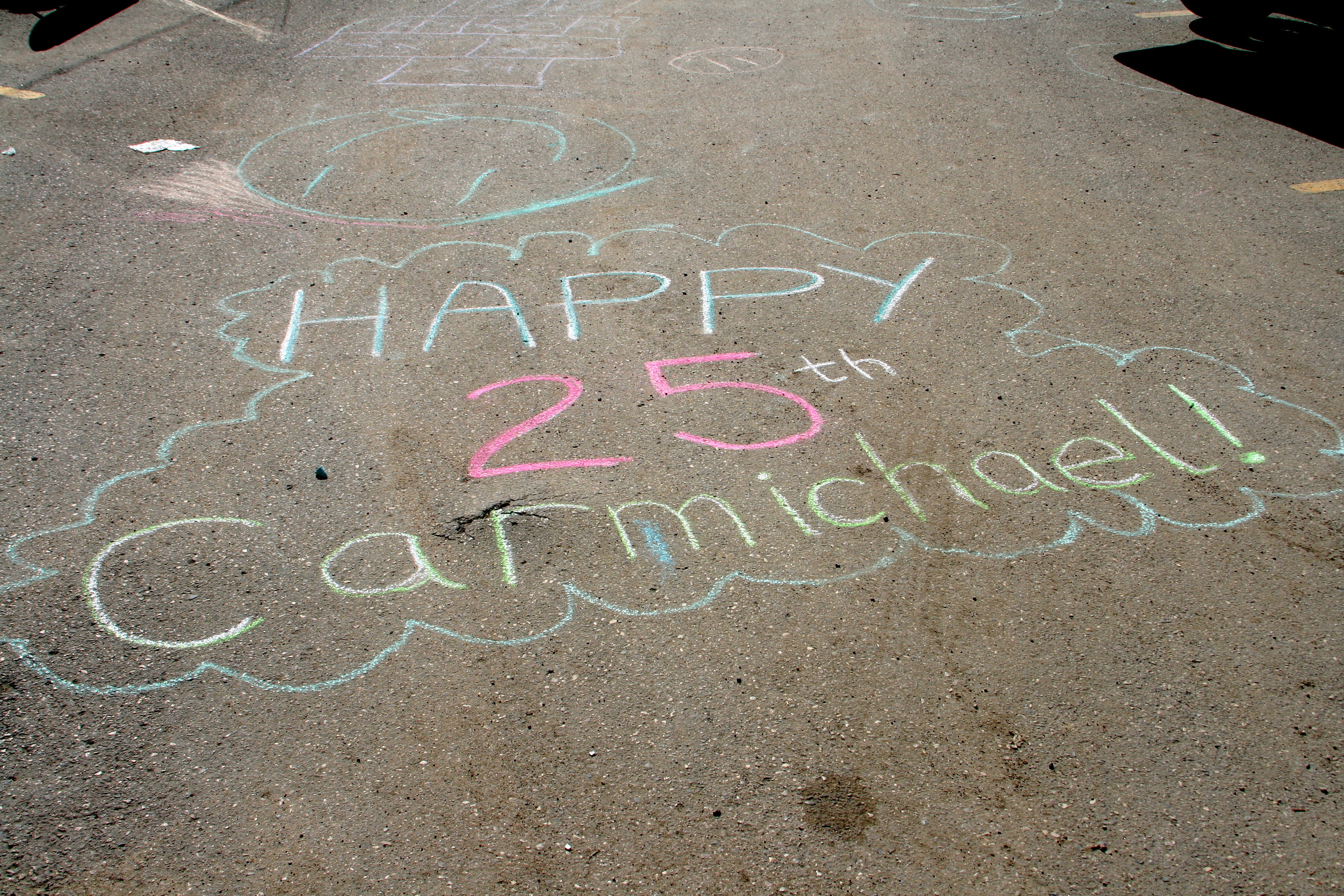
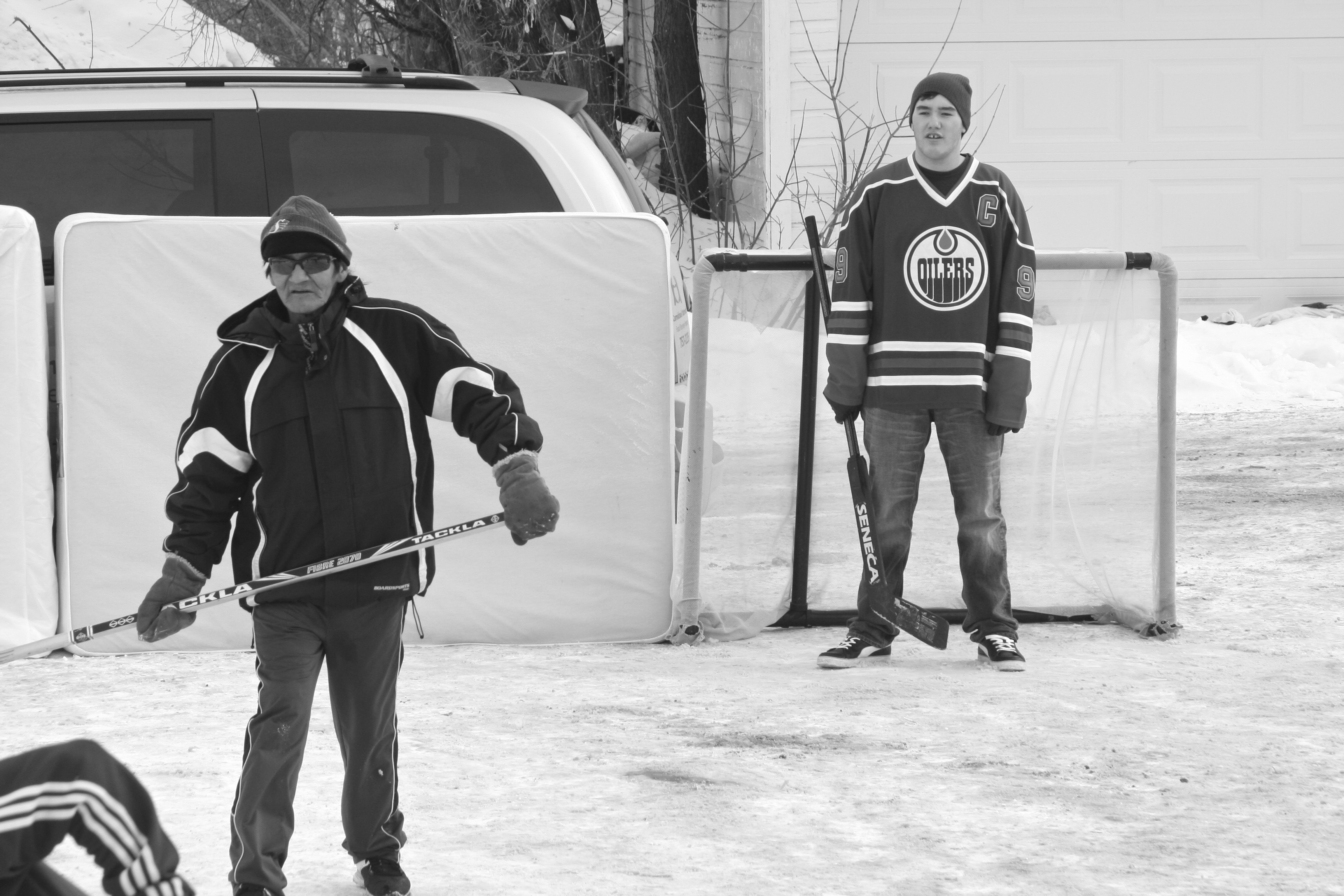
On Saturday, February 23rd, 2013 we had a shinny game in the back parking lot of Carmichael Outreach. Twenty people showed up, the game was heated, the old men beat the young kids 10-8. The One-Block-Off-Broad-Street Bullies warmed the Penalty Box when they were tired. Ken Dryden passed out after the first period. I haven’t had so much fun at work or otherwise in a very long time.


-
Norwood KnowMag Spotlight
A version of the following article was released in the Volume II Issue II edition of the KnowMag. An online version of the magazine can be found here.
Also check out NorwoodShop.ca, Hansen Leather Goods, Norwood Tumblr, Norwood Instagram, Benedict Moyer, Norm Rockwell.
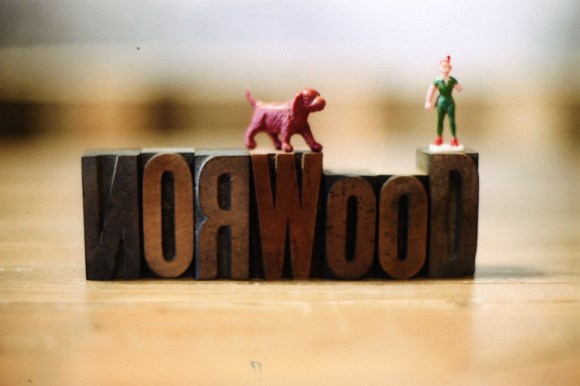
If you were to take a step out of the door at 2401-11th Avenue in Regina, Saskatchewan, turned left to face west, and walked until you reached a rise or fall in elevation greater than a metre, you would likely arrive in the Rocky Mountains. If, instead, you were to walk directly north on Smith Street, the cross-street of 2401-11th Avenue, you would end up walking for three straight days until you reached a heavily forested area with naturally growing trees, as opposed to the wind-breaking hand-planted farm trees in the south. It is in the flat and the barren where real strength is gained. Extreme meteorological conditions can (and will) lift and drop a human being’s spirit daily. When you come from a place where you must walk a minimum of several days to reach the luxuries of natural shelter provided by trees or elevation, you will become innovative and resourceful in many ways. You will because you have no choice. Some born into these conditions take to building structures, some learn an instrument, some read books. Some collect antiques and vintage trinkets to fill the voids. Others sit in basements drilling holes through pressed-steel handsaws to make display cases. The latter is Norwood. A softly-lit amalgam of pine, fir, and birch that brings back warm memories of your grandparents’ basement, or the family cottage at the lake when the leaves have fallen off the trees.
When Noel Wendt, proprietor of the staple Canadian skateshop the Tiki Room, asked me to help him brainstorm names for the new shop he was opening, I was living in Montreal. I hadn’t seen the space and hadn’t been back to Saskatchewan in nearly a year. I didn’t understand his vision. So my list included generic gems such as The Cabin, The Workshop, as well as moronic suggestions such as Grime and Punishment, The Brothel, or Blown Hips (it has recently been given the nickname the Gnarbar, or Gnarburator by the few workers that spend too much time there). For some reason, none of my brilliant suggestions caught wind. Instead, just weeks before the shop opened, someone noticed a rusted iron cap with the diameter of a pasture fence-post inlayed in the concrete at the corner of Smith and 11th. The cap read ‘Norwood’, an old Canadian iron foundry that buried their caps in the sidewalks of cities across the prairies. The name fit the aesthetic. Norwood was born.
The 1000-square-foot storefront is filled with household and industrial items from the days of old, when purchasing something meant a life-long commitment. When objects were built well, with proper materials, and purchased only upon necessity. Norwood carries brands that reflect this mentality. Simplicity, quality craftsmanship, responsibility. Pendleton pillows and blankets sit upon a modified bakery rack against the building’s eastern-most column. Belts, lanyards, and accessories from local leather-maker, Hansen Leather Goods, adorn a vintage hand dolly. Ray Ban sunglasses boast their attractiveness from the previously mentioned glass-case made up of six rusty handsaws. Red Wing Shoes stand proudly under the spotlight on a massive chopping block. Mens coats hang from a coat rack salvaged from a church foyer, and another rack created and designed in-shop, made up of one-inch iron pipes threaded and fitted for the space. Norse Projects hats and sweaters rest comfortably on wooden milk crates and wooden toboggans next to the door. The Levi’s denim decorates the west wall, hanging from a John Deere truss taken from a torn down barn at a sheep farm in Cupar, Saskatchewan. The barn was an acquisition specifically for the creation of the shop–an ad was posted on the internet that Wendt would pay $50 if he could tear down a barn and keep the lumber–the weathered planks from the prairie structure are the appropriate backdrop to the hand-drafted map of Regina from 1957 that hangs as a centrepiece to the entire shop. The barn was torn down in the middle of February in the unforgiving winters of Saskatchewan. The pine floor was milled in Love, Saskatchewan, and the counter top is made of reclaimed fir beams of an old swimming pool, both made and installed with the DIY-values upon which Norwood was founded. The creative balance between product and prop makes for a relaxing visit, no matter the mood you’re in, the time of day, or the type of weather you may see out the North and East windows. An honest, agrarian cabin in the core of a prairie city.
And that’s only half of the space. When the hand-made drawbridge (yes, there is an actual drawbridge) is drawn, one can meander downstairs, into the workshop-dungeon where so much of the work was done for the upstairs shop. A miniature woodworking shop, a small photo studio, a desk made of plywood and paint cans, and soon to be a darkroom for the developing and printing of film photography, the basement is the creative workspace where artistic ideas come to life, where the skeleton of Norwood is pieced together, joint by joint, limb by limb.
In just over one year of existence, Norwood has grown into its own as a fine vendor of classic goods to serve the growing city with increasingly diverse demands. As it gains notoriety and evolves in its design, and as it grows into a community of people committed to quality, Norwood will only become greater through the strength of many, staying true to the motto of the province in which the shop was proudly established.
Small cities may not possess the attractions and allure of larger metropolises. In small cities the pace is slower, the streets are quieter, the people are usually friendlier. Norwood Shop cozies right in with the themes and values of a prairie town, but boasts the ability, know-how, and craftiness to contend with any shop in any major city.
If you were to walk directly south on Smith Street past the windows of Norwood, past the city limits, and through the farmers’ fields, stepping over newborn calves, hurdling barbwire fences, again you would not soon reach a change in elevation that would make your legs ache. If you were to walk straight east on 11th Avenue until you found a shop that better embodied the values of the people whom it serves, you’d likely end up chin deep in the salty Atlantic Ocean.
-
The Chair Project
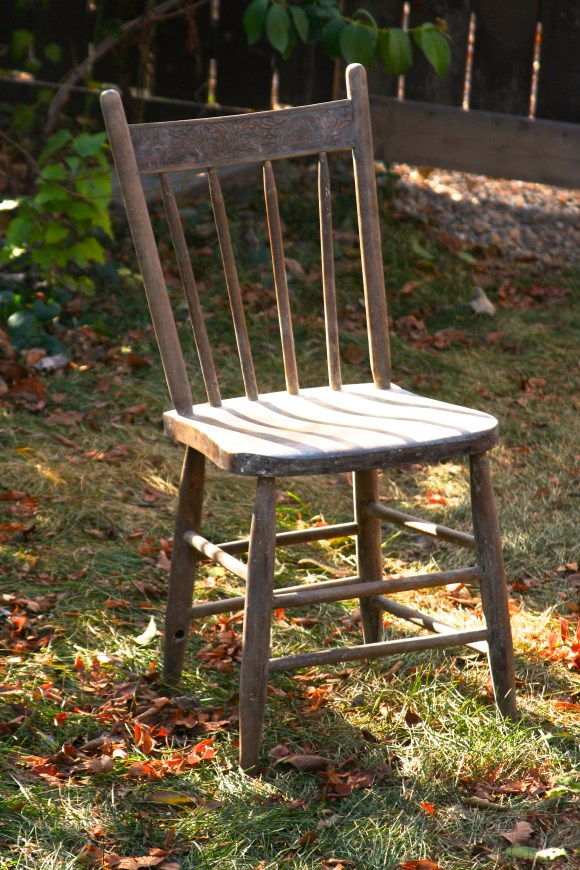 Long before summer hit us with its tube-top good times, but after the snow had melted and evaporated, I found this chair. I had put in a morning volunteering at Carmichael Outreach, came out the back door to see a beat up white chair upside-down in the trash barrel, ready to be taken to the city dump to be buried with shitty diapers and half-eaten pizza pops. The bottom right rung was snapped off. The chair was unloved. Instead of letting it be disrespected, I strapped it onto the handlebars of my bicycle and rode home. On the way I picked up a garbage bag filled with recyclables to fully adopt the poverty stereotype, and rode home talking to myself and chuckling.
After six layers of paint that I stripped with some environmentally-friendly goop and a few paint scrapers I couldn’t figure out why a person would paint such a chair in the first place, and why they decided they needed to do it five more times, from blue to yellow to white to powder blue to seafoam green to white again. The pressed-back was strangled by the paint. Painting things; walls, furniture, teeth, cars, faces, has never computed with me. A temporary, always artificial facade that hides only the truth of natural aesthetic. Truth is better than beauty. Like I’ve said since I was an obnoxious pre-teen: dyeing your hair is living a lie. Painting your chair is as good as murder. Make-up on a girl’s face is often great, but always unnecessary. But alas, I am simply a peasant with no taste.
Regardless, my chair now sits in my basement prison as just one more thing that isn’t anywhere near as comfortable as a beanbag, just one more apparatus to hang clothes off of. I only hang clothes off of antique furniture, restored by the hands of a skilled craftsman. The project is finished, the chair is functional and I have learned nothing but the fact that seeing through to the end of a project is an infinitely difficult task for me. Must be a lack of character.

-
Urban Camping
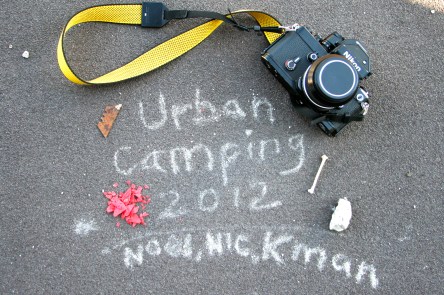


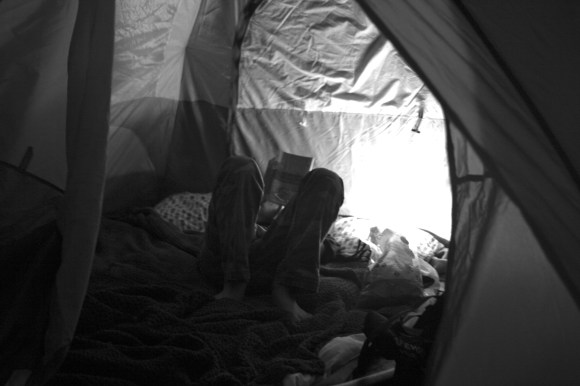
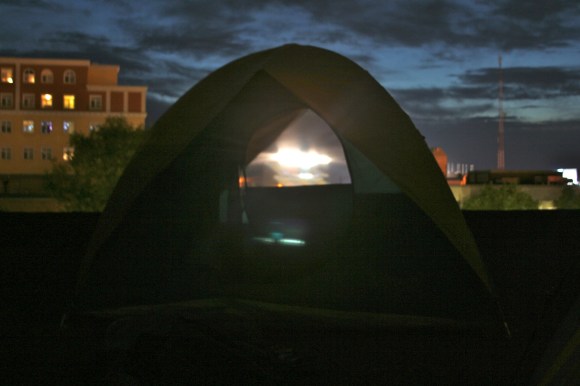 For more, and better, photos of this evening, please see Life of Norm.














 Balls of Rice