Category: Travel

  • Up-and-Coming

    Three blocks from the venue, down an industrial street in Denver like that in any North American city that boomed in the 1950s, was a small store inside of repurposed shipping containers that sold US-made backpacks, outerwear, and slacks. The store was clean and simple and catered to the young outdoorsy types who live inside but are able to sleep in tents in exotic locations outside.

    “We were one of the first businesses in this part of town,” said the shopkeeper sitting bored behind a handmade counter, hair messily gathered in a bun on the top of her head like she had just crawled out of a tent in the Rockies that surrounded her city. “Since then all sorts of businesses have opened here, which is too bad, it used to be a cheap part of town. Now there’s a luxury hotel going up just up Larimer.” The woman expresses her displeasure just as I would. I agreed as I tried on a pair of outerwear pants behind the changing curtain. Their shop and brand are participating in making the neighbourhood more expensive by selling $150USD pants, but they are at least trying to create a manufacturing industry by making their products in the USA. I left without buying pants, wondering where the nearest goodwill was.

    The next day, the venue was plopped in the same part of town, only in a city that was 500 miles away, a state and a half to the east. After load-in and soundcheck, the soundman asked “Where’d you go for food? The burrito place? How was it? I heard it wasn’t that good. Yeah, this was the part of town no one would come, until my boss opened this bar and the other one, we started booking shows here, and then other businesses started coming too. It was kinda the bad part of town, now it’s the up-and-coming part of town.” At the expensive coffee joint across from the bar arcade, next to the burrito place, they were giving out a free, one-page newspaper/zine/leaflet. In it read,

    “Most American cities are run by real estate interests… In Omaha, the tactic for encouraging gentrification is Tax Increment Financing or TIF. TIF is a way for cities to return tax money to developers as an incentive to put up projects that the city wants (and the public makes up the difference). Unfortunately, no provision is made for the people who used to live in the cheap housing turned into gentrified apartments. The former residents are simply scattered to the four winds. Surprised by ‘shots fired’ near 108th and Maple? This is your City gentrification policy in action.”

    A similar but more developed street newspaper in Seattle uses the G-word, gentrification, describing places like Africatown in Seattle being dismembered, breaking up the “home and haven for Seattle’s Black families and businesses”, and highlighting stories of people failing to maintain housing in a rapid-rehousing program because of the recent inflation in costs of rent. Large newspapers will only use the G-word when describing vandals in Montreal or Vancouver who are terrorizing business owners, as business is the uncriticizable holy grail of progress.

    I am fortunate to be able to tour with world-class musicians, but each time I’m on the road I wonder how long such jobs will exist. How long will I be paid to burn fuel and watch music in ‘up-and-coming’ parts of American cities, while around the block, that neighbourhood’s previous inhabitants are clamouring to find shelter under a bridge or in a condemned building. I do it because there’s something in music and creation that is able to be unpolluted by corporate greed, though most times it has already been bought and sold.

    When people ask what I got to see this trip, Linh Dinh answers for me in his book, Postcards from the End of America, in which he visits communities across the United States left with little or no economy:

    You can’t really see a city or town from a motorized anything, so if you claim to have driven through Los Angeles, for example, you haven’t seen it. The speed and protection of a car prevents you from being anywhere except inside your car, with what’s outside rushing by so fast that each face, tree, and building is rudely dismissed by the next, next and next…Like television, the private automobile was invented to wean us off our own humanity. From each, we’ve learned how to amp up our impatience and indifference towards everything, and with life itself.


    After tour ends I fly home to an ailing Saskatchewan. I’d heard of the government cuts while in San Francisco, when a friend texted saying WHAT. THE. FUCK. with a link to an article about the shutting down of the province-owned small town transportation and parcel shipping company. Now home, walking through the downtown, worried citizens are passing colourful clipboards around, asking passers-by to sign one of the multitudes of petitions that are circulating to Save Our Libraries, Save our Bus System, Save our Schools. I sign them all, knowing full well that no petition will be worth the millions of dollars that the government squandered on stadiums and tax cuts on resource extraction companies. The angry protests and province-wide campaigns might get them to preserve something, but the effectiveness of these actions will only go so far if we continue to work within the system that props up corporate interest over that of the public. Though it plays into the hands of the fearmongering government and high income class, one can see why smashing windows in Montreal seems more effective.

    Government MLAs show their responsibility, boasting their 3.5% paycuts, which to them means 3.5% less income to spend on boats and cottages and home renos and filet mignon. The paycuts they make to those on social assistance, the paycuts they make to those once employed by the rural transportation system, the cuts they make to the libraries, all mean that thousands of low income individuals won’t have food, shelter, a way to travel for medical treatment, books, and significantly more.

    Several years ago, after seeing Chris Hedges speak at the University, I worried that Saskatchewan was the next sacrifice zone—the places that are abandoned by industry, left in disrepair and a humiliating culture of dependency after being used and left behind because of their lack of monetary worth. This could be the beginning of that reality.

    It starts with the desperate government selling its struggling assets to the highest bidder, then selling its most profitable assets. They begin begging oil companies to relocate to the province to help the crumbling economy, start giving public land to large corporate bidders. At this point, entire cities and provinces will be bloated with corporate-controlled land and buildings, and towns end up, in a way, like the middle-class urban centres of post-manufacturing North American cities, where no one can afford to pay rent. Eventually, when the government isn’t coddling big business enough, they’ll pack up and move to find a different government who will subsidize their existence. Thirty years later, when our industries have died and all that’s left is cheap bars and empty buildings, businesses that pander to middle class tastes will further move into parts of town with abandoned buildings and cheap rent and begin the process of displacement of those marginalized by the loss of industry, struggling to survive in the older neighbourhoods. We are no better than the economic destruction seen in the United States, we are just a generation behind.

    All that will help in the midst of a breakdown of free, communal places of existence and of the breakdown of social programs, is the creation and maintaining of communities that support one another and support the other, the different communities who are similarly affected. I am the middle class that is being pandered to, and while being in these places, eating their burritos, buying their pants, is not inherently bad, it makes it all the more imperative to support and participate in the communities that are contrary to austerity. These communities—social groups, churches, activist collectives, sports teams, artist groups, musicians—must band together to build movements that support the racialized, marginalized, the poor, Indigenous, immigrant communities, who are most harshly affected by public cuts and an economy sucked dry.

    Linh Dinh, states the obvious:

    For any community to be healthy, local initiatives must be encouraged, nurtured and protected, so let’s reclaim our home turf, reestablish the common, and, in the process, regain our collective sanity and dignity.
  • Ten Years

    IMG_3007

    It is ten years to the day that I started writing Balls of Rice.

    If you read from the painfully embarassing first post, to the lost and meandering most recent post, you’d see how I went from proud flag-loving Canadian to dissident anarchist-in-training. You can see a public journal of mental health. Ten years later I still don’t know why I write, still don’t know what I’m doing with my life, still eating peanut butter and banana sandwiches for supper. All I know is that Balls of Rice has both saved my life and ruined it.

    Naturally, the only posts worth reading were written in the last four years. The six years before that was trial and error, with more error than anything. These days there is less trial and about the same amount of error. The list below is not a list of the best writings, because reading over every single post could only end in crushing depression. But these ones are alright, I think.

    Thanks to whoever has read this in the past decade for the encouragement. If it weren’t for you, I’d probably be a successful engineer by now. Instead I’m a squatter in the back of a pizzeria.

    Thanks for still reading, mom and dad. Oh you stopped reading it in 2012?

    Yeah. Me too.


    Notable Posts:

    Realistic Ideas – August 30, 2012

    Losing Faith – December 2, 2012

    Cheap Attempts at Warping History – April 2, 2013

    Dear Mouse, – September 17, 2014

    I wasn’t shot dead in the CN Railyard – December 29, 2015

    Still don’t know – July 26, 2016

  • Planetarium

    IMG_8007

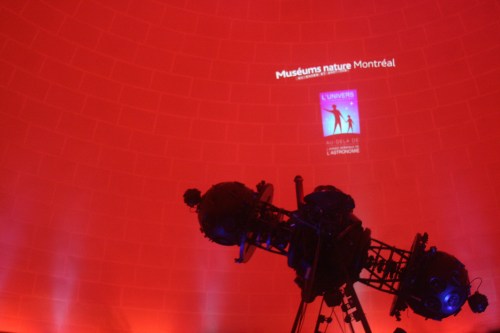
    I’m still nauseous from the planetarium.

    I went in a bout of depression to remind myself that I am infinitesimal and insignificant and that my depression is illogical. Because logic has so much to do with it. I have a friend who uses the opposite idea, that the fact that there is life on earth means that we are significant, the only discovered life in hundreds of millions of planets. Like all I needed was more pressure of being one of the few pieces of life in the universe. But now they’ve found a seemingly habitable exoplanet, and I am back to not knowing what to think.

    In the first planetarium segment, Harrison Ford spoke of life outside our solar system in an already out-of-date presentation. In the second presentation, a man with a bow-tie forgot that his job was entertaining and educating children, and made a dizzy unplanned flight to the edge of the galaxy and back.

    I stepped into the sunlight and ate some trailmix on a downtown picnic table. My biggest worry was not the sun exploding (because I learnt that it won’t) or finding out that life is ubiquitous (because it undoubtedly is), but how to write anything ever again when I don’t believe in anything ever at all. It’s easy to be a nihilist as a white hetero male. Because you know everything on earth sucks but you don’t have to worry about being shot in a racist province or having to stand up for your rights in order to survive. So you can get away with thinking that nothing matters.

    I printed a star map for when I go camping next month. I started telling people that I was going on a self-planned writing retreat in the remote woods. Until I got scared of writing. Now I tell people I’m going camping. The only reason I’m sitting here writing this horseshit is as an experiment, to see if my chest implodes or if the world loses its orbit with the sun and flies into outerspace and we all freeze to death instantly. To show myself that my writing, no matter how good or bad, isn’t the last remaining key to sweeping social change, but that it’s just writing to make me feel human, that other humans might relate to. It is no more a noble craft than scrubbing toilets.

    I’ll use the star map to point me from the Big Dipper to Arcturus to Bootes to Cygnus to pretend I can see Kepler-186f. And Kepler-186f will whisper in my ear that there are plenty of things that matter, such as advocating for social justice, and scrubbing the toilets of the known universe, also known as, writing.

    IMG_8018

  • Still don’t know.

    Di Fara Pizza

    A man walks down a dark Brooklyn side street with his pants at his ankles, genitals flailing. I am looking for pizza. Legitimate conerns are raised about that man getting shot by police but we push on to get some garlic knots at Ganni’s at midnight.

    The Republican convention wraps up and everyone I know, including myself, fears the next four years, but knows full well they’ll survive it. The man walking down the Brooklyn side street, the newly arrived Syrian refugees, the Central American blamed with stealing American jobs, don’t have the privilege of knowing the same thing. In Hedges’ 2010 book Death of the Liberal Class, Chomsky prophesies of a population that seeks out fascism because of a series of politicians beforehand who have sold the rights of the population to corporate power. All they need, he says, is a charismatic leader who tells it like it is. And now he warns this.


    “How much is this one?” I ask.

    “Which one?” the shopkeep asks.

    “The all black one with gold numbers.”

    “$10.” He pulls it out, puts it on my wrist, it fits and feels as though I haven’t wore a watch in fifteen years, which I haven’t.

    “Great.” I place $10 on the table.

    “This one is $15,” he says. I place five more dollar bills on the table and leave, feeling as though I have paid the 50% tourist tax necessary to create a balance in the inequality of wealth that I have benefited from my entire life. The tourist tax necessary to quell my own personal guilt for existing in a marketplace and quitting my community job to travel the world for free. The watch looks great and hasn’t died yet. It fits oddly on my bulging ulna bone.

    I finish my $9 juice and sit on a bench, calling my credit union and credit card company to tell them that I am in fact in the US and that no, my cards have not been compromised, and that yes, I’d like to withdraw money from my accounts so I can spend more money on American juice.

    I loosen the watch strap one notch to relieve the sweat that accumulates under it in the New York humidity in what will likely be the 15th consecutive hottest month on record. I bought a watch so I could avoid pulling my phone out of my pocket so I could avoid wrecking my pants pockets so I could avoid buying new pants so I could avoid buying pants from a hellish factory in south east asia. And so I could avoid using my phone at all. My vain attempts at personal change are conscience clearing but not effective. I still don’t know how to live a life that affects change or isn’t dripping in privilege. You think by 27.667 years of life you’d know everything there is to know in the world.


  • Lyrics of the Month: June 2016 – Neko Case

    Everything’s so easy for Pauline
    Everything’s so easy for Pauline
    Ancient strings set feet a light to speed to her such mild grace
    No monument of tacky gold
    They smoothed her hair with cinnamon waves
    And they placed an ingot in her breast to burn cool and collected
    Fate holds her firm in its cradle and then rolls her for a tender pause to savor
    Everything’s so easy for Pauline

    Girl with the parking lot eyes
    Margaret is the fragments of a name
    Her bravery is mistaken for the thrashing in the lake
    Of the make-believe monster whose picture was faked
    Margaret is the fragments of a name
    Her love pours like a fountain
    Her love steams like rage
    Her jaw aches from wanting and she’s sick from chlorine
    But she’ll never be as clean
    As the cool side of satin, Pauline

    Two girls ride the blue line
    Two girls walk down the same street
    One left her sweater sittin’ on the train
    The other lost three fingers at the cannery
    Everything’s so easy for Pauline

    -Neko Case, Fox Confessor Brings the Flood, Margaret Vs. Pauline

  • Season of the Badlands

    IMG_5565

    The following was originally published with photos in Of Land & Living Skies: A Community Journal on Place, Land, and Learning. For more interesting content and events, consider becoming a Sask Outdoors member at SaskOutdoors.orgDigital magazine available here.

    Just west of the yard in a field of summer fallow is a rock. Its existence alone isn’t remarkable; there are a multitude of rocks in the dirt around Horse Creek. All over the prairies there are rock piles, decades or centuries of rounded stones the size of softballs or buffalo skulls or lawnmowers, stacked as monuments to the neighbouring broken earth. But the rock west of the yard, picked out of the ground to clear the way for tilling, ended up being the size of a small car. Forty paces from the road it looks substantial but unremarkable; flat and several feet high, grey brown, leaning back with a salute to the sky, the remaining clover hissing at its base. But the illusion disappears when it is approached. It juts out significantly, looking like the missing nose of the Sphinx. A nearly immovable object, even with all the trucks and tractors around, because of its size and the damage it would do to the road and the ditch. It would look good in the garden but the force needed to move it is a force we do not have. So there it sits.

    My grandma was born in Horse Creek. I never knew this until a week before I headed there myself. Horse Creek is located on Treaty 4 Territory, seventeen miles south of McCord, 110 miles southwest of Swift Current and just sixteen miles as the crow flies from the American border. If you look for it on a map or even the internet, you may not find it. In a time of unions and co-operatives, grandma’s father was a carpenter in Horse Creek for her first year of life. Last November, I was in Horse Creek holding tape measures and nailing boards and starting my own imaginary union to provoke my anti-union, farming friends.

    Much of that summer was spent exploring the badlands of southern Saskatchewan. The first weekend of spring meant camping with three friends at Grasslands National Park, which shares the same hill ranges as Horse Creek. In 4x4s we were guided through pastures and down ravines to Storey Lowell’s, the local folklore touting it as an early hideout for horse rustlers, when it is more modestly two adobe shacks that made the home of an old homesteader. Later we hiked in at McGowan’s Visitor Centre and camped in a coulee just steps from the moon-like landscape of dirt and cliff. Before darkness settled we walked to the highest point in sight, overlooking the crumbling badlands, with heavy clouds and bursting light advancing from the south sky. Walking back in the heavy showers we purposefully searched out the storied quicksand piles by tossing rocks on odd looking pieces of dirt, then toeing them, then stepping on them, then stomping on them, tempting our fate for a movie-like reaction from the earth. We never found any quicksand.

    Later in summer we visited Castle Butte, a massive ice-age-created structure of sandstone and clay reaching to the sky of the Big Muddy. A few miles from there we navigated to Buffalo Effigy, the flat outline of rocks which shape a buffalo on the highest hill around——a sacred site now part of a pasture, luckily fenced off and somewhat preserved. A few weeks later we camped at St. Victor Petroglyph Park, timeworn carvings on horizontal rock on the top of another highest hill in the area. These three sites of identity and significance to the First Peoples, all purposefully placed on top of the highest of hills, existed long before my maternal grandparents settled in the area——around Harptree, Brooking, Radville——and began creating their own monuments in picked rock piles and homesteads.

    IMG_5447

    In the snow-covered shortgrass prairie of Horse Creek, I attempted to experience the ranching and farming life in which my family was once rooted. I picked bales and fixed fence and tried to be useful. When on break, to bolster my writing craft, I urinated poems into the snow in cursive.

    When heading south to move lumber or check on cows it looked as though the clouds that rested on the hills that enclose the badlands were the end of the world, which in my own way, is the truth. The badlands are dead land and past them is a barbed wire pasture fence that is patrolled with drones and satellites of the American border guard. Other border-adjacent land is sold off to multinational companies scavenging for oil whose only identity in the land they own is corporate identity. The end of the world and the end of identity exists in deserts and robots and contracts.
    I have a vested interest in preserving this land from such ominous ends because I feel connected to it in some vague, flaky kind of way. My friend who has lived here his whole life and whose family has farmed it for a century offers the same. Giving up his land would be the last thing he would do, and because of his connection to the land he acknowledges that he knows to some extent what it might have felt like when the settlers came. I identify with the land that sits atop the badlands because of personal history, but this land does not identify with me any more than it identifies with the farmers or ranchers or indigenous peoples or the Queen who leases it out or that rock west of the yard.

    The connection felt from being on the land, from spending time caring for it and working it, is universal and real. I am not entitled to this land, nor is any one person or group of people. Instead the land has an entitlement to be inhabited by people who identify with it, because those who identify with the land are more apt to treat it as it ought to be treated.

    To be an asset to the land, to be the type of person that the land is entitled to, I learn as much as I can about how it works and how to live well on it. About all its intricacies of connectedness, which offer lessons of how to exist and how to relate. Like the rock west of the yard, I am not out of place standing alone on the prairie, I only look that way when I am dug up from the city and thrown naked in a field. Like the rock, my ancestral composition lies in the soil, just as everyone else.

    Each time I visit the badlands and hills adjacent I seek out the highest geographical point possible——to feel the wind’s unmitigated power or to fully realize the thunderstorm that approaches. Monuments that mark time, the carvings and effigies and buttes of the area, are locations of height for a reason. They are standing points that we revisit to watch the thunderstorm of the future steadily move in. The easiest place to keep your feet grounded for change and resistance is in community and identity. Strengthening our connection with these highest places is the only way to ensure the thunderstorm doesn’t come in and drown us all out and to ensure that when we are walking home, we see the pits of quicksand that would otherwise swallow us up.
    I drove out of the yard and left the farm behind with a year of vagrancy and foreign experiences on the horizon. The rock west of the yard sat silent with the ice fog painted low in the background. The rock will quite likely be there when I get back.

    To look just on the surface, and think that what you see from horizon to horizon is all that is needed to survive, is to misunderstand your place on the ground which you stand. To scale its heights-to learn its lessons—one must be alive to the underlying structures that support the visible and not-so-visible world around you.

    -John Borrows (Kegedonce), Drawing Out Law: A Spirit’s Guide (University of Toronto Press, 2010, p72)