Category: Travel

  • Hit first, talk after.

    Gilles and the Anchor

    The first thing I did when I arrived in Montreal was have a beer with Gilles. Gilles is a 71-year-old Quebecois legend, capable of the mightiest string of French and English curse words. We share a stick and poke tattoo. His knee has deteriorated over the years, but his stubbornness to go to the doctor for it has not, so he calls the depanneur to get beer delivered to the third floor apartment that he rarely leaves anymore. He has gained weight because of his reduced mobility and his steady beer-calorie intake, and he has also grown a goatee. Whether the goatee was inspired by the gained weight remains unknown.

    The doorbell rings, Gilles sticks his head out the hallway and buzzes the delivery man up. He hauls two thin plastic bags up the interior flight of stairs—two Molson Dry 7.1% Quebecois beer in each bag, massive 40 ounce bottles that could kill a man with either the weight of the glass or the liquid they contain. Gilles tips the man, who also brought him lottery tickets, grabs me a glass from the freezer, and joins me seated at the table.

    “Cheers, man.” I take a few glugs of the gold liquid, frosty and malty, leaving warm breath like a shot of whisky. He takes the massive bottle in two hands, lifts it as thought it was a baby bottle, and drinks half of it without tears forming in his eyes, without putting the bottle down, without looking anywhere but the ceiling as the bottle tips back almost upside-down. I leave his apartment at 1900h, drunk and giddy, chewing on the dozens of stories he offered up after almost two years of being apart. His first tricycle. The drug bust across the street. His broad array of jobs. Expo67. The making of war weapons at the RCA building across the way. His homemade 360 degree rotation security camera. Homemade photographic darkrooms. Stolen/borrowed bicycles from the bike shop. Many repeat stories I’ve heard several times, some new ones that further surprise me.

    In many ways he is the opposite of myself and he may know this. Forward and talkative as opposed to passive and reserved. He tells stories that demonstrate this. Of recent fights in a bar, then the next day, seeing the men he fought walking down the street. Gilles grabbed a steel pipe from the ditch, ready to swing with force. “Not across the head, but the shoulder.” To break the clavicle, I deduced.

    I don’t desire to be him but I can learn from him, as a young person should learn from anyone in their golden years. A friend described him as a know-it-all. There is maybe no better person to learn from, than one who knows everything. This last week he taught me that it is important to learn something new everyday. To try something you’ve never tried before. The internet assists him with this. He finds something he has never seen before and replicates it, improves it, has fun with it. Homemade tattoo gun. Musical laser visualizer. Video camera weight balance. He’s worried about getting Alzheimers, he said, so he keeps his brain busy. He was always good at building things, so he continues to do this. Then he taught me the following.

    “You’ve gotta hit first and talk after, Nic. That’s what you gotta do.” The exact opposite of what I know, and advice I won’t soon put into direct practice. There are many people I would love to hit with a steel pipe across the collarbone and then never talk to again. Talking acheives nothing with most people, but an elbow to the nose would often start a riveting conversation. In regards to self, his adage may better fit. I overthink, and Gilles is just another person that, in his own way, is telling me to do the opposite. To follow instinct. To avoid the untameable gusts of thought that occur in an overstimulated, overexerted brain. To just fucking go for it. Consequences be damned. Regret nothing.

    Gilles and I spent three or four hours in two Saint-Henri museums on a Sunday afternoon. In a pom-pom toque, brandishing a cane, he pointed out places he recognized, like the once great Église Saint-Henri, the All Girl Catholic school nearby, the 15-cent store. Several times he told me that he knew more than either of the available guides, and in this case, he may have been right. Gilles has had no time to think of the past negatively. He learned. He once quit his well-paying job to work for three months at Expo67. He got several dates with Miss World. In every story he tells me, as I nod and sip bière-forte, I can see that he didn’t overthink. He either put not enough, or just the right amount of thought in, and he regrets nothing.

    Oh, to be seventy-one.
  • Getaway Bag

    I have begun to pack my getaway bag. Thus far, the three items it carries are a flashlight, several feet of chain, some boot laces. The flashlight was a workplace perk. The chain was purchased in Kalaymyo, Myanmar, in preparation for a long train ride from Kolkata to Bangalore. The poorly manufactured chain of an industry-weak nation ended up being breakable by hand, however, so a thicker grade was found in Kolkata. The bootlaces were free from Red Wing Shoes. They mailed them to my home. These three objects rest in the top pouch of my 90 litre backpack which is perched atop the wooden shelf/fouton frame in my large basement bedroom. The backpack droops and sags, sad with lack of use. Over a year of relaxation—straps loosened, zippers unzipped.

    I still have plans for my bag before it is forgotten. Before it is handed over to the next line of restless, pissed off youth.

    Two more friends recently emigrated from the prairies to the promised land of the west. The night they left I sat at my desk and looked over at my bag. The getaway feels good. Christ, I miss it. But, oh, I have only known it as a coward. Instead of dealing with problems, leaving town has seemed preferable. I am in a several year attempt to never do that again. To slowly build my relational maturity and experience levels to the point where fleeing isn’t cowardly, but rather wise, thoughtful, with no loose ends.

    I have purposefully attempted to live the past several years so that I could leave with twenty-four hours notice. I still do this with no current plans to leave. It is a freeing feeling, I tell myself, to own less. Nothing in my bedroom, save a crokinole board and borrowed books, is worth worrying about. But the longer you stay somewhere, the harder it is to get-up and go. The Regina side-road rut is legendary. I am consciously building the knowledge of travel necessities, and as the unknown time becomes closer, I will gradually fill the bag with these valuable, life-necessary provisions. When the bag is packed, instead of being weighed down and over-comfortable in the city, I will be prepared and calmly eager.

    I bought a rain jacket months ago, prematurely expecting to move to a city with heavy rain, but instead will be invaluable in a well-packed bag. I purchased boots in the fall, already looking to the summer when they would guide me along the shoulders of asphalt highways. I plan to attain a good-quality utility knife. My hatchet will find its way home. A blank notebook will have pages anticipating the sloppy script from a dull, stolen pencil. I will have discovered a back-up hat for when my current staple disintegrates. My bag will be packed. I will be fully prepared. I will have tied-up loose ends.

    My getaway bag will slowly fill into a well-equipped, well-planned, travel bag, one that preparedly leaves, but runs from nothing.

  • Burn Down Your House

    I can’t help but think that those who read gossip rags must have the most pathetically boring lives. Or that those who own iPads have a mental inability to entertain themselves. There are times where distractions are positive, but they are undoubtedly negative when moments of awareness are less than those of blind entertainment. A distracted population is easy to manipulate. Like when a child asks his mother if he can play with matches and she just says yes because she is busy with two other kids, supper, the phone, laundry. Then he burns down the house and when she is tending to her melted flesh, she admonishes him. Except we were so busy sifting through the internet on our phones, cheering for a football team, or shopping for seasonal gifts that we didn’t even bother to give an answer. So we’ll have no place to admonish later.

  • Losing Faith

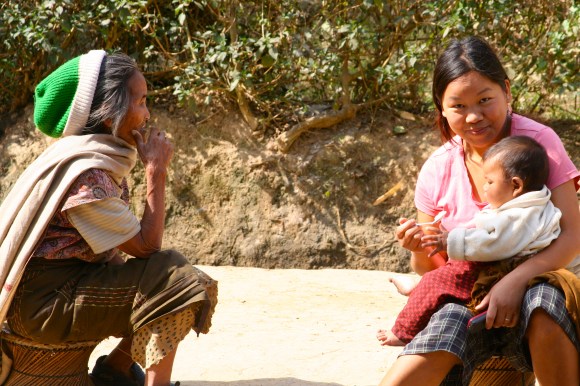
    Nenem

    I recently received this in an email from a friend in India:

    Do you still remember my youngest sister Nenem, you may take her to be your wife if you have any interest. But it would depend upon your choice only though I say anything. Actually young girls needs a trustworthy, abled man for husband and they should be loyal. A lot of marriages are broken causing a lot of problems consquencly.

    Directly after receiving this email, I booked a flight, moved to India, and took Nenem as my first wife. She is currently cooking rice and tending to our Kama-Sutra-conceived children while I sit in a mango tree, my feet being massaged by jewelled monkeys, my scalp being pampered by one hundred barbershop gurus.

    And just now, as the basement furnace powers up and blows cold air at my feet, I am transported back to my cobwebbed corner in my hole in the frozen ground—left only to the gurus of daddy-long-legs and head lice that pamper my once routinely- and professionally-kneaded head.

    Sweet India. Land of many faiths, land where I lost my own.

    The last time I returned from India a new man. It wasn’t I-lived-in-an-ashram changed, nor I-tried-forty-kinds-of-marijuana changed, or even I-was-almost-raped-three-times changed. I came back with a newly-filled gap in my mind. I came back with no interest in the functioning church in which I grew up, and which I partially went to support. I lost complete interest in proselytization or evangelism. I lost my faith and replaced it with a set of values. I became so fed up with the culture of organized belief, the culture of changing people’s beliefs, and the language of faith that inhibits people to speak in the realm of reality—reality, where suffering occurs but where nothing is done because of often blinding visions of a possibly non-existant afterlife utopia—that I handed it in and haven’t really looked back. My friend, Nenem’s brother, was unable to speak of anything but the Glory of Our Lord and the financial support he required to live and to preach. I didn’t write a list of for and against. It wasn’t an immediate disbelief in the resurrection that made me never return to church. It was part of a constant evolution of the mind that peaked while travelling alone, as it tends to do.

    It is a mysterious thing, the loss of faith—as mysterious as faith itself. Like faith, it is ultimately not rooted in logic; it is a change in the climate of the mind.

    -Orwell, A Clergyman’s Daughter, p249

    Propagandhi’s Supporting Caste coincidentally came out during my last trip in India, and I somehow managed a minor miracle to download the album off of Indian iTunes. It was my only friend while travelling. One night, after calling home on my prepaid Indian cellphone, sitting on the beaches of Cochin at night, after four months of solo-travel, I finally realized that the greatest moments in life are better when shared. I have been able to enjoy things alone, but having the ability to acknowledge the greatest things with someone else, is the creation of joy. Joy isn’t a seasonal shopping opportunity at the Victoria Square Mall. Joy isn’t a faith-only feeling. I realized this again over the last few nights when watching my favourite band of all time. I enjoyed parts of the set alone, but the moments I was most elated were those when I sang aloud in the arms of good friends. Imagine the everlasting joy I would have if I actually just took part in arranged marriage to a conservative Christian girl in a village in India. Never-ending, tantric, yogic, conservative joy.

    My faith was replaced with something else. Something no less powerful. It was replaced with some sort of logical desire for decency and equality in the real and tangible world, both rooted in my Christian upbringing and my love for socially-conscious punk rock. Not that values didn’t exist in my life beforehand, they just sat at the back on my brain, washed out by uncertainty and contentedness. And as much as it pains my father to hear it, my faith was partially replaced with many of the tenets of a Winnipeg punk band. Neither the band nor the church would quickly agree that (what I would identify as) their basic doctrines line up—absolute equality, that the “unifying principle of this universe is love” (Propagandhi, Duplicate Keys Icaro). I connected my early life in the church basements in which I had grown up, to the realities of poverty, inequality, and hypocrisy that I had seen while travelling, and filled that gap with a set of discernible values that I seemed to lack previously. A serious respect still exists in the utmost for people who adhere to systems of faith, as it is another means to the end I am constantly seeking, and it helped mould my values to what they are now.

    The smell of glue was the answer to her prayer. She did not know this. She did not reflect, consciously, that the solution to her difficulty lay in accepting the fact that there was no solution; that if one gets on with the job that lies to hand, the ultimate purpose of the job fades into insignificance; that faith and no faith are very much the same provided that one is doing what is customary, useful, and acceptable.

    -Orwell, A Clergyman’s Daughter, p295

    A man of faith is the same as a man of no faith, as long as both are acting positively in regard to humanity. Both are inevitably flawed. One puts hope in the unknown, one puts hope in something else—science, humans, another form of the unknown. Perhaps I put my hope in myself, not in a self-righteous, superiority-complex kind of way, but in the way that I am the only thing that I know can make an absolute change in, and hope things can move on from there.

    This is no where near the first time I’ve been proposed to, or propositioned, by someone in India, but it has been some time. Though I am flattered, though I wish I could get fifty-cent haircuts in India once a week, and though I think it could potentially work out better than a love-marriage, I will not take him up on the offer. This man, Nenem’s brother, is still a friend. And though many of his thought-processes irritate me as anti-productive or misdirected, I do not see my new vague set of values as greater than his faith. Mine will waver and transform as does anything philosophical. I merely lost my faith a while back, replaced it with something new. If he forgets his ultimate purpose, and I realize that I don’t have an ultimate purpose, and we work together to help those we know need it, then we can be mutually productive. The fact that he offered me his sister without her even knowing it, or likely even speaking English, is another issue that we’ll have to sort out after the marriage. Curry feast to follow.