Category: Writing

  • Cold Weather Strategy

    “Do you prefer summer, or shit weather like this?” the Brazilian man asked me on McIntyre Street with his eyes peeping out from a burly knit scarf.
    I told him, and he coughed a laugh and called me a liar.

    “Then what do most Canadians prefer, do you think, summer, or this minus-forty stuff?”
    “Most Canadians likely prefer summer. Most of my friends left—”
    “And went elsewhere. Yeah,” he interrupted me. He and I, likely making up one-third of the city’s total pedestrians of the day, stopped on the street and talked about mutual misery, or at least that is what he thought we would be talking about. I told him that I loved it. I just finished a bike ride to the outdoor rink where I played hockey on the only three-metre by three-metre patch of ice that didn’t still have grass growing through it. He told me that he liked the weather in Brazil, “one-thousand percent more than this,” and I don’t blame him.

    One of my few optimisms is in that which causes everyone else’s negativity. I heard on the radio that this is a sign of sociopathy. One way or another I have become a person that instinctively finds the actions of the majority as absurd, whether or not this feeling is justified. I like the winter, but I like it more because it causes misery to a large percentage of the population. Though it merits conversation because of its indomitable power, it is not worth the endless crying chatter, the talk of thriving in a different province, the several trips to shitty resorts in developing countries. It is not worth the complaining. Nothing is. Peoples’ inability to deal with a climate that they have lived in for their entire lives is a side effect of having everything they’ve ever wanted since they were old enough to slurp on a nipple. It is unattractive. These are the people with homes and vehicles with command-start and $1000 jackets filled with the plume of geese and the ability to go inside a mall without getting kicked out. They truly, without a doubt in my mind, have nothing to complain about.

    The winter does not threaten my survival—I don’t make a living where I could die, and I don’t have a living situation or addiction that may cause me to end up freezing to death outside. But those who do with whom I interact go about their daily business without much fuss. Because dwelling on it makes it significantly worse. And because it makes my days worse listening to it.

    My friend from Brazil and all migrant companions have grounds for disapproval of the weather. They are here putting up with frostbite and chaffing thighs potentially for people elsewhere. They weren’t born into it. And though being born into a climate is not enough reason to love it, it is enough experience to know how to get through it without whining like the moronic family dog.

    While biking to work in December, I waited at a stop light in the middle of the lane. A black Dodge Neon slid to a halt six inches from my right handlebar. The man fumed, rolled down his window, and yelled at me for holding him up for one block. I proceeded to call him a degenerate asshole. He asked me,
    “So why are you even riding your goddamn bike in the winter?” to which I answered by stating my masculine supremecy over him and his teenage-girl car. But the question bewildered me in its ignorance and raw stupidity. If you are going to hate anything about this place, anything at all, please don’t pick on the mother nature, who we have abused and mistreated to the point of her trying to exterminate us with extreme weather. Please take note of the general small-town mindnedness of the general populace who surround us. This is something worth griping over, because somehow, in someway, it might be able to be changed.

    See you on the ice-covered, snow-packed, gravel-sprinkled, 50-centimeter-rutted road, you annoying, lazy, degenerate prick.

    I love winter.

    Safe drives.

  • November 6th, 2013

    In response to November 5th, 2013:

    I am the romanticizer, the unenviable fool. I am a manipulator of words. I turn several years of running away from my problems and write a book about it, glorifying it into an admirable form of ‘roaming’ and ‘wandering.’ I romanticize my gloomy, smug, withdrawn nature as intellectualism and progress. I idealize my lifestyle of work and creation; a prideful and pretentious idolatry. I am likely the only one that strains to see through it all.

    What all who serve an idol fear is death, what Paul calls, “the last enemy.” It is fear of eventual obliteration. It is the fear that death, like life, means nothing. It is a fear we rarely name but which hovers over us. The compulsiveness that drives us to consume too much, drink too much, take drugs or work too hard are bred from this fear of death, the fear that we will no longer exist, the fear that no matter what we do or say or accomplish our life will be meaningless, an insignificant blip on the screen.

    -Hedges, Losing Moses on the Freeway, Chapter 2, p51

  • November 5th, 2013

    There is a crokinole board as a permanent fixture in front of a free hide-a-bed couch. Next to the couch is a stack of books from the library, easily ingested thanks to the lack of distractions of the internet or the television. Next to the stack of books is a bedroll laid on the hardwood with several blankets rumpled up on top. On the windowsill is a bottle of whiskey, two plants, a kerosene lamp, all gifts from friends and family. Next to the windowsill is a rickety card-table/desk with a few more books, a laptop computer. Opposite the desk next to the door is a bicycle which sits upside-down, dripping dirty melting snow and ice onto a tarp below.

    This is my bachelor apartment. I have never been surrounded by such solitude and peace in my life. Nothing I despise exists inside this setting of personality. Only distractions that I wish to have, only smells I create myself, only one light on at a time. No human interference except for when I wish to have human interference. I have abandoned formal education, thus informal, personally motivated knowledge is all I have. If I’m not working, I’m wasting. Accepting the truths of others is irresponsible. Truths must be discovered individually. And truths can’t be discovered when you are living in someone else’s filth. Before this attempt at personal solitude I believed I would miss the unplanned visitors and roommate experiences of living in a home, but now I know that comfort in the presence of people and distraction in happenings kept me unable to progress. Albeit I have only lived here a week, and I will undoubtedly become wretchedly lonely when this couch eventually gives me bed sores.

    Introversion doesn’t necessarily have to mean loneliness, or even solitude. But daily I find myself more inclined to stay home, to be quiet, to read. And while I crave human interaction, I only crave it to the point of surrounding myself with the people I like, and only for short amounts of time. This, also, is largely because the humans I wish to surround myself with have their own adult lives that don’t welcome a third-wheel for extended periods of time. But I do wish I’d have visitors every now and then. I do wish someone would ring my doorbell without telling me via text beforehand that they are going to do so. But my antiquated ways of communication likely won’t be shared anytime soon.

    People often say they hate people, and people usually laugh. But real misanthropy is more than a frustration with the foibles of humankind. Where annoyance becomes misanthropy is the point where one finds himself talking to his plants and never leaving his couch. I can’t imagine a sociable misanthropist, though they may well exist. A person that requires the company of people to relieve their stress, all the while cursing every person for their inanities and selfishness. Either confused, or just diabolical.

    I don’t hate people, but I do talk to my plants. And I do like my own company more than that of most others. The real love of a select few instead of the pretend love of a wide variety is how I survive. When drinking with a group of friends recently, one of the females convinced us to participate in the ‘what we are thankful for’ game while waiting for a cab. And although the cab interrupted my answer, I was thankful for a small group of friends and family that I know would look after me if life ever got too real. I can sit alone for hours comfortably knowing that fact.

  • Coffee is a human right.

    Coffee is a human right, we decided at work today. We have a coffee room so that the ultra-marginalized can have access to that steaming, aromatic, bold flavour to start each morning. As a non-coffee-drinker, coffee is far from something I would ever consider an important provision. Treating people as they ought to be treated, whether or not they can afford to purchase the right to be a customer of a Robin’s Donuts, is an important necessity, however. And if some foreign, non-fair trade caffeinated liquid does that, if coffee does that, then I guess I can support it. Treating people as humans even if they cannot participate in a market economy is a human right, thus, coffee is a human right where I work.

    Water, actually, is a human right. At work, we have cancelled our water service from Nimbus, one of those brilliant companies that sells necessities to spoiled morons who don’t know that it is essentially free in half of the rooms of their home. We cancelled the Nimbus because of cost, but in my mind, because of the classism that comes with letting only staff drink filtered moron water. I drank tap. Water is a human right, but it can be classed.

    Housing is a human right, though most forms of government act as if it weren’t. They watch, coddling the testicles of ‘the market’ in one hand, creating sub-committees out of thin air with the other hand, and let the erect shaft of the market decide. The market, therefore, decides what is a human right. Water and coffee don’t stand a chance.

    The topic of this year’s Blog Action Day is human rights. A few hundred or thousand hack writers delusionally pretend that a cob-webbed corner of the internet constitutes a conversation. The internet is a tool of monitorship and distraction with the veil of community and connectivity. Blogging will not save the world. Forms of virtual kudos and sharing will not save the world. Change.org petitions will not save the world. Blog Action Day will not save the world. You will not save the world.

    Nor will negativity. But nor will the market. And if we continue, as a human species, to live on hope and the poor writing of laypersons on the internet, if we continue to rely on shit media campaigns to start conversations, then sweet fuck, things are going to take a while.

    Blogging for human rights could be equated to smiling to end racism, or clapping to apartheid, or patting yourself on the back to start a revolution.

    Coffee is ready. (This coffee was brewed with good intentions and paid for by the market.)

  • Compliance or Complaints

    The CarpetI used to think selfishness was the basic flaw in most of humankind. That all problems in the world could be cured with a cure for selfishness (see How to Cure a Man, in this award-winning piece of horseshit). This hypothesis is perhaps too flattering to the human species. Selfishness takes the presence of mind to know what a person wants, whether it destroys another human being or not in the process is irrelevant. Selfishness is bold. It is daring enough to step over an injured child on the side of the road to catch a fluttering $5 bill in the tempestuous prairie wind.

    Obedience, a compliance or submission to some form of authority, real or imagined, takes nothing. It takes cowardice and brainlessness. It takes cowering in a corner and an inability to think for one’s self. It takes the physical ability to nod.

    When I consider the ghastly orders obeyed by underlings of Columbus, or of Aztec priests supervising human sacrifices, or of senile Chinese bureaucrats wishing to silence unarmed, peaceful protesters in Tiananmen Square only three years ago as I write, I have to wonder if obedience isn’t the basic flaw in most of humankind.

    -Kurt Vonnegut, Sucker’s Portfolio, Episode Seven – The Last Tasmanian, p132

    As young mushroom-hair-cutted brats of 1998 (photographed above) we were taught to be compliant. Schools are dens of obedience. Being conditioned to work well with others, to finish projects without accessing the portion of your brain that requires questions that make the teacher do more work. Being conditioned to keep quiet and not to ask stupid questions. Conditioned to see the virtues of obedience as opposed to those of knowledge. To avoid sounding too conspiratorial, I will avoid using the term ‘the system’, but the molding of impressionable sock-footed suburban kids is done intentionally to make a smoother transition into the system of obedience. (Dammit, I said ‘system’.) When we come out as full-fledged adults, procreating in healthy uteri or test-tubes, spending money and buying dinnerware, we are well-prepared to nod our heads when told what to do by the prevailing order.

    We are taught to obey politicians, those brave and intellectual souls who do what is best for their country without even a thought about themselves or their friends’ corporate interests. We are taught to obey societal and relational norms and end up reclusive, in debt, and lonely. We are taught to obey the market, the ultimate form of democracy, the system that leaves no one behind. We are taught to obey the status quo.

    Without rebellion from the opinion of corporate powers (even as minor as voting yes), souls will continue to be crushed by the forces that originally indoctrinate children with obedience. Without disobedience, creative thought would cease to exist. Without disobedience, those in power will continue to rape the land without end. Without disobedience, the population, you, will be complicit in everything you hate.

    In works such as On Power and Ideology and Manufacturing Consent, Chomsky has, more than any other American intellectual, charted the downward spiral of the American political and economic system. He reminds us that genuine intellectual inquiry is always subversive. It challenges cultural and political assumptions. It critiques structures. It is relentlessly self-critical. It implodes the self-indulgent myths and stereotypes we use to aggrandize ourselves and ignore our complicity in acts of violence and oppression.

    -Chris Hedges, Death of the Liberal Class, Chapter 2, p35

    Obedience is death.

    Deciding which is a worse human abomination, selfishness or obedience, is maybe an impossible task (like Oprah vs Dr. Phil, or politicians vs lawyers) and wouldn’t accomplish much. We are naturally selfish, and this is something that we will never grow out of. We are taught to be obedient, however. It is easier to unlearn something learned than to override a natural instinct.

    Blind obedience is foolish. Selfishness is barbaric.
    The fool is cowardly, while the barbarian doesn’t know better.

    It doesn’t really matter which is worse, it matters that we can acknowledge both in our own person. Let us unlearn, then let us defy natural instinct. Our children’s haircuts will be all the better for it.

  • I’m a burner

    Burnout rate is high, they said during my first week of work. And I laughed. The new director and new boss started the staff meeting with handouts. Staff meetings were still a novelty. They handed out a booklet about boundaries and ‘compassion fatigue’. Internally I called bullshit, and I mostly still do. Boundaries are a way for people to back out of doing their job properly because of personal discomfort, I figured. And I mostly still do. ‘Compassion fatigue’ is a nice way to say burnout. But I mean, there are websites about it. Legitimacy reigns via the internet.

    Choose your adventure Route #2 – The Less Depressing Route: If my continual burnout, like blisters upon blisters or scabs upon scabs, doesn’t impress you, or is something you’d rather avoid reading because it may cause second-hand depression, then refer to this site which takes what I so eloquently complain about and turn it into relatively humourous internet one-liners. If you’d prefer to delve deeper into the cave, read on.

    A year later there is a complete staff overhaul due to pregnancy (also known as future-mom-burnout) and likely self-diagnosed ‘compassion fatigue’, and I am desperately searching my file-folder shoeboxes for that handout about boundaries. I am a goddamn burnout and it wasn’t mood-altering substances that caused it. My moment of realization was when I was in my beneath-the-stairs office and some oppressively bad country music came charging into my ears. I almost cried real tears in total resignation. I held back and ate a box of Oreos instead.

    Once, in a similar mental state of exhaustion as I am in now, I joined friends to partake in the initial social act of becoming a true burnout; the joint-smoking part. It was great until I realized that I forgot the work van at work and almost got hit by a truck while bicycling back to get it pretending I was flying in a hangglider. Solving burnout with burnout doesn’t work.

    And thusly I slip into habits that oppose my values. Laziness in diet. Reliance on the relaxation of beer. Mindless screen time. The norm does not seem normal. Mine is far away and theirs is just not right.

    Then today, at a staff meeting in a coffee room that has shifted ten feet east, with faces that shifted once clockwise, while I sat off of the round table, shucking peas from their pods, I raised concerns (complained) about the job I love so much. Trying to find ways to make sure the job I love doesn’t become any more unlikeable, because then these blisters upon blisters might just pop. We didn’t come up with a blister solution and I didn’t find that sheet about boundaries. I guess I will continue to have none.

  • The Paint Debate

    NYC Painting

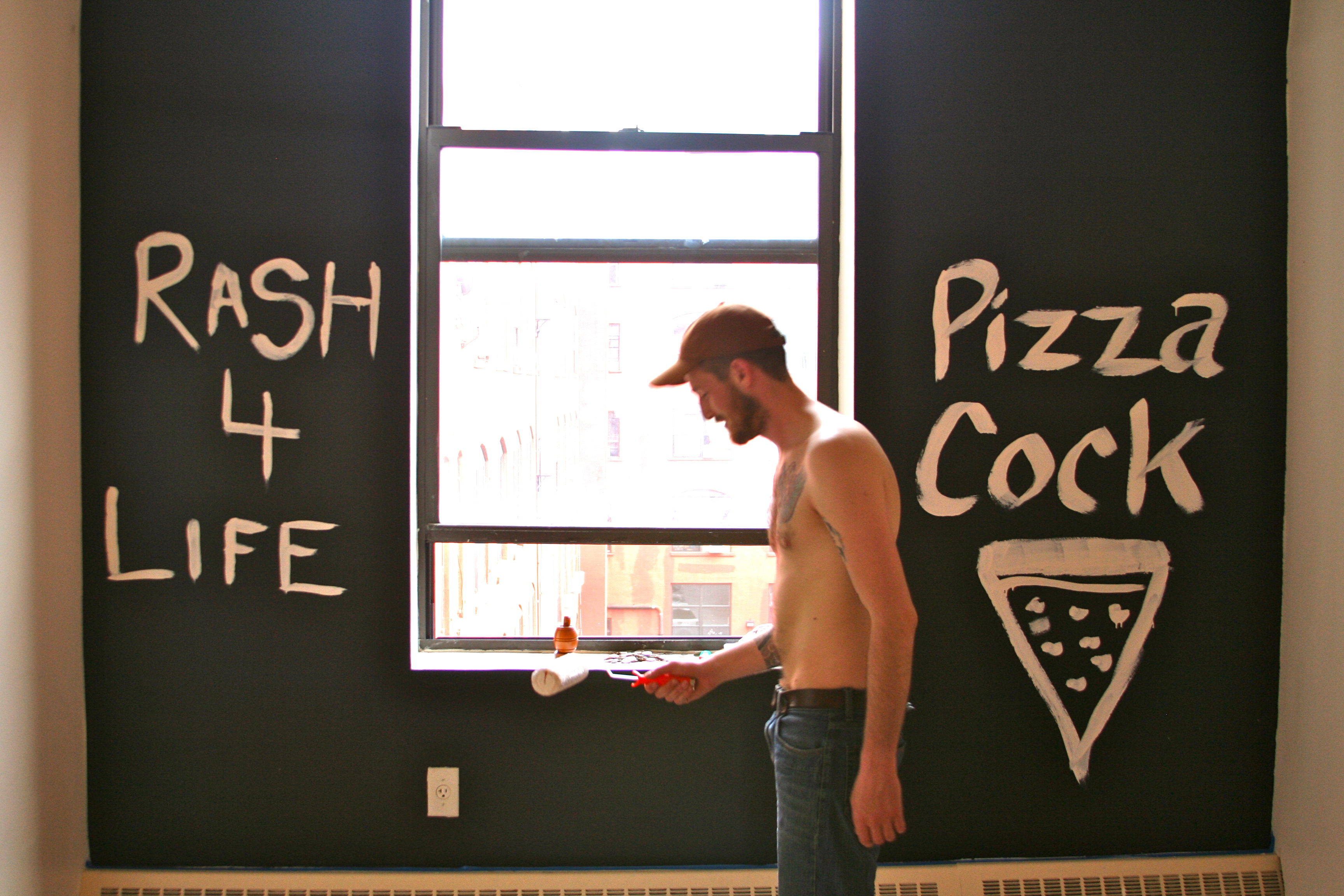
    I have never owned a home, though I am in an age where my peers are all deciding that such an investment would benefit them. I find this admirable. Home ownership is something I aspire to greatly, but something which I know with certainty that my immaturity and late-bloomingness make me currently wholly unprepared. So instead I rent. There was a moment in time where I said I would rent comfortably for the rest of my life. I have since revoked this idea, as living in a home with zero roomates and no landlord (except for the bank) sounds somehow pleasant. My views of the following are likely to change in the same way.

    A married couple and I have been having a long-standing debate. This is a debate, to be sure, because both parties are so stubbornly rooted in their belief that no one will change sides, that is, until ten years down the road when I get married and see the lightly-tinted Kokopelli Teal and finally understand how a colour seems to understand my innermost being. I believe that painting the walls of a home or apartment is a painful waste of time and money, and though the debate will remain insignificant forever, the internet is rampant in even less stimulating debate, which therefore legitimizes The Paint Debate. Somehow.

    To state that the flat colour of the wall of a home can even begin to express the personality of a human soul is a degrading to the complexity of personality, which with every individual person would require more than the several thousand shades offered on the Benjamin Moore paint chip section. It would require millions of ever-changing colours; colours that don’t yet exist. The architecture and interior design of a house (if considered art), like the composition of a painting, has thousands of colours and strokes and accents and features that can hint at the surface of a personality, but in no way fully capture the intricacies and oddities of a person. You are not what you own, as Fugazi put it. You are not the colour of paint in your home.

    To state that colour has the ability to change a person’s mood may be a good enough reason to surround yourself in Baby Chick Yellow or the dignified Gibralter Cliffs Grey, though this may hold true only for classes of people who have nothing else to worry about besides superficial interior decorating decisions or choose to paint walls repeatedly to help them forget of their mounting debt. There has undoubtedly been some conclusive research conducted by an authority in psychology stating that certain colours release endorphines and thus, painting a room of a home will guarantee happiness. Similar psychology has been taken up by colonialist governments to bring joy and happiness to the groups of people that they previously assimilated and murdered, and hey, that seemed to work well.

    To claim ownership by way of paint on a wall is an illusional attempt at false ownership. It is evident that a human being purchasing a home will instinctively paint the walls regardless if the colour is something they would like in another context, and this is the Dog Piss Complex. Dogs will urinate on things even when they do not have to urinate, dribbling drops onto a fence or hydrant in a primal game of grafitti, simply to make more things their own. Humans have civilized ways of pissing on property, and thousands of colours of piss to choose from. Besides all this, simply put, ownership is a false dream. Possession is nine-tenths of the law, they say. But to have ownership over something, besides some twentieth century discipline system, is nothing. Ownership is a form of entitlement. A person’s home is no more theirs than it is mine, besides a magical thirty-year digital transaction or physical currency swap. Besides the fact that I would get arrested for attemping to enter it on my own will, and besides the fact that I might be sent to the hospital, mental or otherwise, for painting it myself. Claiming ownership of four walls and a roof is as misguided as claiming ownership over the air that resides within those walls. Painting those walls to mark territory, then, is ineffective.

    To protest living in apartments of drab white walls, to make a statement by painting walls elaborate colours, is something I can support. Change for the sake of change is something I can support. But when change is done in the name of personality, of ownership, of permanent mood-boosters, then I lose interest. Because then reason is out the window, and some bizarre cultural rite of passage comes into play. Adulthood or something.

    All this to say that I have yet to find a reason that I myself would take the time and financial discourse to paint the walls of my dwelling, and that I have a difficult time understanding those that do. There are indeed colours that I prefer over others, this is normal. But to base decisions or pocketbook numbers on these colours, even if they invoke the warmest of positive feeling, is not worth a person’s time. I’d rather sit here for three hours and write a piss-poor essay than waste my time rinsing out brushes and taping floorboard with green tape. The theorized, marginally-improved mood brought by the finished product would not offset the 100% worsened mood caused by mere seconds of the painting process.

    I do not consider it wrong, dumb, superficial, or negatively adult, I just find it as another case of myself not understanding human habit or what has grown to be the norm.

    I think I’m afraid of committment.

    And everyone sits patiently as they wait around for me to grow up.

    NYC Painting 2

  • World Crokinole Championships – The Great Paternal Experiment

    The following piece was featured on Ominocity.com out of Saskatoon, Saskatchewan.

    Crokinole 4

    If you’ve never heard of crokinole, you’re likely not a citizen of the disintegrating Canadian countryside. If you are from the North of 49 and you still haven’t heard of crokinole, you either a) are from a city, b) didn’t grow up in a church, c) grew up with a Nintendo, or d) had unloving parents. Crokinole is a two or four person game played on a 66cm-diameter circular board, in which each player has a determined number of discs made of lathed wood. Each player purposefully flicks these buttons with a finger or wooden cue towards a hole in the centre of the board a quarter-of-an-inch deep and only slightly larger than the button itself, attempting to avoid the eight stationary pegs that guard it like pawns on a chess board.

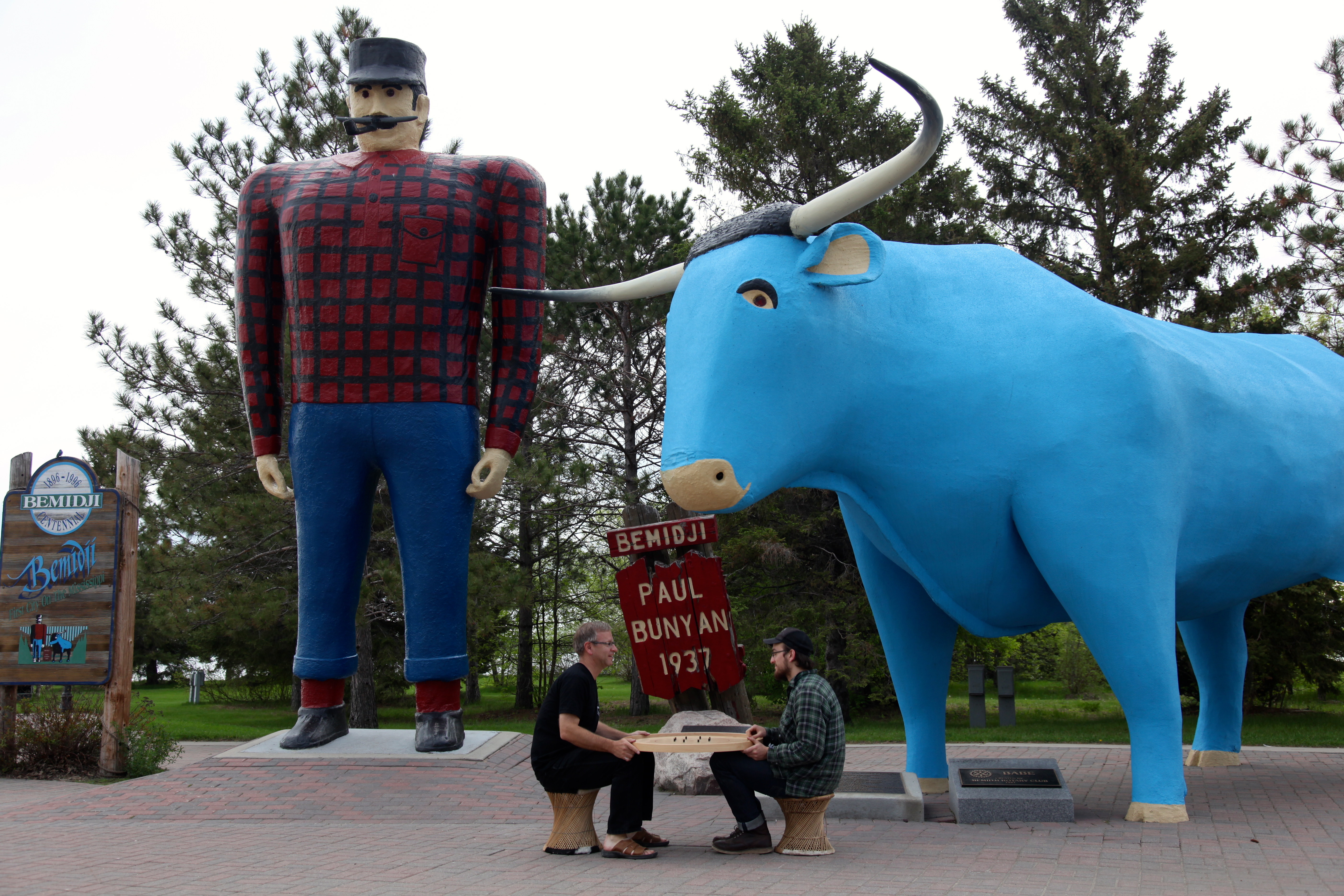
    It is a game you may have played with your loud uncle and your wrinkly aunt before Christmas dinner. A game in which your grandpa is likely indomitable in between heavy naps in a dusty cardigan on an itchy couch. It is a game you may have tinkered with not knowing the rules (of which there are perhaps three), or, as previously determined, a game you may not have ever even heard of. For myself and my father, it is the game in which we competed at the World Championship in Tavistock, Ontario on June 1, 2013. The World Crokinole Championship, widely revered as the Stanley Cup of crokinole tournaments, the Kentucky Derby of the forefinger stallions, centre stage of peculiar rural males aged 39-88, was obscurity and sportsmanship perfectly defined.

    Crokinole 3

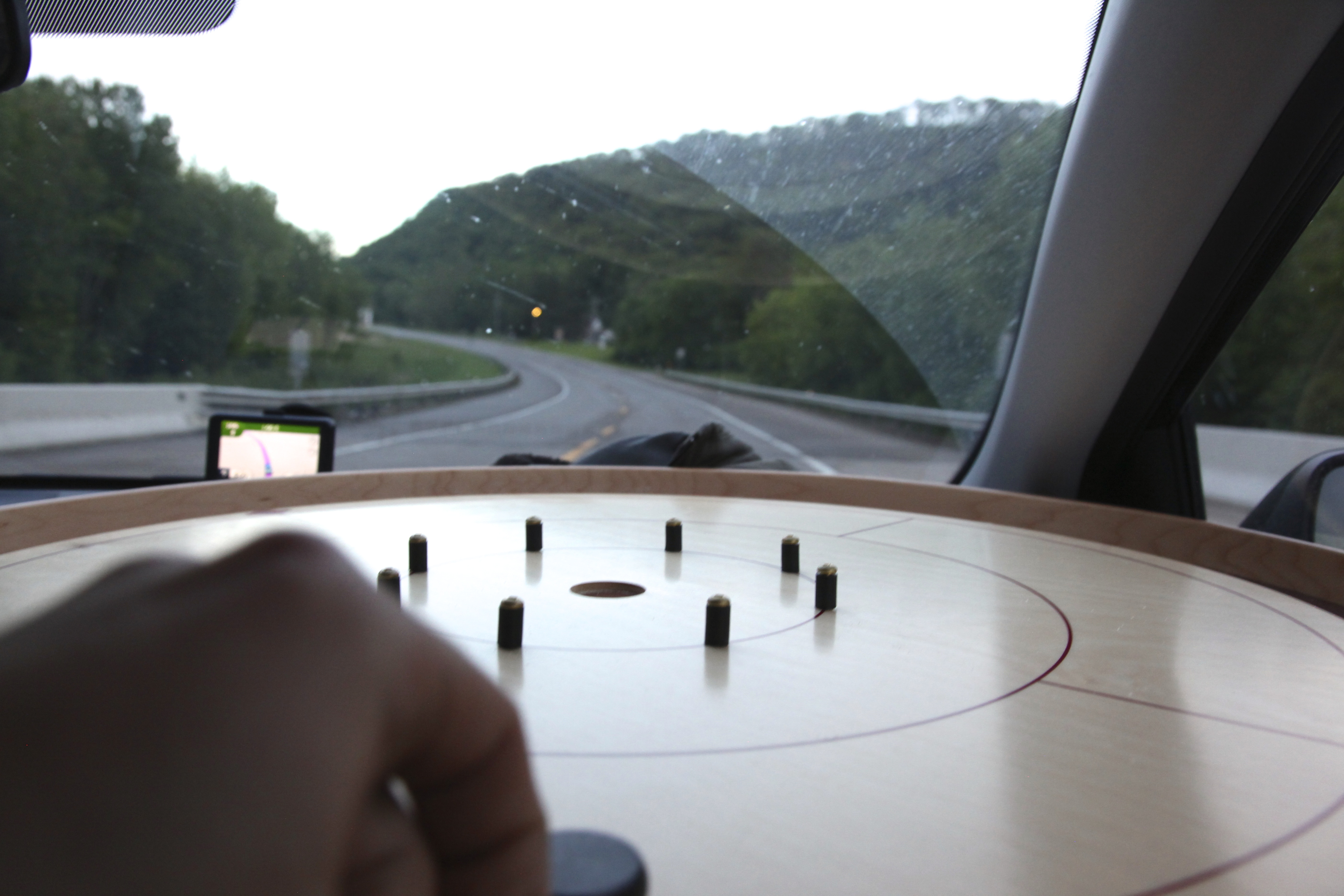
    After driving straight through six U.S. states and two Canadian provinces, we pulled into Tavistock, home of the oldest known crokinole board dating back to 1876. During the drive, when our periods of silence (often reaching four or five hours at a time) were broken, we discussed religion in many contexts; traditional theology, silage and dairy production in devout farming lives, and most importantly, righteousness through crokinole techniques. We made our ecclesiastical pilgrimage, fasting from sleep and whole foods in the goal of reuniting westerly disciples with the holy land of immaculate wooden conception. We were pilgrims for the board of life. The home of crokinole was like I had dreamed it would be as a kid of twenty-four years old. An established farming community of dairy producers with a Main Street that boasted a two-decade old Chinese Restaurant, local credit union, and butcher shop. As one might expect, side streets were dotted with various forms of seniors’ homes.

    Upon arrival, silence was broken by John Schultz, the bald, wiry, extremely pleasant chairman of the World Croknole Championship, asking, “Are you folks here for the crokinole tournament?” He woke us napping in the park—our first hours of horizontal sleep in two days—and it finally occurred to me what we’d done. We drove twenty-two hours for crokinole. In the same amount of time I could’ve driven to the flawless forests of northern California. I could’ve driven to Nunavut. “Holy shit,” I thought, “I could’ve just travelled an hour and played a game of crokinole with my grandpa.” But instead I drove twenty-two hours to play with all of the grandpas of southern Ontario. John Schultz continued to tell us that other folks drove in from Michigan, New York, Ohio, P.E.I.. We cleaned up, grabbed our board, and began our pre-tournament practice on a picnic table in the shade of Queens Park.

    Crokinole 2

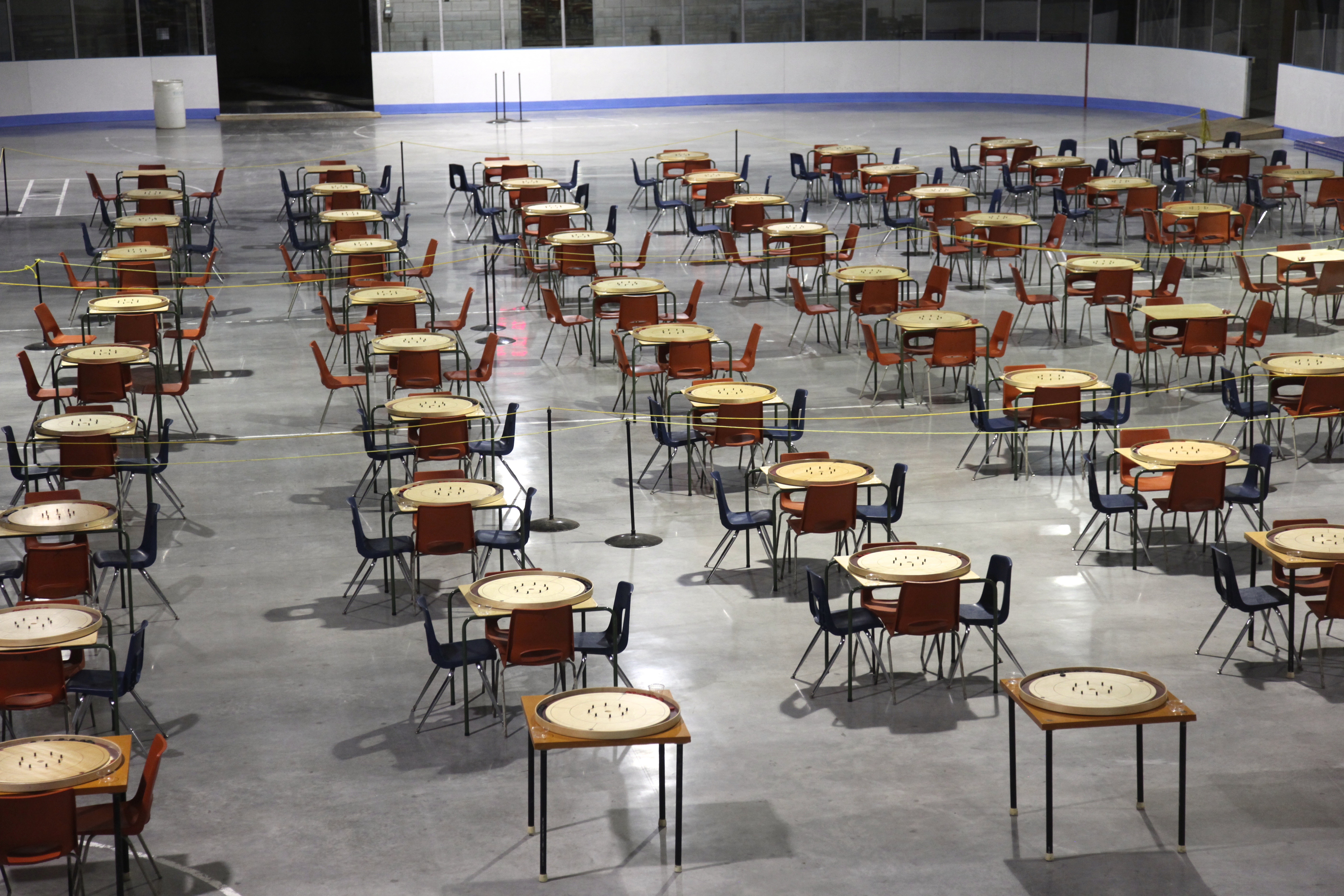
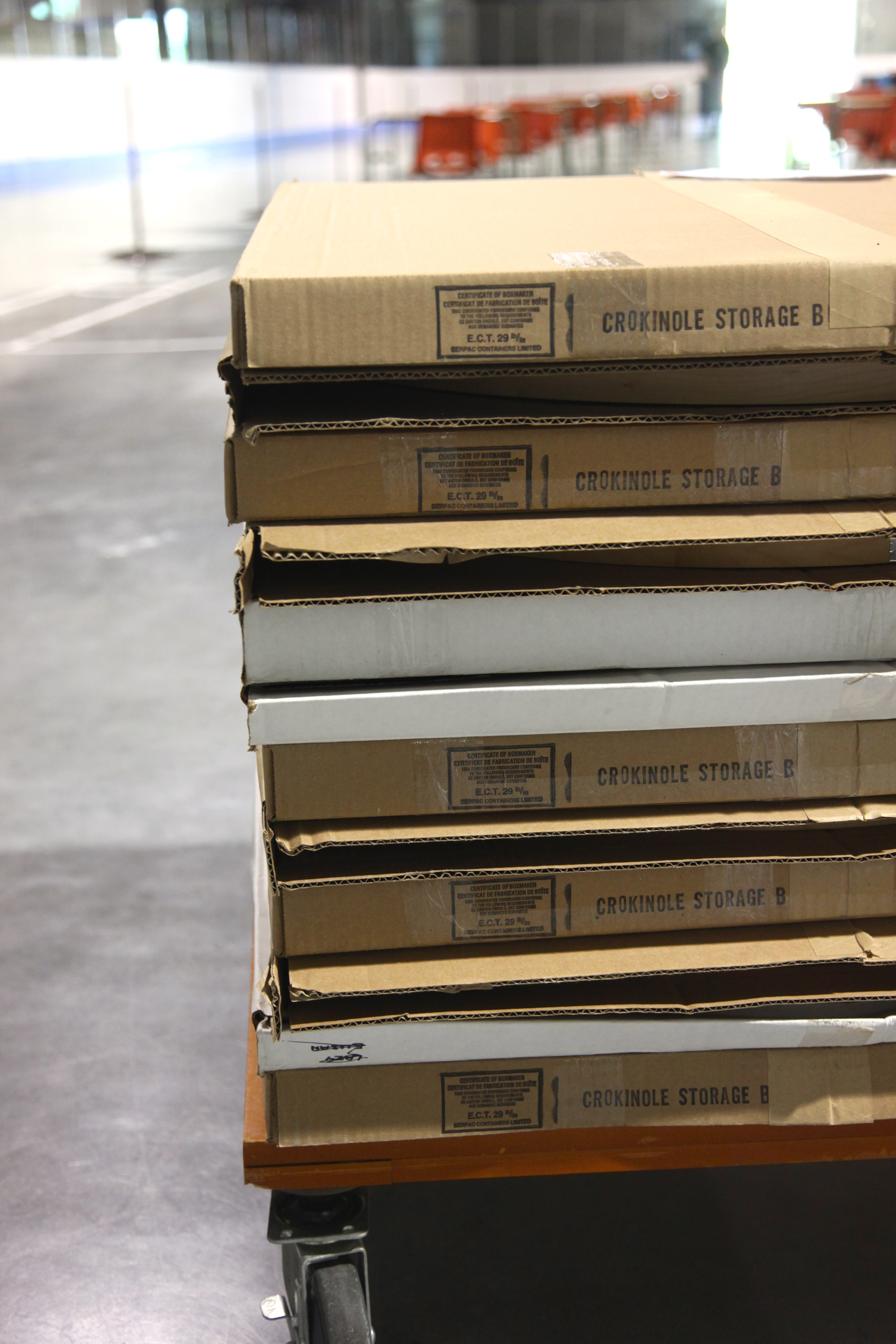
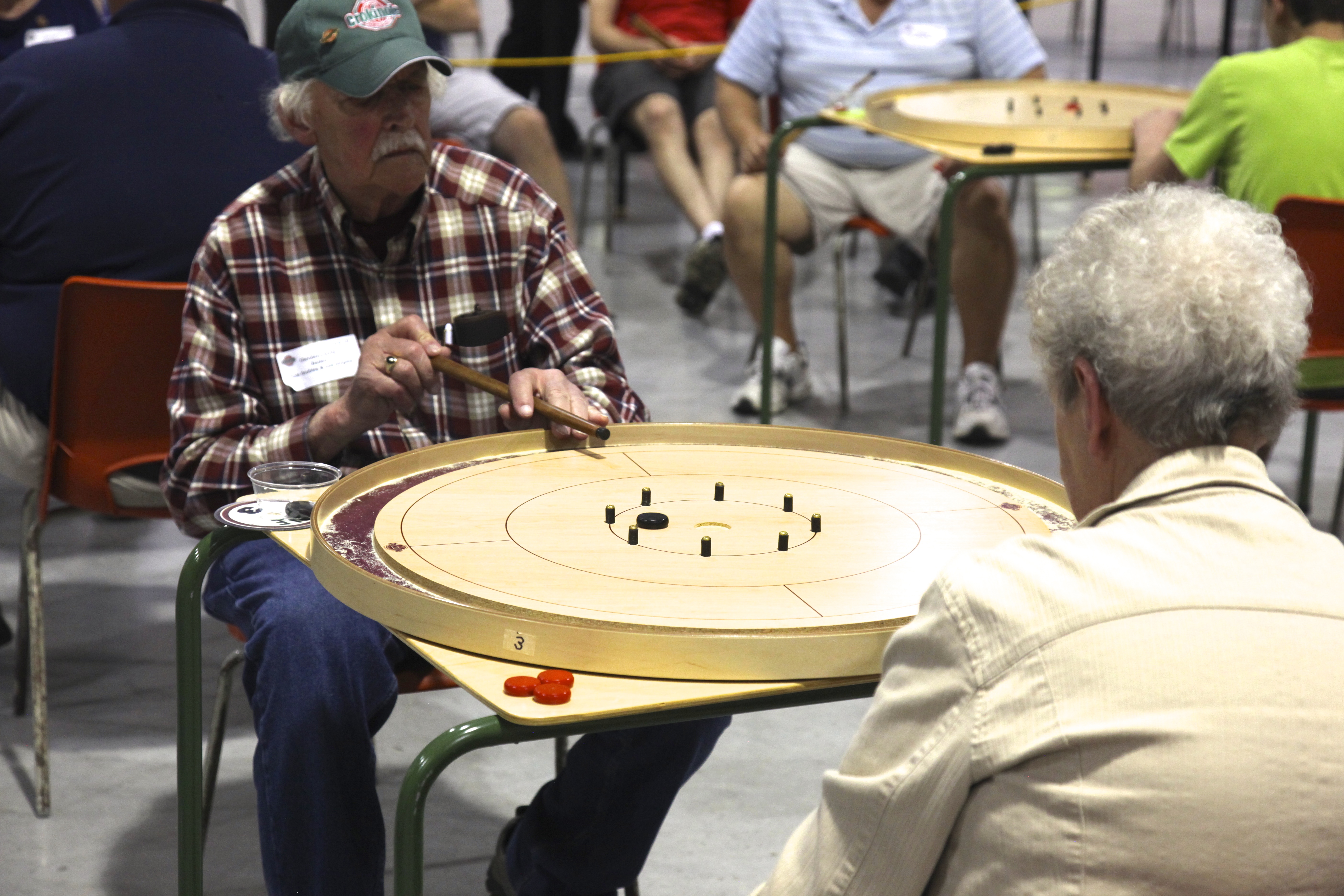
    On Saturday morning when I woke up at dawn to practice before competition began at 8:30, the Ontario air was thick. The humidity weighed down the crokinole buttons as if Mother Nature rubbed each one on her sweaty chest. After a breakfast fine-tuned for finger endurance I followed my father into the arena which housed over 64 freshly waxed, previously untouched boards set up in a grid on the concrete slab of the dried up hockey ice, all partitioned by yellow rope. Competitors and spectators in jean shorts and agriculturally branded caps floated around the merchandise on the perimeter of the rink. Those keen on capitalizing on the lucrative crokinole market sold World Championship t-shirts, ballcaps, boards and board accessories. People competed in the skill shot competition and captured photos of the trophies which were handmade for the event (it is difficult to find a golden plastic figurine of a man playing crokinole to fix to the top of a regular trophy). When tournament competition began, over 280 competitors showed their masterly applied-geometry skills and muscle memory. Each competitor sat down at a table with ten strangers for eight minutes at a time until the horn sounded, shaking hands and wishing luck to people they hoped to blank eight points to zero. Saturated in Canadian politeness, if crokinole isn’t a game of true sportsmanship, it isn’t anything at all.

    Crokinole

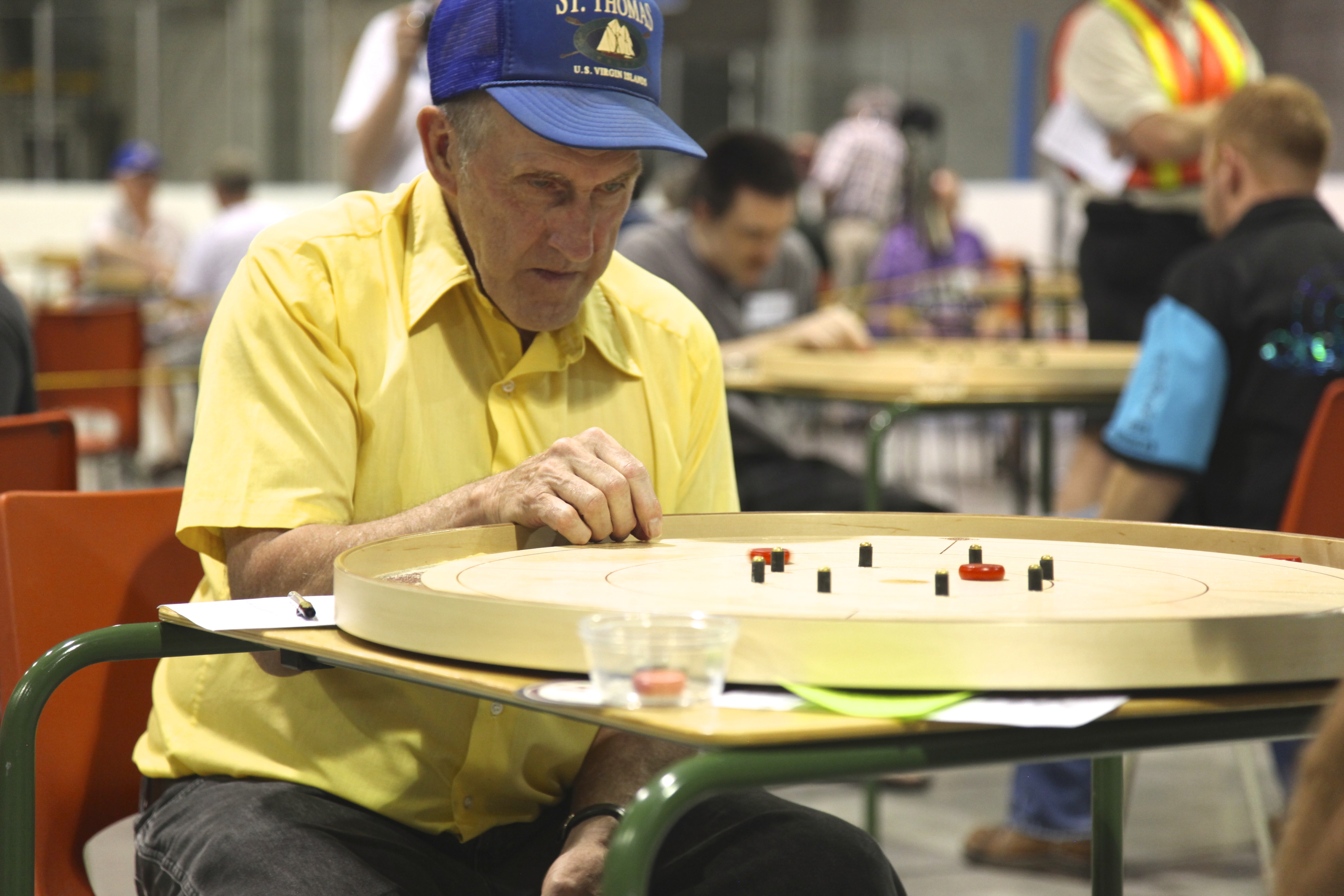
    As for the competition, unfortunately the prophesy from aged-competitor Dave Skipper that, “people with beards and moustaches shoot better on these boards,” didn’t prove true. I, one of the few participants with a gnarly beard, didn’t even place in the top half of the draw, and the eventual singles champion, John Conrad, had the hairless face of a teenager, although he was surely approaching his golden years. My father proved to be worthy competition, scaling the ranks of eleventh of 86 participants in the main draw, making the playoff round with the true elites. The final match drew crowds upwards of forty, those who had already sweat through their crokinole team jerseys and sweat bands, groaning and whispering with the final shots of the game. Hands become shaky with such pressure. For one of his final shots, Conrad made an incredible triple take-out. Someone in the crowd said in praise, “I think that was a statement.” In the finals, fathers sat behind the yellow rope, watching sons in competition, offering familial support. My father and I participated in the great paternal experiment that is crokinole.

    While discussing board consistency during the final round, a man who placed third in the doubles category, making no excuses, commented: “The heat, the humidity—we have been battling the elements all day long,” as though it were an Ironman competition, which, in a way it was. The oldest participant was 88-years old, and was celebrating his 50th wedding anniversary at the tournament. He had competed in all previous fifteen World Championships that had been held.

    If it were a televised event, and if the champions were interviewed and asked to describe their feelings, I imagine that like any other world final, they would stumble and mumble in speechlessness. There is no way to properly explain a world championship of any sport, and it only becomes more grueling when it is a celebration of nearly-perfected obscurity. We travelled knowing full-well that we were participating in an antiquated parlour game that itself was competing against screen-bright technologies for space in the family room. What we didn’t know was that our hands would shake and that we would miss shots from fried nerves in a game usually as relaxing as a free massage. We didn’t know that we’d have to practice for another year to make even a dent in the crokinole kingdom.

    Back to the grind. Back to the board.


    Crokinole 1

    Crokinole, The Finals

    Crokinole Boxes

    Crokinole Cues

  • The Melt

    I had a cup of coffee about twenty-one days ago. First time in a decade perhaps. Tasted fine. Any thing tastes good with three scoops of white sugar and some non-dairy powdered whitener. Put that shit on an old worn out boot and you could eat the damn thing. I had coffee because someone needed me to have coffee with them so badly that I didn’t say no. He waited until he had absolutely no choice but to call someone, on the brink of self-destruction sitting in the park.

    I drank beer and pissed in the bush about ten times and eight times respectively on Friday evening. The beer kept appearing in my koozie and I kept talking, more than I may have talked in a few months. The topics discussed included petroleum, Aboriginal rights, picky eaters, atheism, plastic bags (reusable vs. one-time use), housing, Harper, Meatless Mondays and veganism, which brought us back to petroleum and Aboriginal rights and Harper. We cycled into the same topics on purpose, hitting the same points eloquently and intelligently, but after piss number seven the cycles looked more like a child’s attempt a drawing a circle. I held the left wing, and he, the right, and pulled so hard that beers brought left and right so close that they nearly touched.

    Unless we are struck by bicycle-stopping winds that prevent me from delivering two donation receipts to my Alternative Measures Program this week, I am all but in the clear for my passionate stencil incident. “It wasn’t stupid, it was ill-advised,” said the mediator, “You’re not a stupid person.” This was my first mediator/participant that didn’t speak down to me like I was in grade school.

    These stories have a theme. The theme could be summed up by a phrase I heard this week in the alley by our garden.
    Just another goddamn bleeding heart. No perspective or guidance. With no fucking clue.

    And thus I’ve hit a new stage of life. The catatonic stage. The one where you get home from your day and you realize that having two jobs you love isn’t enough to keep you happy. Karma has struck you lonely because of selfishness. Booze, bonfires, television, hobbies cannot distract you like work can, nor can they make you feel like your days are well spent. You are tired but you aren’t too tired. Laying on the couch staring at the ceiling, standing in the kitchen staring out the window, sitting in the work van staring at the steering wheel in the complete city silence, with no thoughts except simultaneous self-pity and self-loathing based on things you can’t even remember. Getting home is no longer a mental relief because you are alone with your thoughts, trying to find where one balances passion and sanity, trying to see how long you can drown your emotional and relational issues in work tasks and busywork. And when those begin to sour then the rest begins to heat up. The coffee melts the mandatory donation receipts and mixes with the beer.

    The spring melt has ended, but the summer brain melt has just begun.

  • Thou Mayest

    I sat at the Housing Strategy Public Forum at noon on Thursday. I listened as four city representatives justified a plan to fix a city, scrambling to answer questions from dozens of disgruntled citizens about housing in various forms. Providing housing for the masses is a priority, they said. Just not as serious of a priority as making a lot of money, they neglected to say. The citizens’ sole chance to have their say in a hotel lobby with free cookies and Fruitopia. Democracy works.

    I wondered whether it counts as having a voice if you are speaking to those do not have ears.

    So mom said this, “I think sometimes for your own sanity you have to believe that people will eventually do the right thing.” I genuinely do not believe that people will eventually do the right thing. I only have so many years of life to impatiently wait. What I do believe, for my own sanity, is that people can do the right thing. They have the choice and this puts me at greater ease. Because I expect nothing. Because I am not waiting with fried nerves for the sun to explode. I’ve got to believe at least this or I will give up, and giving up is a cardinal sin in anyone that matters. I’ve got to believe this or I might kill myself. I’ve got to believe it whether it is true or not. My cynicisms no longer reach as far as believing in an inherently evil humanity. I have passed that point in my perpetual anger. If that were the case, we would have starved long ago.

    “Maybe it’s true that we are all descended from the restless, the nervous, the criminals, the arguers and brawlers, but also the brave and independent and generous. If our ancestors had not been that, they would have stayed in their home plots in the other world and starved over the squeezed-out soil.”

    -Steinbeck, East of Eden, Chapter 51.2, p568

    Though we may not be an evil people, we are still not inherently good. We are inherently selfish, and this to me seems concrete. As animals we instincually make decisions to ensure our personal survival. This is not news. Humans can, however, break this conditioning. There is still a choice.

    In East of Eden, Lee studies the story of Cain and Abel.

    Lee’s hand shook as he filled the delicate cups. He drank his down in one gulp. “Don’t you see?” he cried. “The American Standard translation orders men to triumph over sin, and you can call sin ignorance. The King James translation makes a promise in ‘Thou shalt,’ meaning that men will surely triumph over sin. But the Hebrew word, the word timshel—‘Thou mayest’—that gives a choice. It might be the most important word in the world. That says the way is open. That throws it right back on a man. For if ‘Thou mayest’—it is also true that ‘Thou mayest not.’ Don’t you see?”

    “Yes, I see. I do see. But you do not believe this is divine law. Why do you feel its importance?”

    “Ah!” said Lee. “I’ve wanted to tell you this for a long time. I even anticipated your questions and I am well prepared. Any writing which has influenced the thinking and the lives of innumerable people is important. Now, there are many millions in the sects and churches who feel the order, ‘Do thou,’ and throw their weight into obedience. And there are millions more who feel predestination in ‘Thou shalt.’ Nothing they may do can interefere with what will be. But ‘Thou mayest’! Why, that makes a man great, that gives him stature with the gods, for in his weakness and his filth and his murder of his brother he has still the great choice. He can choose his course and fight it through and win.” Lee’s voice was a chant of triumph…

    “…This is not theology. I have no bent toward gods. But I have a new love for that gilttering instrument, the human soul. It is a lovely and unique thing in the universe. It is always attacked and never destroyed because ‘Thou mayest.’”

    -Steinbeck, East of Eden, Chapter 24.2, p301-302

    I still question the effectiveness of a political process that is so inane as a public relations exercise with five different types of cookies. I question the point in trying to penetrate the infinitely-layered inclined mountain of bureaucracy. But possibilities arise. Thou mayest triumph over sin. Thou mayest triumph over ignorance. Thou mayest triumph over selfishness. This, Steinbeck says, is what makes man great. He still has “the great choice. He can choose his course and fight it through and win.”

    It doesn’t matter what others do—I must remind myself of this. Letting the poor decisions and monumental mistakes of others disrupt your progress along the line of choice is foolish. Thou mayest. Or thou mayest not, and it doesn’t fucking matter to me what the innumerable morons of the world decide to do. As long as I remember that both they and I had a choice.

    Because ‘Thou mayest.’